When boarding a train
Allow others to get off first, and queue to board
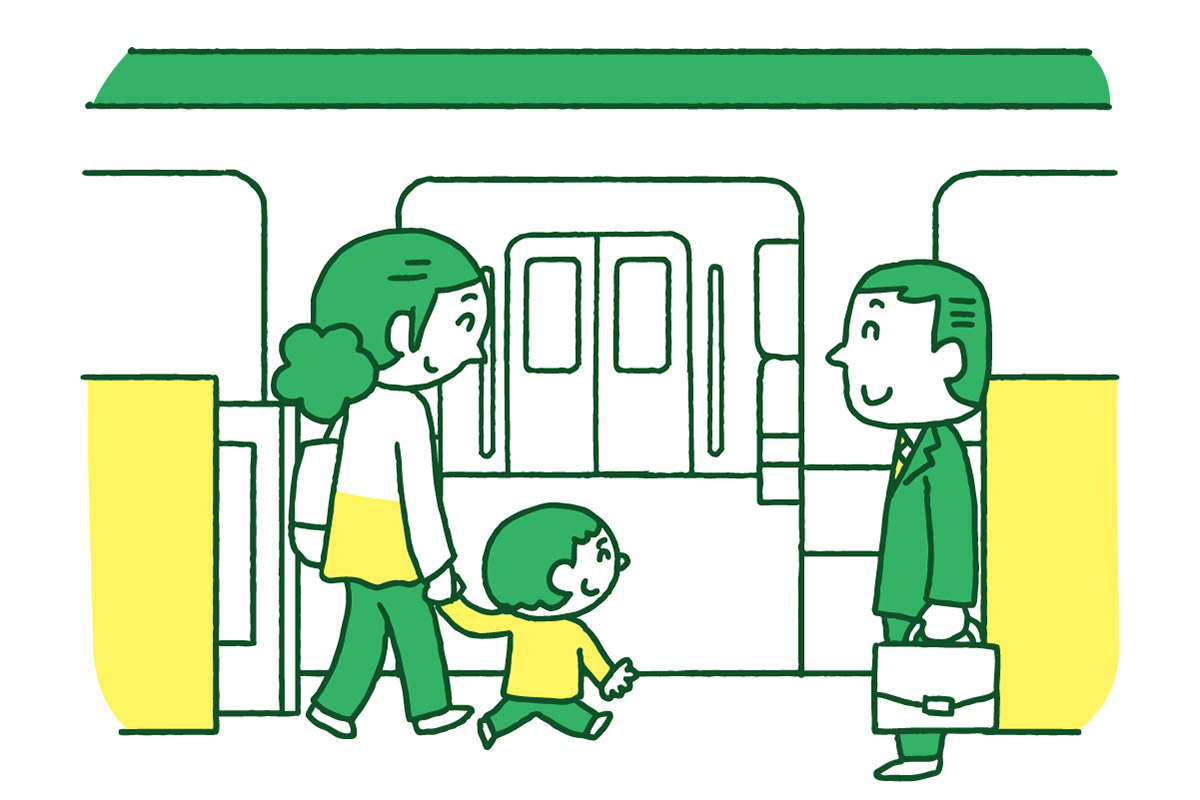
When boarding a train at the station, there is an important rule that applies regardless of which train you take: allow other passengers to get off first. This is fundamental to ensuring that everyone can use the train safely and comfortably.
Once everyone who wishes to has gotten off, it is your turn to board. At this point, it is important to queue up and board in order. Platforms have markings or lines indicating where to stand, so queue and wait in these areas. Cutting in line or pushing others can startle those around you or even cause injuries. When there are small children or elderly individuals around, it is important to be considerate to ensure everyone can board slowly and safely.
Once it is confirmed that no one else is alighting, start boarding from the front of the queue.
Do not stand near the doors
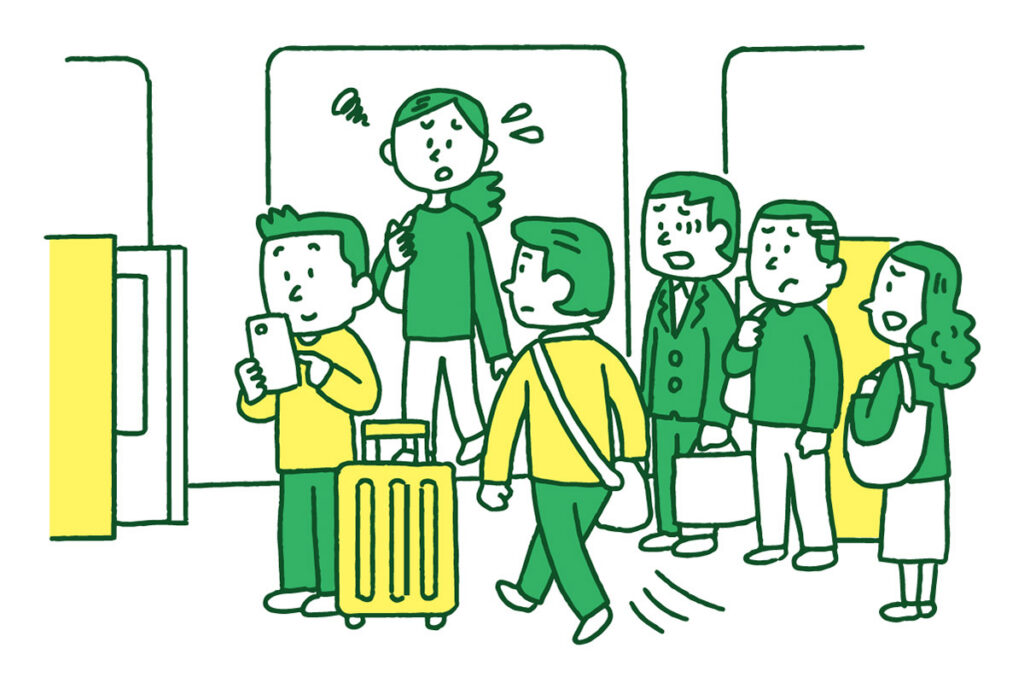
When riding a train, avoid standing near the doors. Blocking the area in front of the door stops the flow of passengers, and may even cause pushing, shoving, or falling. Therefore, even when the train is crowded and you are unable to find a seat, it is important to move toward the rear of the car or the aisle whenever possible. Simply moving a little further back allows everyone to get on or off smoothly and creates more space in the car.
If you have to stand near the door for any reason, step outside once the train arrives at the station to clear the way and allow passengers to get off. Once everyone has gotten off, you can calmly board again. If you are carrying large bags or suitcases, be careful not to block the door. Hold your bags in front of you, place them on the overhead rack, or position them in a way that does not obstruct anyone.
Be mindful of your bags
Trains are often crowded and have limited space, so it is important to make an effort to ensure everyone can enjoy a pleasant ride. First, if you keep your backpack on your back, you may bump into the people behind you or block the aisle without realizing it. In a crowded train car, hold your backpack in front of you or carry it in your hands to avoid getting in the way of those around you.
Additionally, large bags such as suitcases require special attention as they take up space. When you are moving with them, they can bump into other passengers’ feet or block the aisle. Keep your suitcase pulled firmly close to you and avoid obstructing the movement of those around you as far as possible.
Furthermore, placing large bags near the doors can get in the way of passengers boarding or getting off, potentially causing congestion. When arriving at a station, step off the train first to clear the door area. This will ensure people can board or get off smoothly.
How to Behave on a Train
Do not speak loudly or talk on the phone
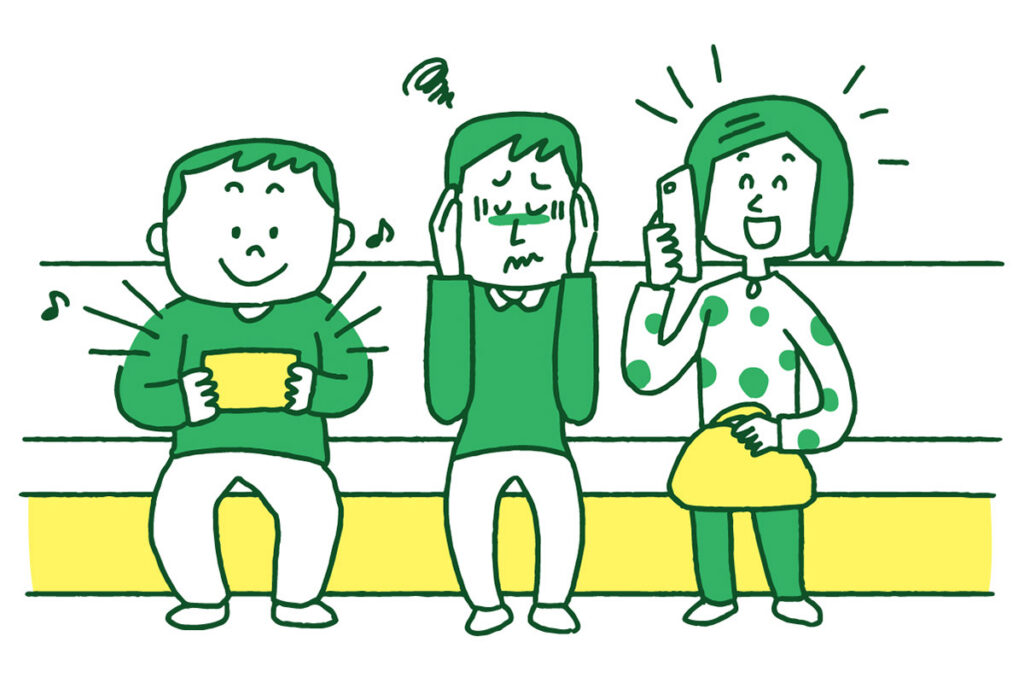
In Japan, trains are viewed as places where everyone should remain quiet. Talking loudly or being rowdy with friends not only makes those around you feel uncomfortable but can also lead to unexpected trouble. Additionally, making phone calls on trains should be avoided. Conversations on the phone can resonate surprisingly loudly, which can be extremely annoying and disturbing for other passengers near you.
Furthermore, it is important to be mindful not only of conversations and phone calls, but also of sounds from game consoles and smartphones. Even at low volumes, these sounds can be surprisingly audible in a quiet train. When watching videos or playing games, always mute the sound or use earphones. However, since sounds can also leak from earphones, it is important to keep the volume low.
Avoid sitting with your legs apart
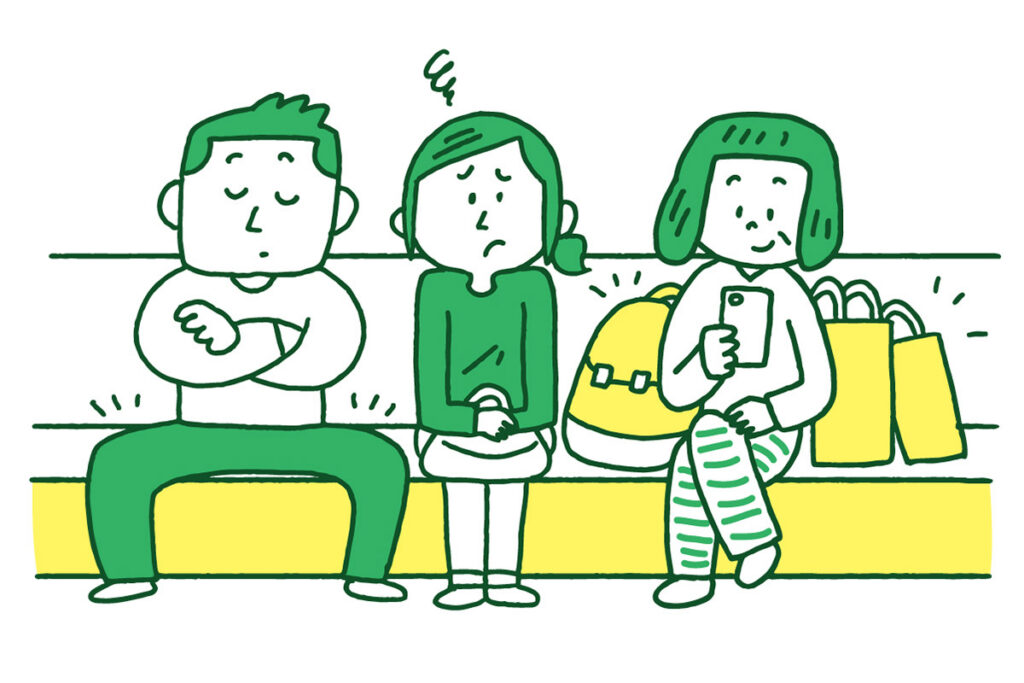
Train seats are places where many people share seats across a restricted space. When you sit down with your legs wide apart, you take up more space than necessary, making it cramped for the person next to you or preventing them from sitting at all. Especially at times when the train is crowded, more people will be able to find seats if each person is just a little more mindful.
Moreover, sitting with your legs apart can make others feel uncomfortable when you bump into them or push against their bags or clothes. Since strangers frequently have to sit close together on a train, it is important to be considerate to avoid trouble.
Similarly, keep your bag on your lap or the overhead rack, and avoid placing your belongings on the seat.
Do not eat on the train
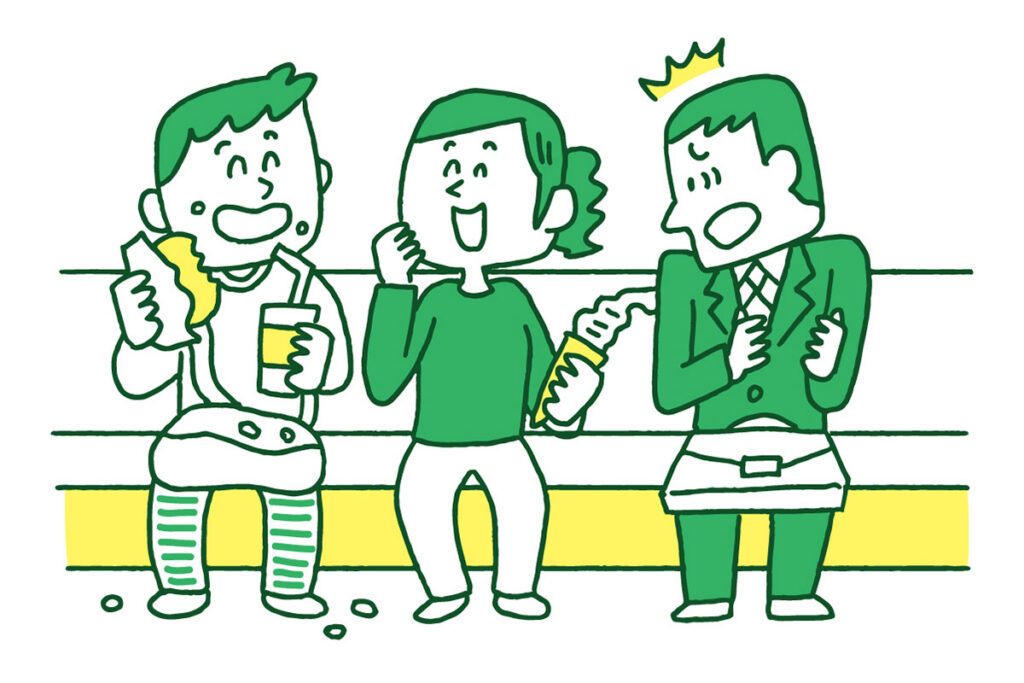
In Japan, it is widely understood that not eating on trains is good etiquette. On commuter and local trains where many people get on and off, food odors can spread, or spills can happen, which inconveniences fellow passengers. In addition, handling food in a moving train may dirty your clothes or the seats and potentially lead to trouble. Therefore, it is generally considered advisable not to eat on trains.
However, eating is not prohibited on all trains. On trains that travel over long distances, such as Shinkansen (bullet trains), limited express trains, and sightseeing trains, seats are often arranged in a cross-seat configuration facing each other, and some may even have tables. It is often acceptable to eat on such trains, as exemplified by the culture of enjoying ekiben (boxed meals sold at stations or on trains).
Even so, it is essential to be considerate of others, avoiding strongly scented foods and making sure that you take away the trash or properly dispose of it after finishing your meal.
What are priority seats?
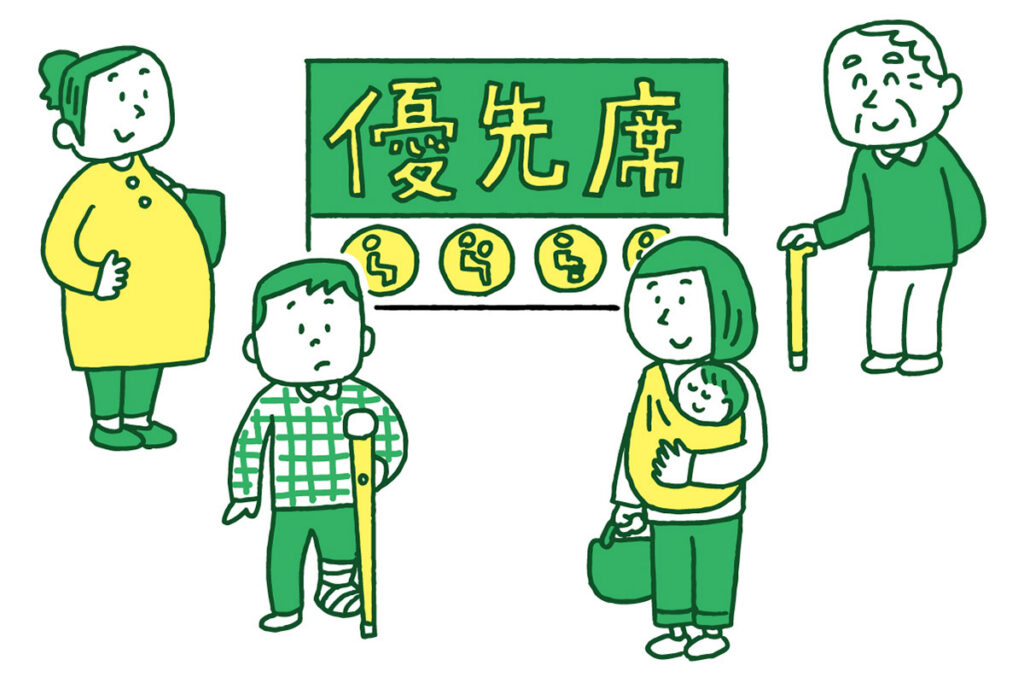
On trains, there are special seats called “priority seats.” These are not seats that anyone can freely sit in; rather, they are reserved for people who particularly need them, including the elderly, people with disabilities, those who are injured, people carrying infants, and pregnant women. It is important to be considerate and offer them a seat, as standing can be dangerous or physically taxing for these individuals.
Even when a train is crowded, those sitting in priority seats should be mindful of their surroundings and be ready to offer their seats when necessary. If someone who seems to need a seat approaches, it is kind and considerate to say, “Please have my seat” and offer it. If you feel shy about speaking up, simply standing up quietly to vacate the seat is perfectly sufficient.
When you are near the priority seats, good etiquette means that you are expected to turn off your smartphone or ensure it does not make any sounds. This is to prevent people wearing medical devices on their bodies from being affected by radio waves.
In Closing
Rules for riding the train are important guidelines that help everyone feel safe and comfortable. Waiting for people to get off, keeping quiet, being mindful of your luggage… all these actions come from a little consideration for others. When everyone acts with thoughtfulness toward those around them, the train becomes a more pleasant and enjoyable place to be.
Simply making space for someone who seems troubled or offering your seat to someone who looks like they need it—these small acts of kindness will surely make someone feel relieved.