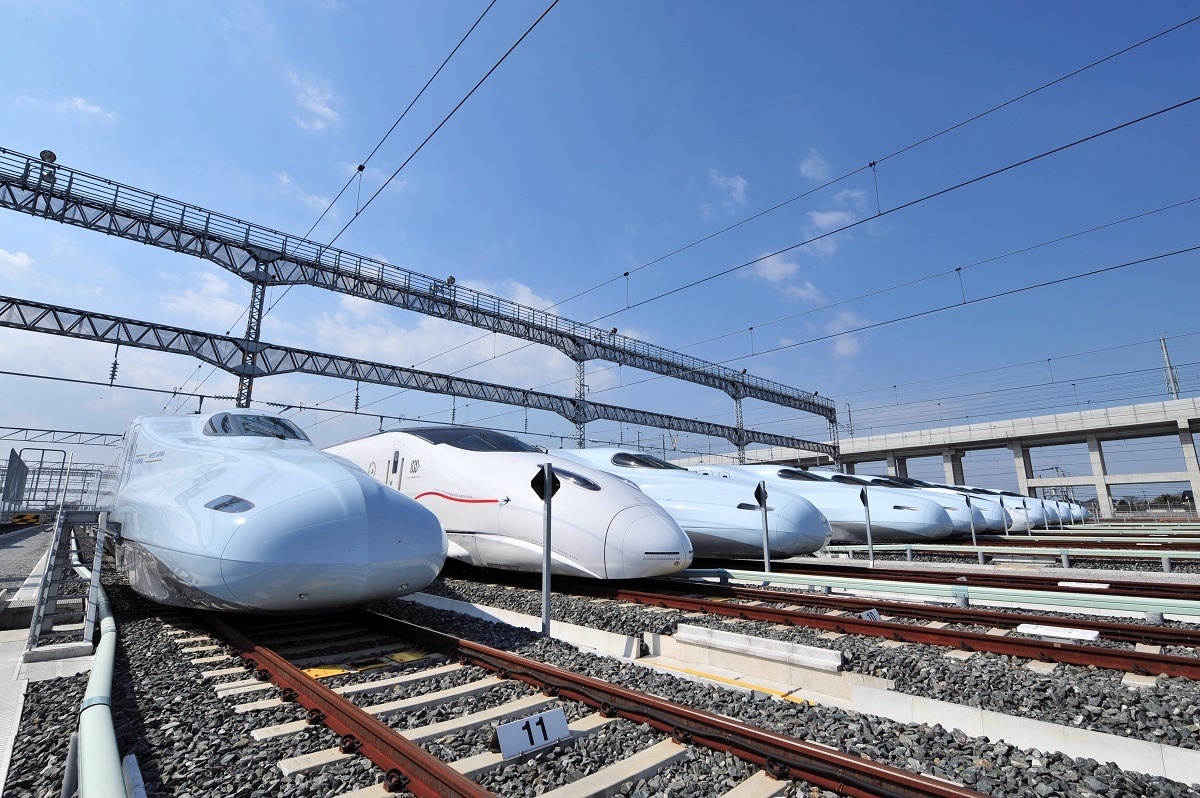
Japan’s bullet trains at a glance.
The shinkansen connects cities across the country, but just how many lines are there? Even on a single route, multiple types of trains operate side by side, and telling them apart isn’t always easy.
In this article, we break down every shinkansen line in Japan and introduce the trains that run on each one.
What You’ll Learn in This Article
- A complete list of the shinkansen lines across Japan
- The characteristics of each route
- The sections covered by each line
- Stops along the way
- Train cars and rolling stock
- What exactly is the shinkansen?
A Complete List of Japan’s Shinkansen Lines
There are 10 shinkansen lines in total operating across Japan.
| Route Name | Operating Route | Train Name | Rolling stock |
| Hokkaido Shinkansen | Shin-Aomori – Shin-Hakodate-Hokuto | Hayabusa, Hayate | Series E5, Series H5 |
| Tohoku Shinkansen | Tokyo – Shin-Aomori | Hayabusa, Yamabiko, Nasuno, Hayate | Series E5, Series E5, Series E6, Series E2, Series E8 |
| Akita Shinkansen | Morioka – Akita | Komachi | Series E6 |
| Yamagata Shinkansen | Fukushima – Shinjo | Tsubasa | Series E8 |
| Joetsu Shinkansen | Omiya – Niigata | Toki, Tanigawa | Series E7 |
| Tokaido Shinkansen | Tokyo – Shin-Osaka | Nozomi, Hikari, Kodama | Series N700A, Series N700S |
| Hokuriku Shinkansen | Takasaki – Tsuruga | Kagayaki, Hakutaka, Asama, Tsurugi | Series E7, Series W7 |
| Sanyo Shinkansen | Shin-Osaka – Hakata | Nozomi, Mizuho, Hikari, Sakura, Kodama,Tsubame | Series N700A, Series N700S, Series 700 7000 subseries (S formation), 8000 subseries (R formation), Series 500 |
| Kyushu Shinkansen | Shin-Osaka – Hakata | Mizuho, Sakura, Tsubame | Series N700 7000 subseries (S formation), 8000 subseries (R formation), Series 800 |
| Nishi-Kyushu Shinkansen | Takeo-Onsen – Nagasaki | Kamome | Series N700S |
Even within a single route, you’ll notice that trains run under different names.
For example, the Tokaido Shinkansen, which runs between Tokyo and Shin-Osaka, has three different trains operating on this route: the Nozomi, Hikari, and Kodama.
So, what sets them apart?
It comes down to three things: the sections they cover, the stops they make, and their speed.
Let’s take a closer look at each line and the trains that run on it.
Hokkaido Shinkansen
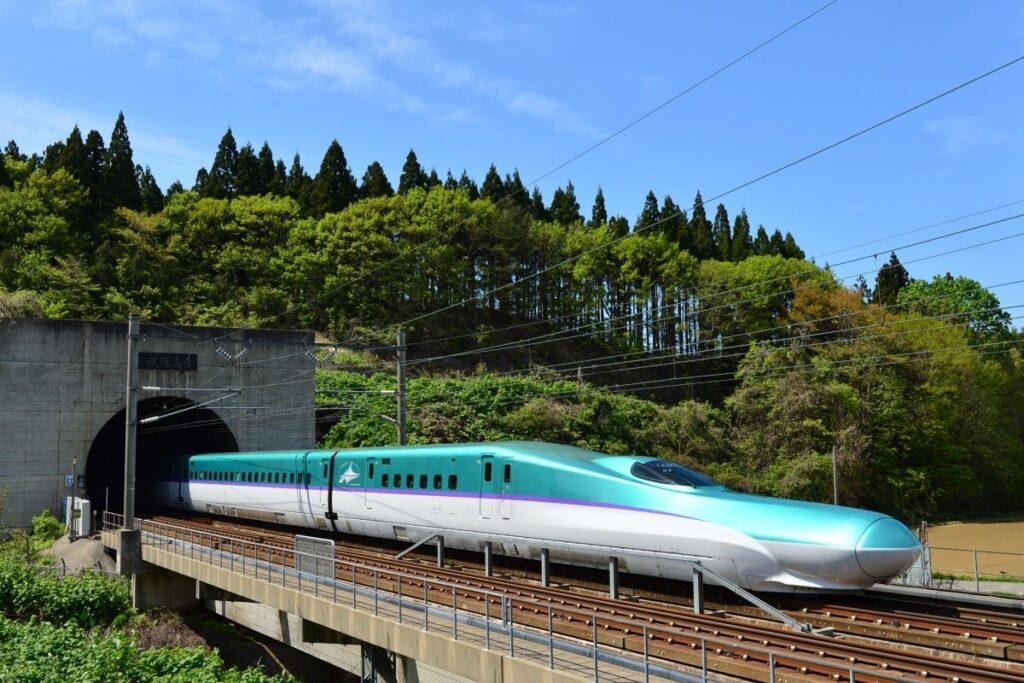
Two trains operate on the Hokkaido Shinkansen: the Hayabusa and the Hayate.
The line runs in conjunction with the Tohoku Shinkansen, and the two train names reflect differences in maximum speed within the Tohoku Shinkansen section.
Route: Shin-Aomori – Shin-Hakodate-Hokuto
Trains: Hayabusa, Hayate
Hayabusa
The Hayabusa refers to trains that run through directly from south of Morioka, where speeds of up to 320 km/h are possible. On the Hokkaido Shinkansen segment, some Hayabusa services run non-stop between Shin-Aomori and Shin-Hakodate-Hokuto, while others stop at Kikonai, or at both Oku-Tsugaru-Imabetsu and Kikonai.
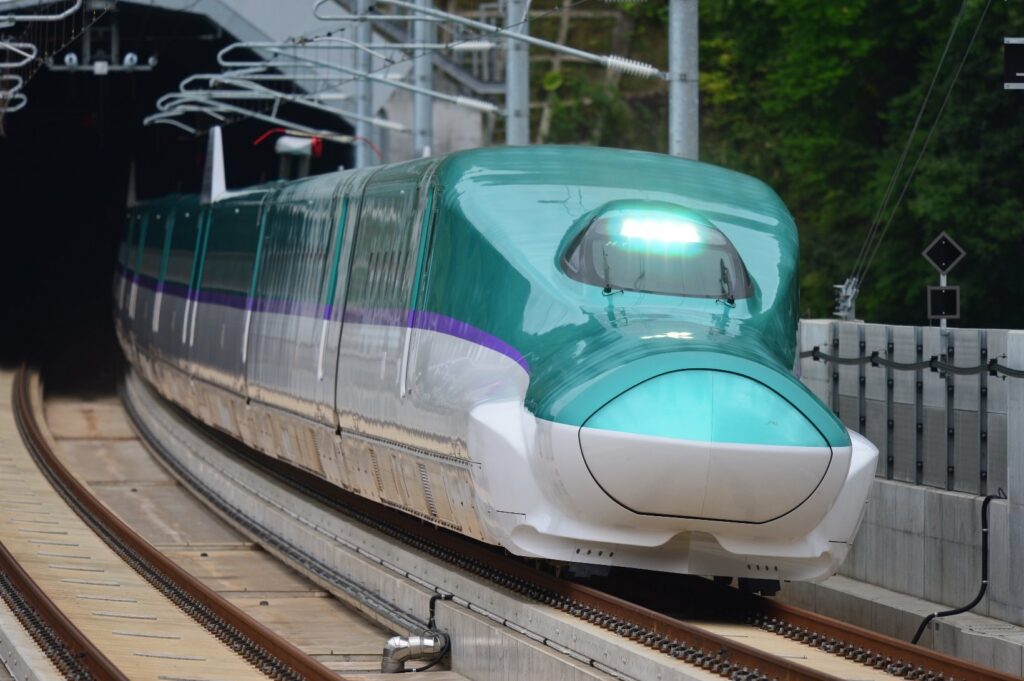
Rolling stock: Series E5, Series H5
Stops: Shin-Aomori, Oku-Tsugaru-Imabetsu (select services), Kikonai (select services), Shin-Hakodate-Hokuto
Seat types: Standard class (reserved only), Green Car (reserved only), Gran Class (reserved only)
Power outlets:
E5 series: Standard class seats A & E, front and rear rows (formations U1–U28); all seats (formations U29–U51) / All Green Car and Gran Class seats
H5 series: All seats
Onboard sales: None *Gran Class is available
Hayate
The Hayate uses the same rolling stock as the Hayabusa and has identical journey times. However, trains operating solely between Morioka, Shin-Aomori, and Shin-Hakodate-Hokuto have no section where 320 km/h running is possible, and so they carry the Hayate name instead.
There are only two routes available: one round-trip between Shin-Aomori and Shin-Hakodate-Hokuto, and one between Morioka and Shin-Hakodate-Hokuto. Southbound services run only in the early morning and northbound only in the evening, making the Hayate quite a rare catch.
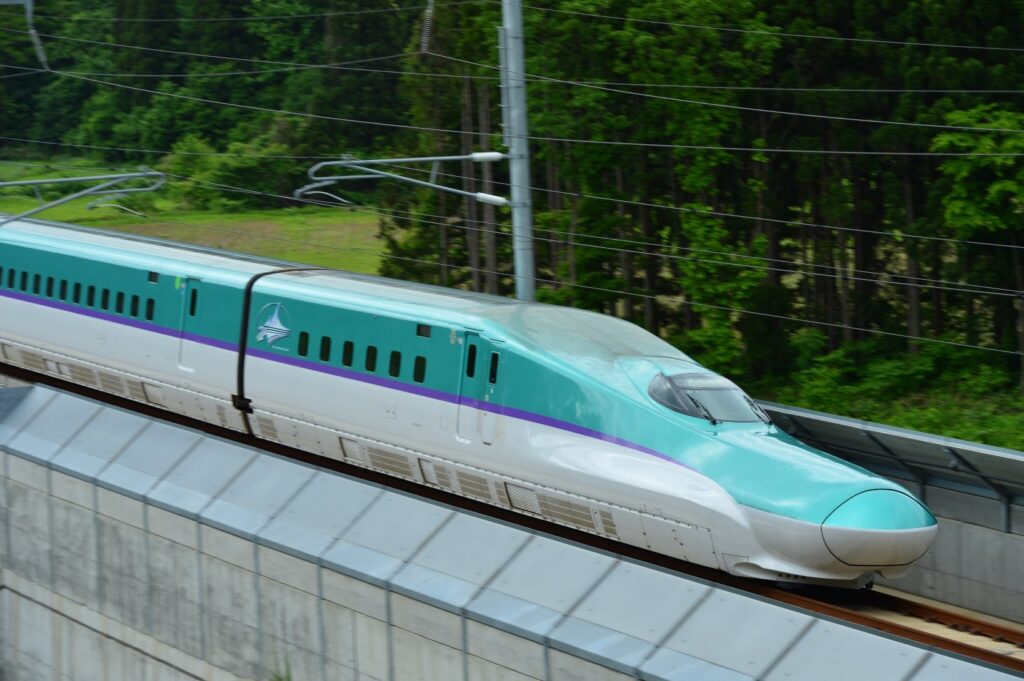
Rolling stock: Series E5, Series H5
Stops: Shin-Aomori, Oku-Tsugaru-Imabetsu (select services), Kikonai (select services), Shin-Hakodate-Hokuto
Seat types: Standard class (reserved only), Green Car (reserved only), Gran Class (reserved only)
Power outlets:
E5 series: Standard class seats A & E, front and rear rows (formations U1–U28); all seats (formations U29–U45) / All Green Car and Gran Class seats
H5 series: All seats
Onboard sales: None
Tohoku Shinkansen
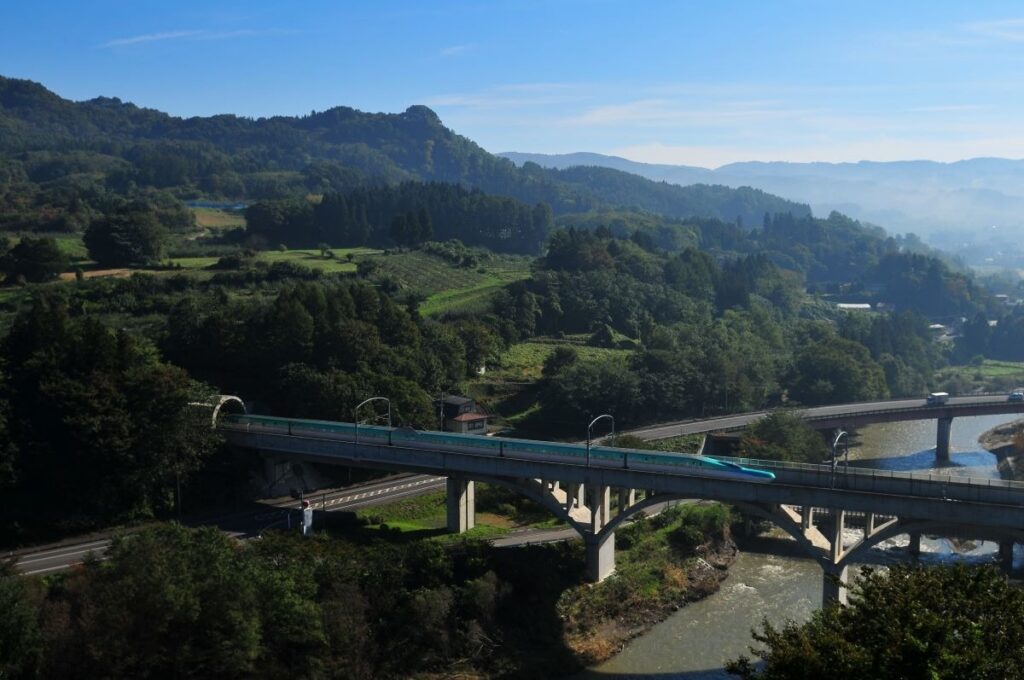
The Tohoku Shinkansen is the backbone of eastern Japan, linking the major cities of the Tohoku region.
Some services feature Gran Class, a level above even the Green Car, while others serve as a commuter lifeline for northern Kanto, giving this line a remarkably diverse character.
Train names are determined by the section operated, maximum speed, and whether unreserved seating is available.
Route: Tokyo – Shin-Aomori
Trains: Hayabusa, Yamabiko, Nasuno, Hayate
Hayabusa
All Hayabusa services run non-stop between Omiya and Sendai. There are no unreserved cars on this train.
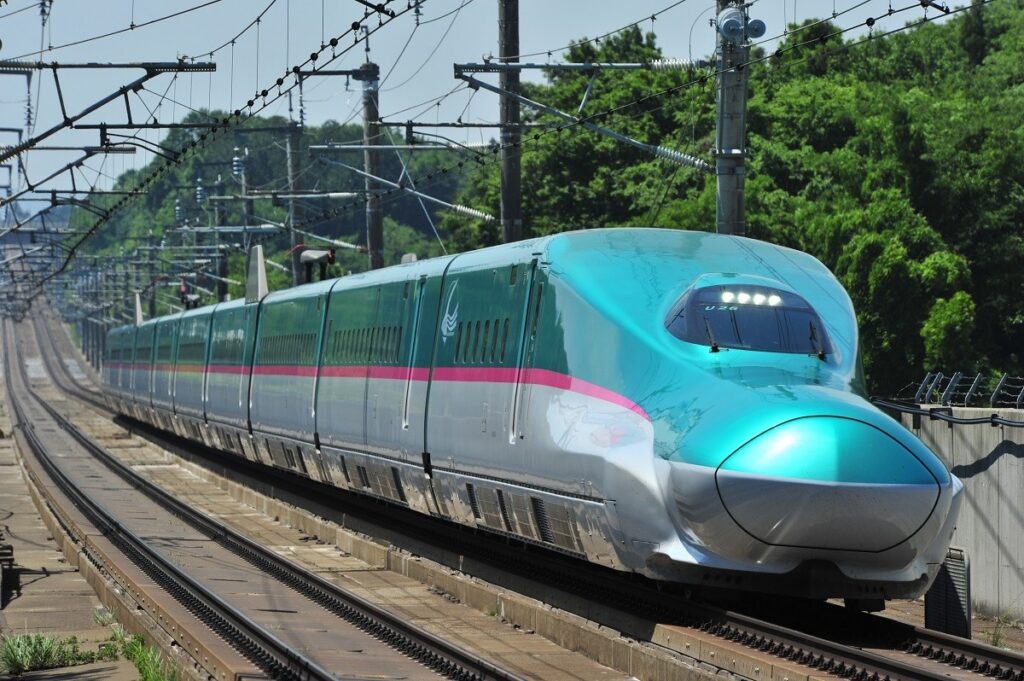
Rolling stock: Series E5, Series H5
Stops: Tokyo, Ueno (select services), Omiya, Sendai, Furukawa (select services), Kurikoma-Kogen (select services), Ichinoseki (select services), Mizusawa-Esashi (select services), Kitakami (select services), Shin-Hanamaki (select services), Morioka, Iwate-Numakunai (select services), Ninohe (select services), Hachinohe (select services), Shichinohe-Towada (select services), Shin-Aomori
Seat types: Standard class (reserved only), Green Car (reserved only), Gran Class (reserved only)
Power outlets:
E5 series: Standard class seats A & E, front and rear rows (formations U1–U28); all seats (formations U29–U51) / All Green Car and Gran Class seats
H5 series: All seats
Onboard sales: Available (for details on Gran Class service, click here)
Yamabiko
The Yamabiko operates between Tokyo and either Sendai or Morioka, and includes unreserved seating. Stopping patterns vary considerably between Tokyo and Sendai; some services call only at Omiya and Fukushima, while others stop at every station. Between Sendai and Morioka, all services generally stop at every station.
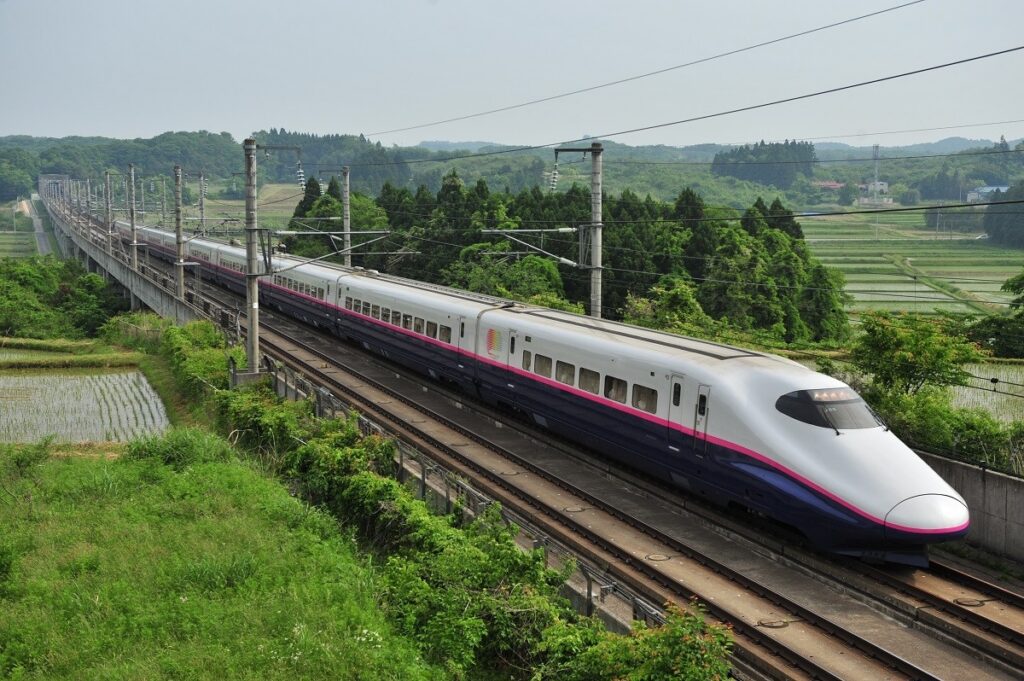
Rolling stock: Series E5, Series E6, Series E2
Stops: Tokyo, Ueno (select services), Omiya, Oyama (select services), Utsunomiya (select services), Nasushiobara (select services), Shin‑Shirakawa (select services), Koriyama (select services), Fukushima, Shiroishizao (select services), Sendai, Furukawa, Kurikomakogen, Ichinoseki, Mizusawa‑Esashi, Kitakami, Shin‑Hanamaki, Morioka
Seat types: Standard class (unreserved and reserved), Green Car (reserved only), Gran Class (reserved only)
Power outlets:
E5 series: Standard class seats A & E, front and rear rows (formations U1–U28); all seats (formations U29–U51) / All Green Car and Gran Class seats
Series E6: All Green Car seats / Standard class window seats, front and rear rows (all seats on select E5 series formations)
Series E2: (Trains J70–J75) Standard Class / Seats A and E, front and rear rows; Green Car / All seats
Onboard sales: None
Nasuno
A short-haul, local-stop service running between Tokyo and either Nasushiobara or Koriyama. Southbound services run mainly in the evenings, while northbound services are concentrated in the morning hours.
Rolling stock: Series E5, Series E6, Series E2, Series E3
Stops: Tokyo, Ueno, Omiya, Oyama, Utsunomiya, Nasushiobara, Shin‑Shirakawa, Koriyama
Seat types: Standard class (unreserved and reserved), Green Car (reserved only), Gran Class (reserved only)
Power outlets:
E5 series: Standard class seats A & E, front and rear rows (formations U1–U28); all seats (formations U29–U51) / All Green Car and Gran Class seats
Series E6: All Green Car seats / Standard class window seats, front and rear rows (all seats on select E5 series formations)
Series E2: (Trains J70–J75) Standard Class / Seats A and E, front and rear rows; Green Car / All seats
Series H8: All seats
Onboard sales: None
Hayate
Although this type of train still exists today, it is a “rare train” with few departures that operates only on limited routes.
The name lives on because Hokkaido Shinkansen services between Shin-Aomori and Shin-Hakodate-Hokuto are designated Hayate due to the 260 km/h speed limit on that section. As occasional charter or special services on the Tohoku Shinkansen remain a possibility, the name continues to appear in timetables and service guides.
Akita Shinkansen
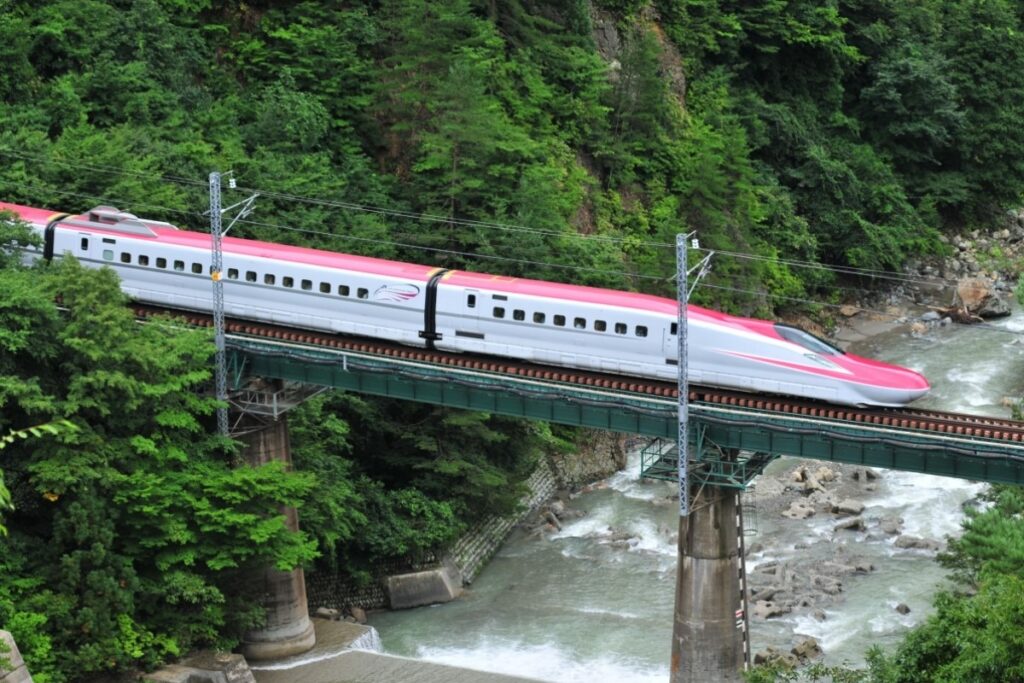
The Akita Shinkansen runs from Morioka through Tazawako, Kakunodate, and Omagari before reaching Akita, with services continuing onto the Tohoku Shinkansen between Morioka and Tokyo. Every service on this line is the Komachi, operated by Series E6 trains, with a straightforward and consistent stopping pattern.
Like the Yamagata Shinkansen, the Akita Shinkansen is a “Mini Shinkansen;” a through-service made possible by widening the gauge of existing conventional rail tracks to accommodate full shinkansen rolling stock.
Route: Morioka – Akita
Trains: Komachi
Komachi
On the Tohoku Shinkansen section, the Komachi runs coupled to the Hayabusa and generally calls only at Omiya, Sendai, and Morioka. On the Akita Shinkansen section, most services stop at Tazawako, Kakunodate, and Omagari. Four services a day also stop at Shizukuishi, while the last southbound service of the day (Komachi No. 41) and the first northbound departure (Komachi No. 6) call only at Omagari.
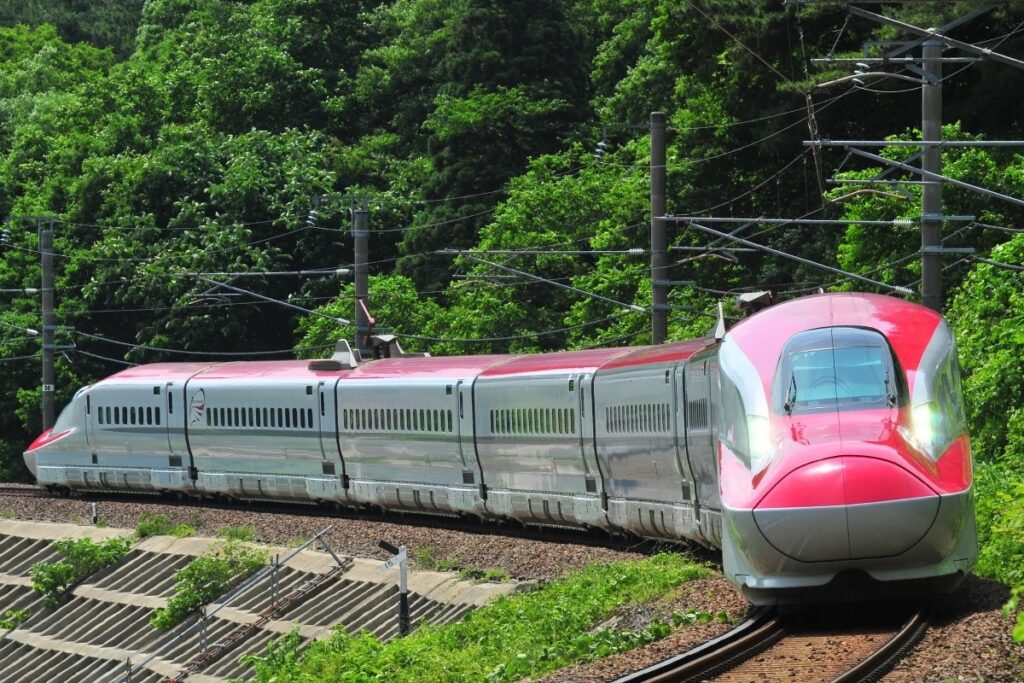
Rolling stock: Series E6
Stops: Tokyo, Ueno (select services), Omiya, Sendai, Furukawa (select services), Kurikoma-Kogen (select services), Ichinoseki (select services), Mizusawa-Esashi (select services), Kitakami (select services), Shin-Hanamaki (select services), Morioka, Shizukuishi (select services), Tazawako (select services), Kakunodate (select services), Omagari, Akita
Seat types: Standard class (reserved only), Green Car (reserved only)
Power outlets: Seats A & D, front and rear rows / all seats
Onboard sales: Available between Tokyo and Morioka (soft drinks and snacks only; onboard sales on the Akita Shinkansen operate within the Tohoku Shinkansen section only)
Yamagata Shinkansen
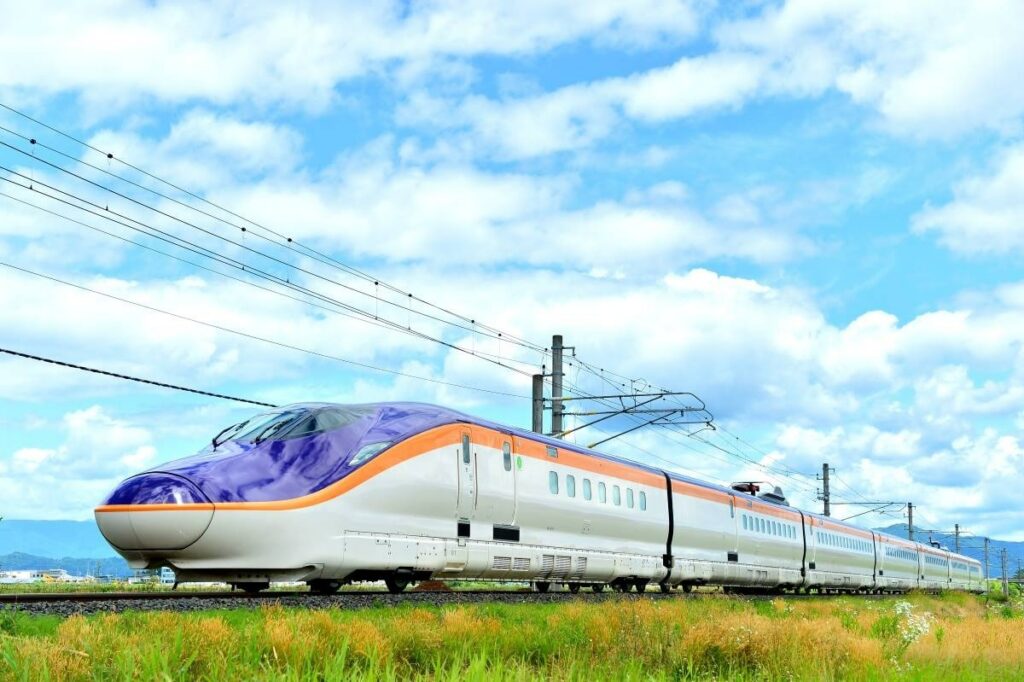
The Yamagata Shinkansen connects the inland cities of Yamagata Prefecture, including Yonezawa, Yamagata, and Shinjo, with the greater Tokyo area, running onto the Tohoku Shinkansen between Tokyo and Fukushima. Strictly speaking, however, the “Yamagata Shinkansen” is not an officially designated shinkansen line. The name refers to the through-service that operates across both the Tohoku Shinkansen and the conventional Ou Main Line.
Route: Fukushima – Shinjo
Trains: Tsubasa
Tsubasa
Services run roughly once an hour. During the daytime, trains alternate between terminating at Yamagata and continuing through to Shinjo.
The stopping pattern is straightforward; all services call at Yonezawa, and every station between Yamagata and Shinjo. During the day, most trains also stop at Akayu and Kaminoyamaonsen, while Takahata is served only once every two to three hours. Most Tsubasa services run coupled to the Series E5 Yamabiko between Tokyo and Fukushima.
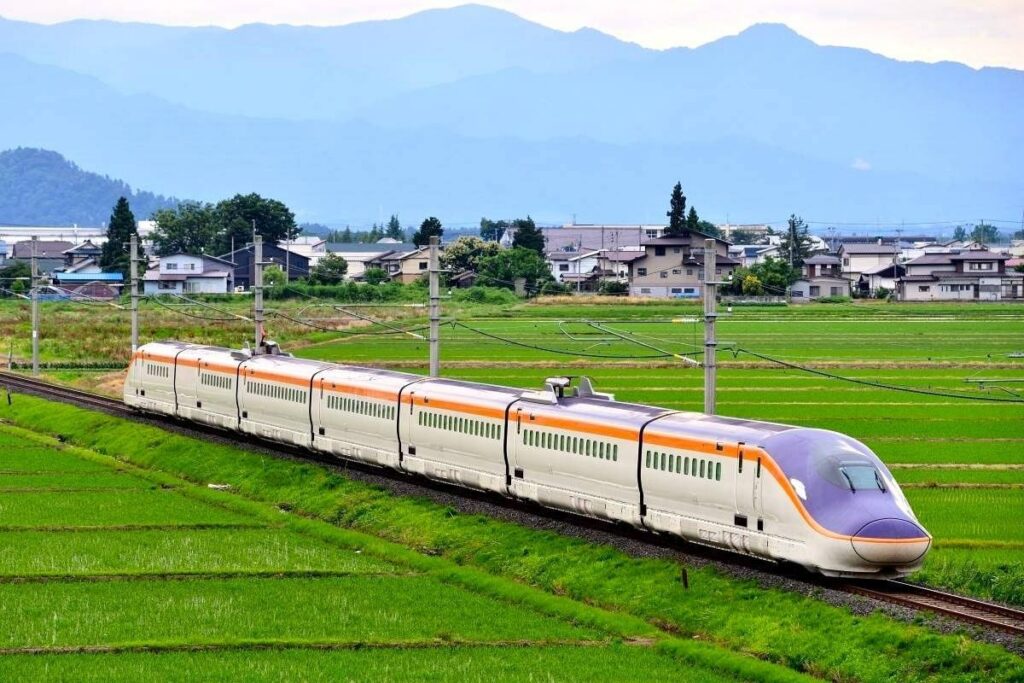
Rolling stock: Series E8
Stops: Tokyo, Ueno (select services), Omiya, Utsunomiya (select services), Koriyama (select services), Fukushima, Yonezawa, Takahata (select services), Akayu (select services), Kaminoyamaonsen (select services), Yamagata, Tendo, Sakuranbo-Higashine, Murayama, Oishida, Shinjo
Seat types: Standard class (reserved only), Green Car (reserved only)
Power outlets:
Series E8 : All seats
Onboard sales: Available (between Tokyo and Yamagata only)
Joetsu Shinkansen
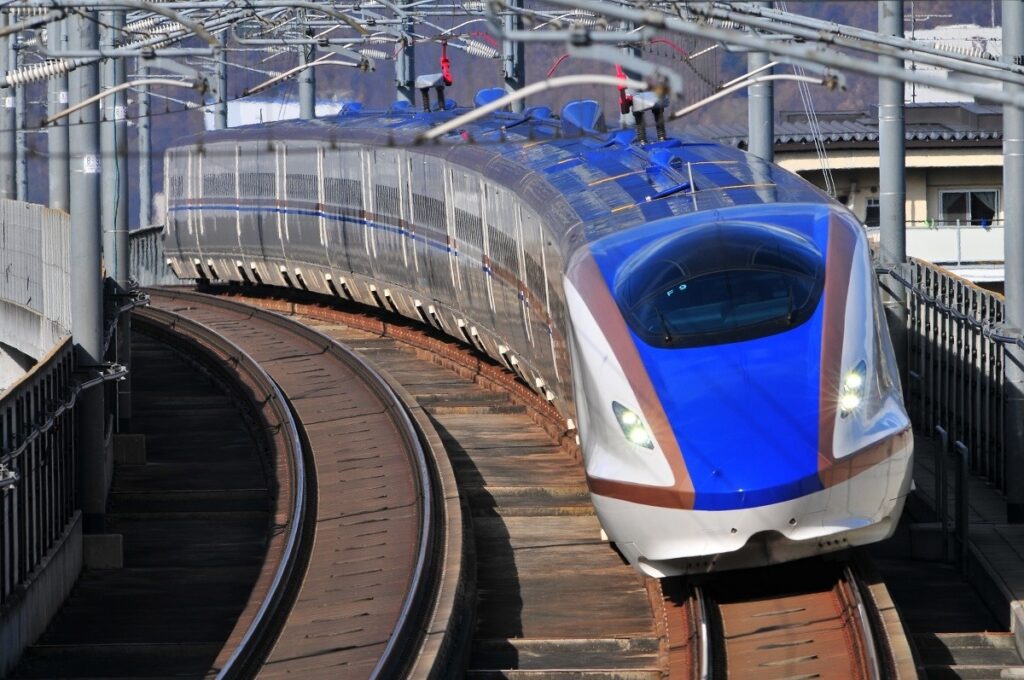
The Joetsu Shinkansen links the greater Tokyo area with Gunma and Niigata prefectures. The line officially runs between Omiya and Niigata, with services extending onto the Tohoku Shinkansen to operate through between Tokyo and Niigata.
Route: Omiya – Niigata
Trains: Toki, Tanigawa
Toki
With the exception of early morning and late-night departures, all Toki services run the full length of the line between Tokyo and Niigata, making it the medium-to-long distance workhorse of the route. Stopping patterns vary considerably from train to train; some call at every station, while others make the journey with barely any stops at all.
Rolling stock: Series E7
Stops: Tokyo, Ueno (select services), Omiya, Kumagaya (select services), Honjo-Waseda (select services), Takasaki (select services), Jomo-Kogen (select services), Echigo-Yuzawa (select services), Urasa (select services), Nagaoka (select services), Tsubamesanjo (select services), Niigata
Seat types: Standard class (unreserved and reserved), Green Car (reserved only), Gran Class (reserved only)
Power outlets:
Series E7: All seats
Onboard sales: Available
Tanigawa
A local-stop service running primarily during morning and evening hours between Tokyo and either Takasaki or Echigo-Yuzawa. In Gran Class, there is no attendant on board, so the fare is slightly lower.
Rolling stock: Series E7
Stops: Tokyo, Ueno, Omiya, Kumagaya, Honjo‑Waseda, Takasaki, Jomo‑Kogen, Echigo-Yuzawa
Seat types: Standard class (unreserved and reserved/ Non-reserved seating only on select services), Green Car (reserved only), Gran Class (reserved only)
Power outlets:
Series E7: All seats
Onboard sales: None
Tokaido Shinkansen
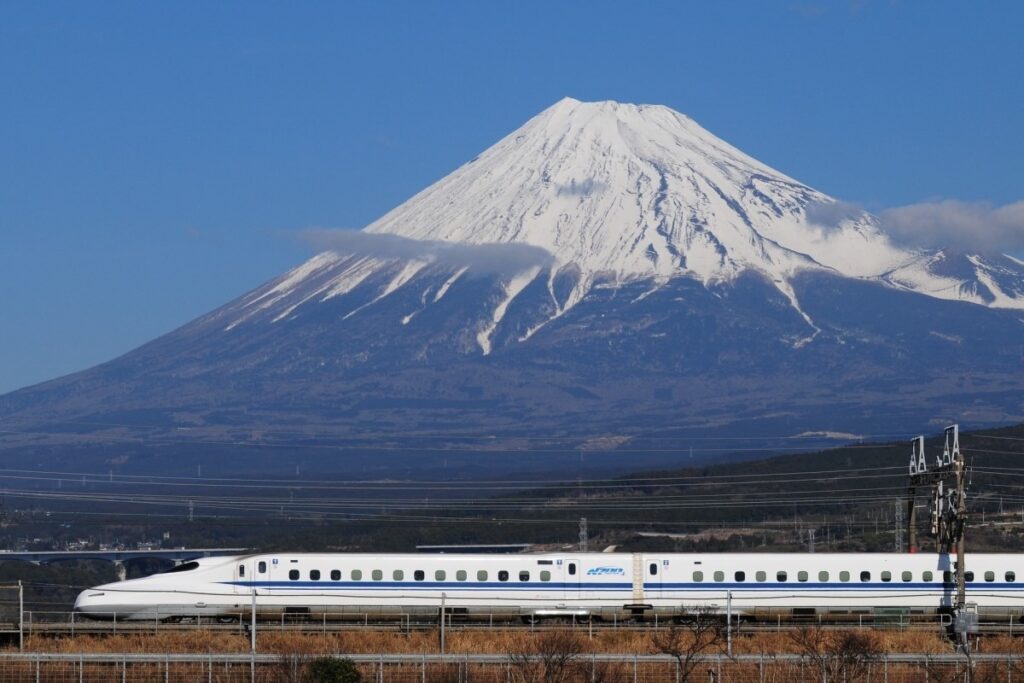
The Tokaido Shinkansen is the busiest rail line in Japan, directly linking the country’s three major cities — Tokyo, Nagoya, and Osaka — and carrying up to 458,000 passengers a day. Three trains operate on this line: the Nozomi, Hikari, and Kodama. All services use either the N700A or N700S, and seating configurations are identical across all trains, though each name carries its own role and character.
Route: Tokyo – Shin-Osaka
Trains: Nozomi, Hikari, Kodama
Nozomi
The Nozomi is the flagship express service of the Tokaido Shinkansen. Every Nozomi calls at the same four intermediate stops — Shinagawa, Shin-Yokohama, Nagoya, and Kyoto — making it easy to hop on without checking the timetable, with frequent departures throughout the day.
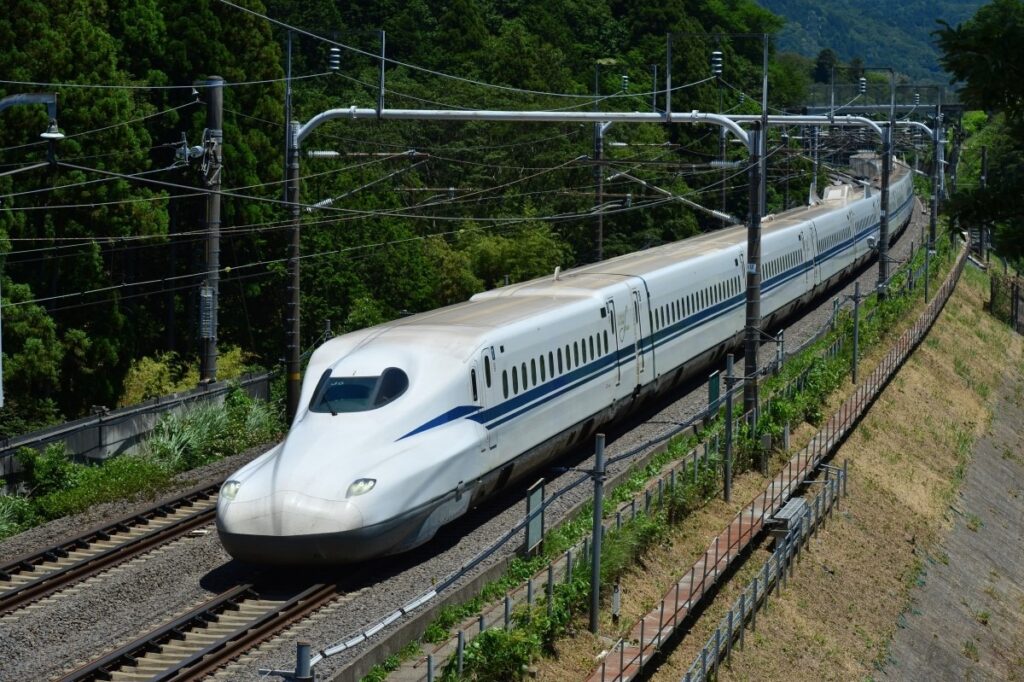
Rolling stock: Series N700A, Series N700S
Stops: Tokyo, Shinagawa, Shin‑Yokohama, Nagoya, Kyoto, Shin‑Osaka
Seat types: Standard class (unreserved and reserved), Green Car (reserved only)
Power outlets:
Series N700A: All Green Car seats / Standard class window seats
Series N700S: All seats
Onboard sales: Available
Hikari
The Hikari serves a wider range of cities, including mid-sized stations such as Shizuoka. While it connects more destinations along the route, service frequency varies by station; some stops are served once an hour, others only once every two hours, making the stopping pattern something of a puzzle.
Two Hikari services run per hour: one continues through to Okayama on the Sanyo Shinkansen, while the other terminates at Shin-Osaka.
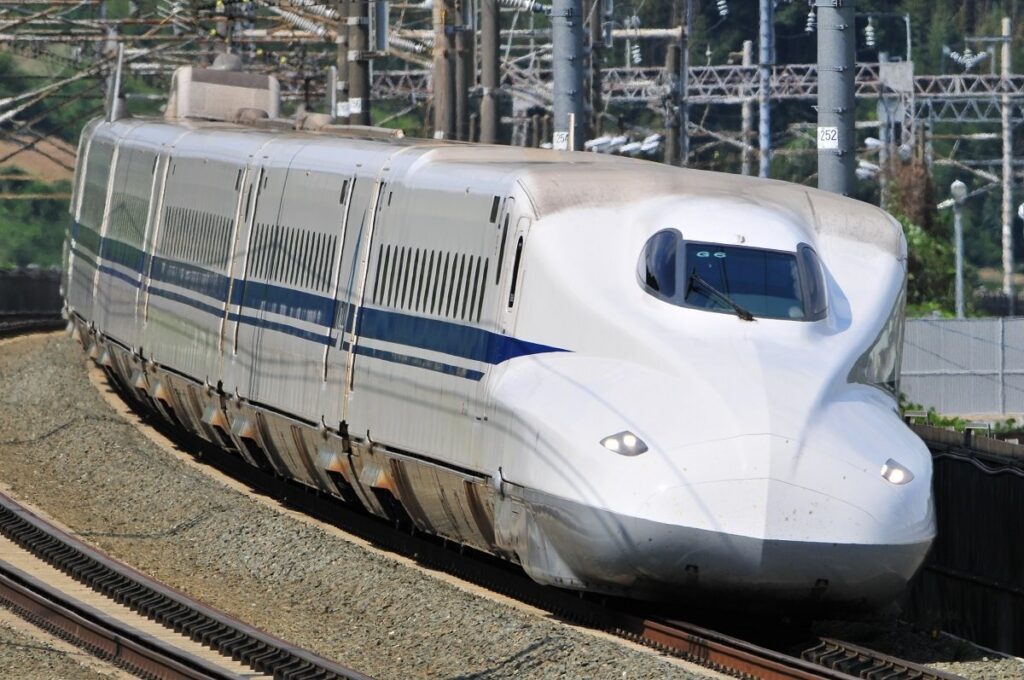
Rolling stock: Series N700A, Series N700S
Stops: Tokyo, Shinagawa, Shin‑Yokohama, Odawara (daytime services operate every 2 hours), Atami (three services per day), Mishima (daytime services operate every 2 hours), Shizuoka (daytime services operate hourly), Hamamatsu (daytime services operate hourly), Toyohashi (daytime services operate every 2 hours), Nagoya, Gifu‑Hashima (daytime services operate hourly), Maibara (daytime services operate hourly), Kyoto, Shin‑Osaka
Seat types: Standard class (unreserved and reserved), Green Car (reserved only)
Power outlets:
Series N700A: All Green Car seats / Standard class window seats
Series N700S: All seats
Onboard sales: Available
Kodama
The Kodama is the local service of the Tokaido Shinkansen, stopping at every station. Two services run per hour, alternating between trains terminating at Shin-Osaka and those turning back at Nagoya. The number of trips and destinations may vary during the early morning and late at night.
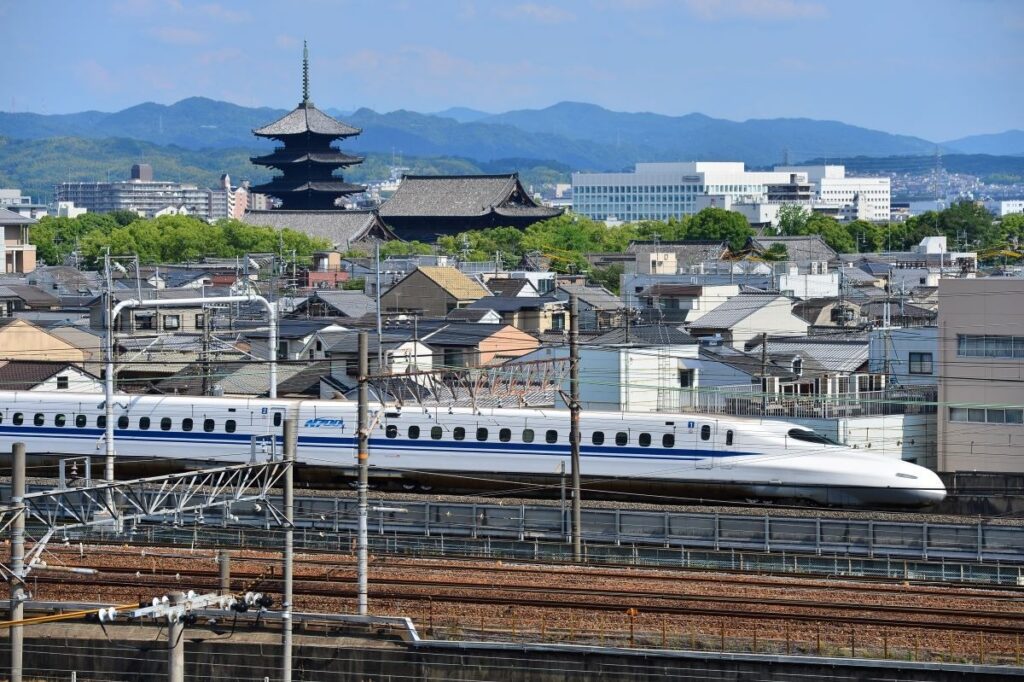
Rolling stock: Series N700A, Series N700S
Stops: Tokyo, Shinagawa, Shin‑Yokohama, Odawara, Atami, Mishima, Shin‑Fuji, Shizuoka, Kakegawa, Hamamatsu, Toyohashi, Mikawa‑Anjo, Nagoya, Gifu‑Hashima, Maibara, Kyoto, Shin‑Osaka
Seat types: Standard class (unreserved and reserved), Green Car (reserved only)
Power outlets:
Series N700A: All Green Car seats / Standard class window seats
Series N700S: All seats
Onboard sales: None
Hokuriku Shinkansen
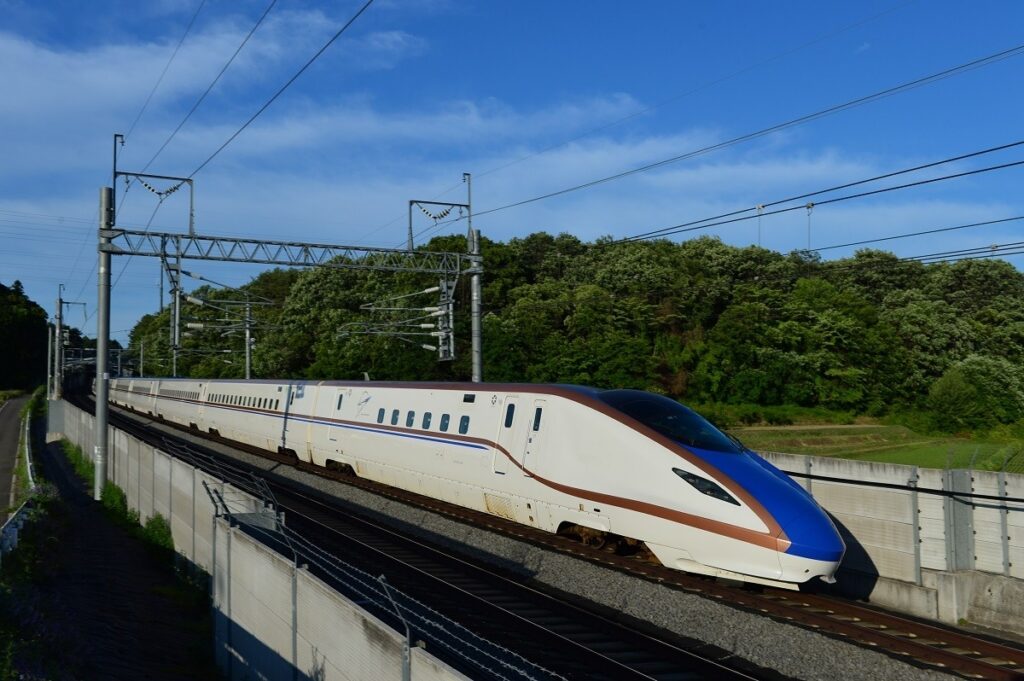
The Hokuriku Shinkansen connects the greater Tokyo area with the Hokuriku region, the home to Toyama, Ishikawa, and Fukui prefectures.
The line officially runs between Takasaki and Tsuruga, but services operate through to Tokyo via the Joetsu Shinkansen between Omiya and Takasaki, and the Tohoku Shinkansen between Tokyo and Omiya.
Route: Takasaki – Tsuruga
Trains: Kagayaki, Hakutaka, Asama, Tsurugi
Kagayaki
The fastest service on the line, the Kagayaki runs mainly in the mornings and evenings. It calls at Ueno (some services skip this stop), Omiya, Nagano, and in the Hokuriku area principally at Toyama and Kanazawa. All seats are reserved. Gran Class is available on every service, and most trains offer a light meal and drink service provided by a dedicated attendant, with the exception of certain short-distance travel.
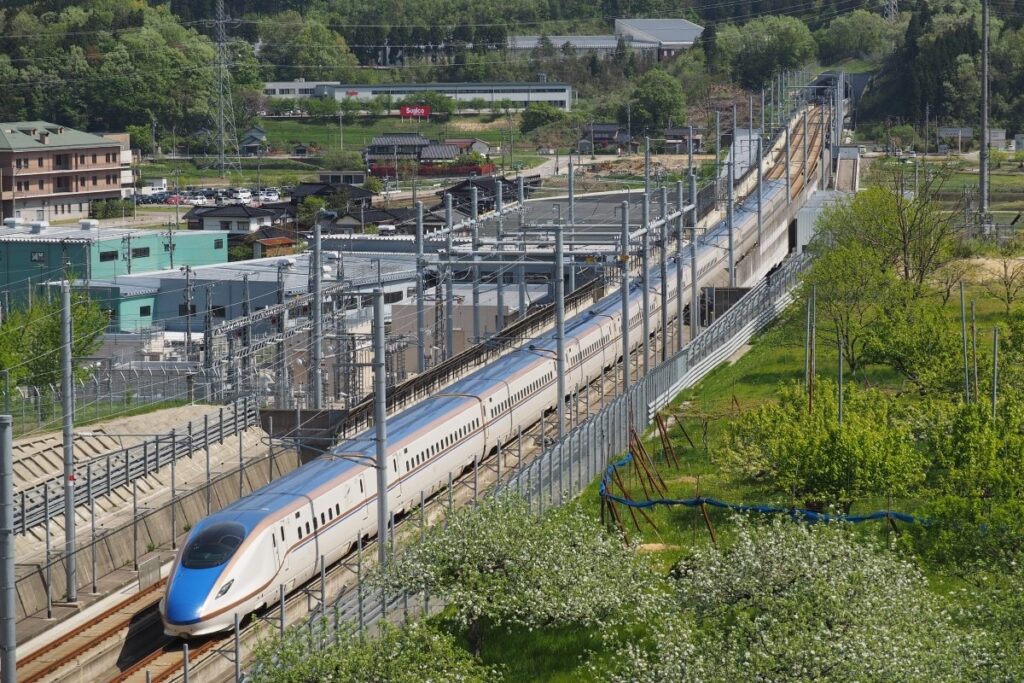
Rolling stock: Series E7, Series W7
Stops: Tokyo, Ueno (some services skip this stop), Omiya, Nagano, Toyama, Kanazawa, Tsuruga (select services also stop at Kaga‑Onsen, Tsuruga, Awara‑Onsen, Echizen-takehu and Fukui)
Seat types: Standard class (unreserved and reserved), Green Car (reserved only)
Power outlets:
Series N700A: All Green Car seats / Standard class window seats
Series N700S: All seats
Onboard sales: Available
Hakutaka
The backbone of the Hokuriku Shinkansen, with roughly one service per hour. Unreserved seating is available in cars 1 through 4 at the Tokyo end of the train (select services). Gran Class operates on all services, with light meal and drink service provided by a dedicated attendant on most trains, except certain short-distance travel.
Rolling stock: Series E7, Series W7
Stops: Tokyo, Ueno (select services), Omiya, Takasaki (select services), Karuizawa (select services), Sakudaira (select services), Ueda (select services), Nagano, Iiyama (select services), Joetsu‑Myoko, Itoigawa(select services), Kurobe‑Unazuki‑Onsen, Toyama, Shin‑Takaoka, Kanazawa, Komatsu (select services), Kaga‑Onsen (select services), Awara‑Onsen (select services), Fukui (select services), Echizen‑Takefu (select services), Tsuruga (select services)
Seat types: Standard class (unreserved and reserved), Green Car (reserved only)
Power outlets:
Series N700A: All Green Car seats / Standard class window seats
Series N700S: All seats
Onboard sales: Available
Asama
A shorter-distance service operating between Tokyo and Nagano. Gran Class is available but runs without an attendant, and fares are slightly lower accordingly.
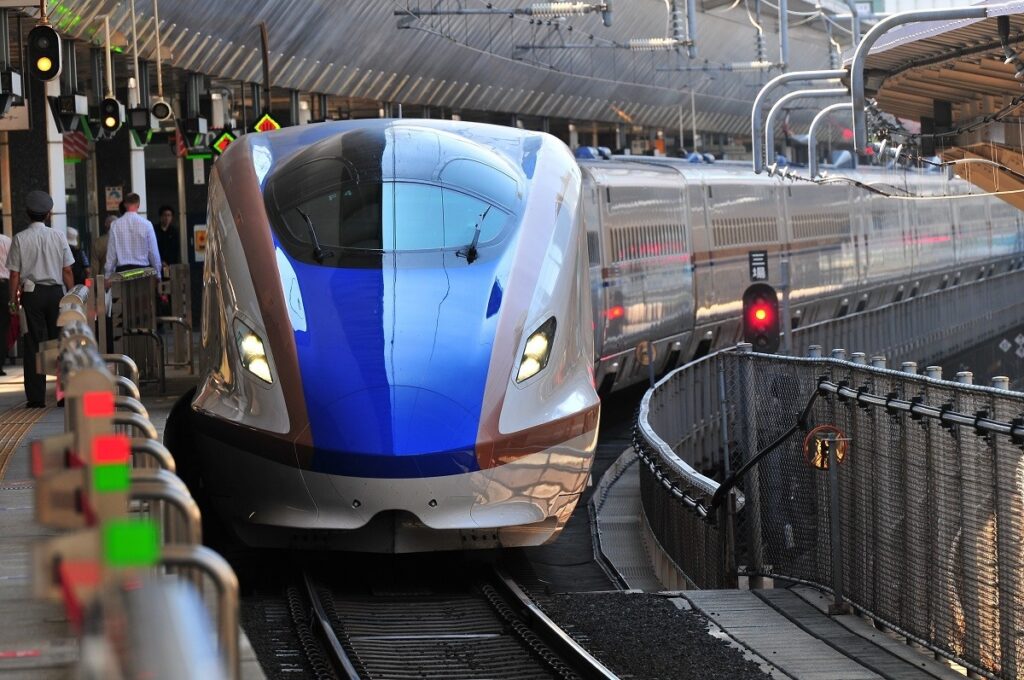
Rolling stock: Series E7, Series W7
Stops: Tokyo, Ueno, Omiya, Kumagaya (select services), Honjo‑Waseda (select services), Takasaki, Annaka‑Haruna (select services), Karuizawa, Sakudaira (select services), Ueda (select services), Nagano
Seat types: Standard class (unreserved and reserved), Green Car (reserved only)
Power outlets:
Series N700A: All Green Car seats / Standard class window seats
Series N700S: All seats
Onboard sales: Available
Tsurugi
A short-distance service linking Toyama, Kanazawa, and Tsuruga. Most Tsurugi services connect with the limited express Thunderbird from Osaka and the limited express Shirasagi from Nagoya, making it a key transfer point between the shinkansen and conventional rail networks.
Rolling stock: Series E7, Series W7
Stops: Toyama, Shin‑Takaoka, Kanazawa, Komatsu (select services), Kaga‑Onsen (select services), Awara‑Onsen (select services), Fukui, Echizen‑Takefu (select services), Tsuruga — with some services operating between Kanazawa and Tsuruga
Seat types: Standard class (unreserved and reserved), Green Car (reserved only)
Power outlets:
Series N700A: All Green Car seats / Standard class window seats
Series N700S: All seats
Onboard sales: Available
Sanyo Shinkansen
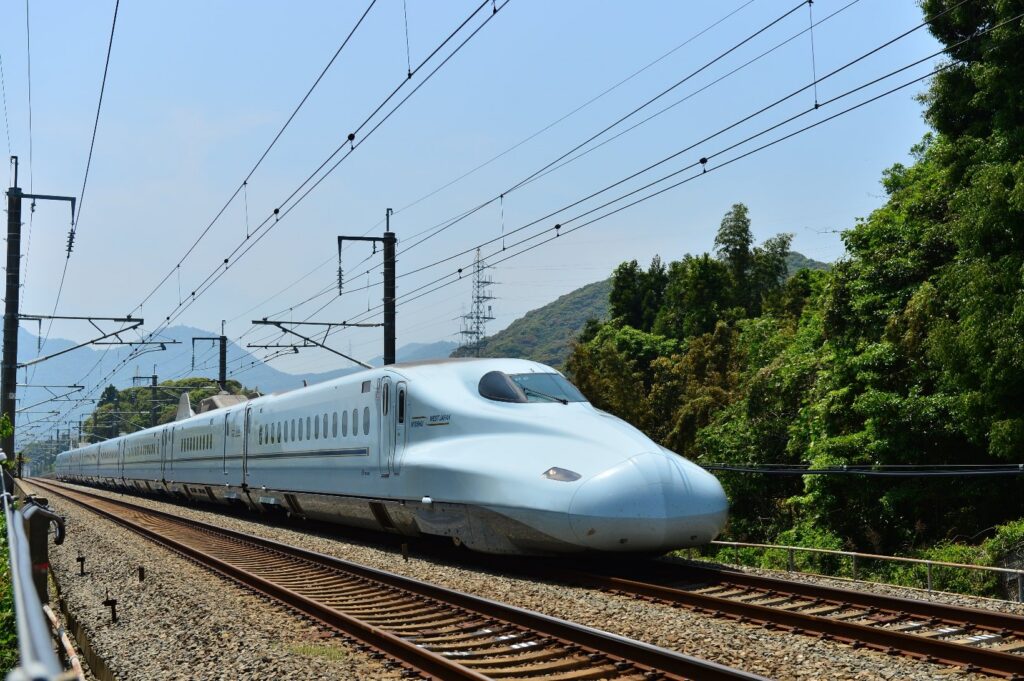
Running from Osaka through to Kobe, Okayama, Hiroshima, and the key cities of the Chugoku region before reaching Hakata, the Sanyo Shinkansen carries an average of 198,000 passengers a day.
Through services with both the Tokaido and Kyushu Shinkansen bring a rich variety of trains to the line.
Route: Shin-Osaka – Hakata
Trains: Nozomi, Mizuho, Hikari, Sakura, Kodama, Tsubame
Nozomi
The fastest service on the line, running through directly from the Tokaido Shinkansen. Most services originate or terminate at either Hiroshima or Hakata. Typically three to four services run per hour, rising to a maximum of six during peak holiday periods.
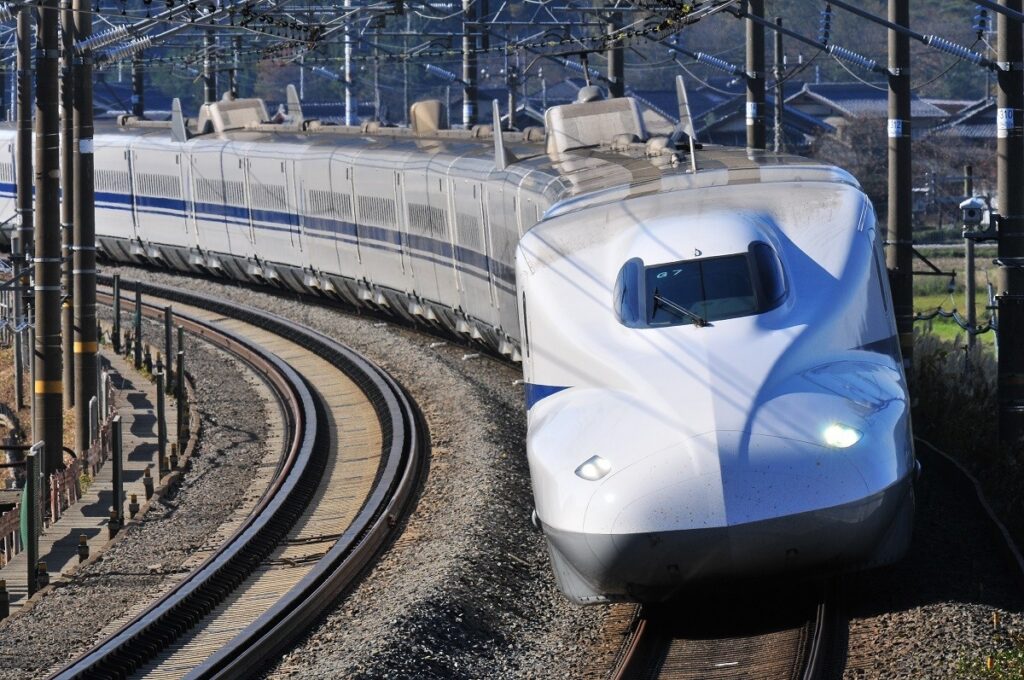
Rolling stock: Series N700A, Series N700S
Stops: Shin‑Osaka, Shin‑Kobe, Nishi‑Akashi (select services), Himeji (select services), Okayama, Fukuyama (select services), Hiroshima, Tokuyama (select services), Shin‑Yamaguchi (select services), Kokura, Hakata
Seat types: Standard class (unreserved and reserved), Green Car (reserved only)
Power outlets:
Series N700A: All Green Car seats / Standard class window seats, front and rear rows
Series N700S: All seats
Onboard sales: Available
Mizuho
A Nozomi-class express operating between Shin-Osaka and Kagoshima-Chuo. Services are limited with just eight departures a day from the origin station, concentrated in the morning and evening hours.
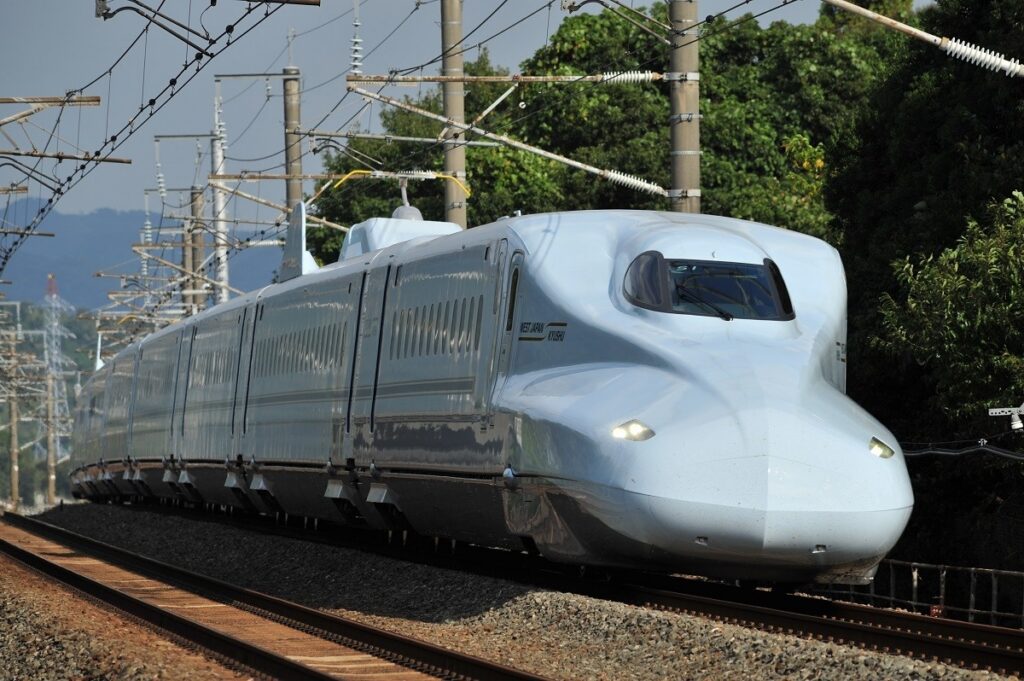
Rolling stock: Series 700 7000 subseries (S formation), Series 700 8000 subseries (R formation)
Stops: Shin‑Osaka, Shin‑Kobe, Himeji (select services), Okayama, Fukuyama (select services), Hiroshima, Shin‑Yamaguchi (select services), Kokura, Hakata
Seat types: Standard class (unreserved and reserved), Green Car (reserved only)
Power outlets: All Green Car seats / Standard class window seats, front and rear rows
Onboard sales: Available
Hikari
The Hikari on the Sanyo Shinkansen comes in two wide-ranging varieties.
The first runs through directly from Tokyo, serving destinations as far as Okayama or Hiroshima (with some services operating between Nagoya and Hakata, or between Shin-Yokohama or Nagoya and Hiroshima).
The second operates entirely within the Sanyo Shinkansen and skips certain stations.
Since the full opening of the Kyushu Shinkansen, however, most of this second type has been replaced by the Sakura, leaving only two southbound and three northbound services running in the early morning and late evening.
Rolling stock: Series N700A, Series N700S,Series 700 7000 subseries (E formation)
Stops: Shin‑Osaka, Shin‑Kobe, Nishi‑Akashi (select services), Himeji, Aioi (select services), Okayama, Shin‑Kurashiki (select services), Fukuyama, Shin‑Onomichi (select services), Mihara (select services), Higashi‑Hiroshima (select services), Hiroshima, Shin‑Iwakuni (select services), Tokuyama (select services), Shin‑Yamaguchi (select services), Shin‑Shimonoseki, Kokura, Hakata
Seat types: Standard class (unreserved and reserved), Green Car (reserved only)
Power outlets: All Green Car seats / Standard class window seats, front and rear rows
Onboard sales: Available
Sakura
A through-service to the Kyushu Shinkansen calling at the major cities along the Sanyo Shinkansen, with one to two services per hour.
Rolling stock: Series 700 7000 subseries (S formation), Series 700 8000 subseries (R formation)
Stops: Shin‑Osaka, Shin‑Kobe, Shin-akashi (select services), Himeji (select services), Okayama, Fukuyama, Hiroshima, Tokuyama (select services), Shin‑Yamaguchi (select services), Shin‑Shimonoseki (select services), Kokura, Hakata
Seat types: Standard class (unreserved and reserved), Green Car (reserved only)
Power outlets: All Green Car seats / Standard class window seats, front and rear rows
Onboard sales: Available
Kodama
The local all-stations service of the Sanyo Shinkansen, operating across various sections including Shin-Osaka to Hakata, Okayama to Hiroshima, and Kokura to Hakata.
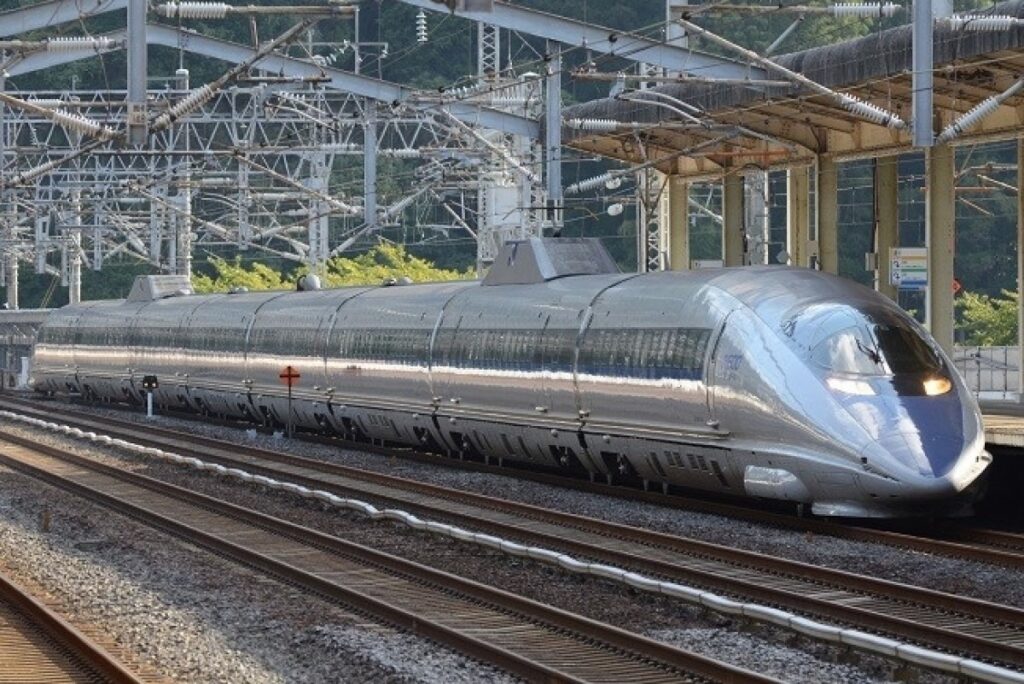
Rolling stock: Series 700 7000 subseries (E formation), Series 500/early‑morning and late‑evening services only: Series N700A,Series N700 7000 subseries (S formation), 8000 subseries (R formation)
Stops: Shin‑Osaka, Shin‑Kobe, Himeji (select services), Okayama, Fukuyama, Hiroshima, Tokuyama (select services), Shin‑Yamaguchi (select services), Shin‑Shimonoseki (select services), Kokura, Hakata
Seat types:
Series 700: Standard class (unreserved and reserved), Green Car (reserved only)
Series 500: Standard class (unreserved and reserved)
Series N700A,Series N700 7000 subseries (S formation), 8000 subseries (R formation) : Standard class (unreserved and reserved)all‑non‑reserved services available,Green Car (reserved only)
Power outlets:
Series 700: Standard class front and rear rows
Series 500: None
Series N700A,Series N700 7000 subseries (S formation), 8000 subseries (R formation) : All Green Car seats / Standard class window seats, front and rear rows
Onboard sales: None
Tsubame
The “Tsubame” trains primarily operate on the Kyushu Shinkansen line and generally remain within Kyushu, though some run between Hakata Station and Kokura Station, and between Shin-Shimonoseki Station and Hakata Station.
Rolling stock: Series N700 7000 subseries (S formation), 8000 subseries (R formation)
Stops: Hakata, Shin-Tosu, Kurume, Chikugo-Funagoya, Shin-Omuta, Shin-Tamana, Kumamoto, Shin-Yatsushiro, Shin-Minamata, Izumi, Sendai, Kagoshima-Chuo
Seat types:N700 7000/8000 subseries; Standard class (unreserved and reserved), Green Car (reserved only)
Power outlets:N700 7000/8000 subseries; all Green Car seats / Standard class window seats, front and rear rows
Onboard sales:N700 7000/8000 subseries; none (vending machines in cars 3 and 7)
Kyushu Shinkansen
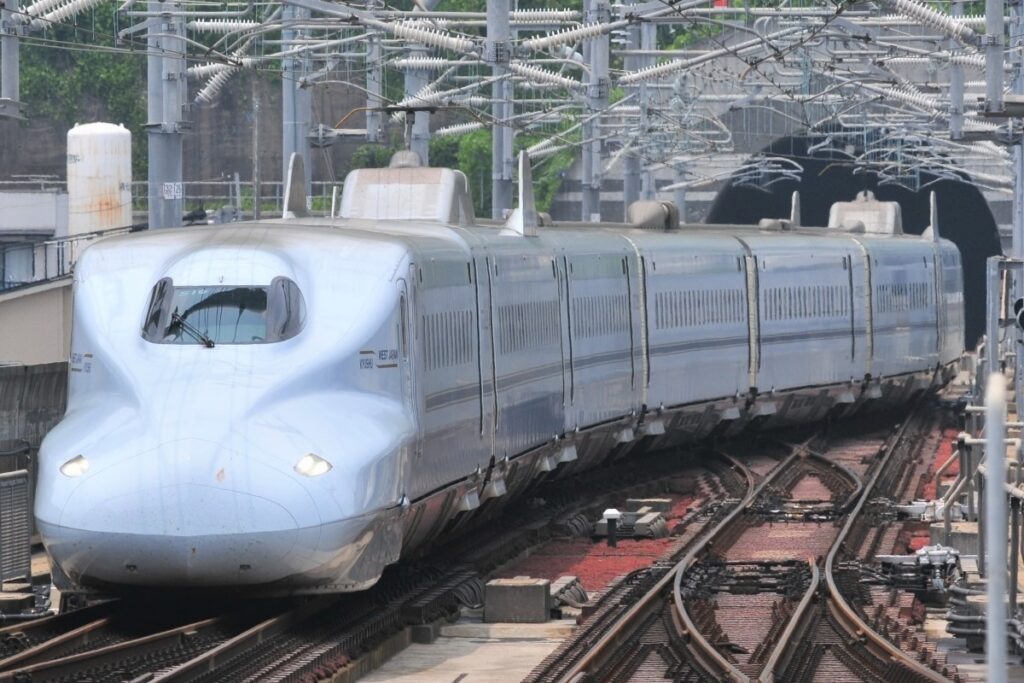
The Kyushu Shinkansen links the major cities of Kyushu; Fukuoka (Hakata), Kumamoto, and Kagoshima. The line has developed a character all its own, with closely spaced stations for added convenience and station designs that draw inspiration from Japan’s traditional culture.
Route: Hakata – kagoshima-chuo
Trains: Mizuho, Sakura, Tsubame
Mizuho
The fastest service on the Kyushu Shinkansen, running through directly onto the Sanyo Shinkansen. Eight services operate daily, concentrated in the morning and evening hours.
Rolling stock: Series N700 7000 subseries (S formation), 8000 subseries (R formation)
Stops: Hakata, Kurume (select services), Kumamoto, Sendai (select services), Kagoshima-Chu
Seat types: Standard class (unreserved and reserved), Green Car (reserved only)
Power outlets: All Green Car seats / Standard class window seats, front and rear rows
Onboard sales: None (vending machines available in cars 3 and 7)
Sakura
The workhorse of the Kyushu Shinkansen, running at intervals of roughly 10 to 30 minutes. Some services continue onto the Sanyo Shinkansen, while others operate solely within Kyushu. All services skip at least a few stations, but every station on the line is served by at least two Sakura departures per day.
Rolling stock: Series N700 7000 subseries (S formation), 8000 subseries (R formation) / Series 800
Stops: Hakata, Shin-Tosu, Kurume, Chikugo-Funagoya (select services), Shin-Omuta (select services), Shin-Tamana (select services), Kumamoto, Shin-Yatsushiro (select services), Shin-Minamata (select services), Izumi (select services), Sendai (select services), Kagoshima-Chuo
Seat types:
N700 7000/8000 subseries; Standard class (unreserved and reserved), Green Car (reserved only)
Series 800; Standard class only (unreserved and reserved)
Power outlets:
N700 7000/8000 subseries; all Green Car seats / Standard class window seats, front and rear rows
Series 800; front and rear rows only
Onboard sales: N700 7000/8000 subseries; none (vending machines in cars 3 and 7) / Series 800; none (vending machine in car 4)
Tsubame
The Kyushu Shinkansen’s equivalent of the Kodama on the Tokaido and Sanyo Shinkansen. The “Tsubame” trains primarily operate on the Kyushu Shinkansen line and generally remain within Kyushu.
Most services run between Hakata and Kumamoto, with only a handful of through-trains to Kagoshima-Chuo, mainly in the morning and evening.
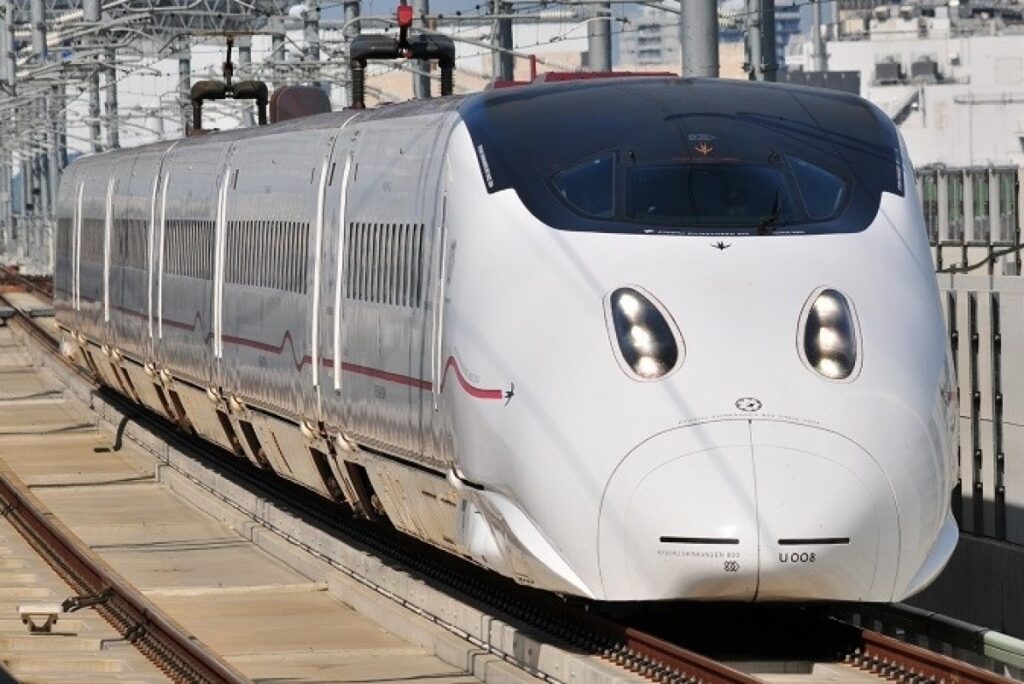
Rolling stock: Series N700 7000 subseries (S formation), 8000 subseries (R formation) / Series 800
Stops: Hakata, Shin-Tosu, Kurume, Chikugo-Funagoya, Shin-Omuta, Shin-Tamana, Kumamoto, Shin-Yatsushiro, Shin-Minamata, Izumi, Sendai, Kagoshima-Chuo
Seat types:
N700 7000/8000 subseries; Standard class (unreserved and reserved), Green Car (reserved only)
Series 800; Standard class only (unreserved and reserved)
Power outlets:
N700 7000/8000 subseries; all Green Car seats / Standard class window seats, front and rear rows
Series 800; front and rear rows only
Onboard sales:
N700 7000/8000 subseries; none (vending machines in cars 3 and 7)
Series 800; none (vending machine in car 4)
Nishi-Kyushu Shinkansen
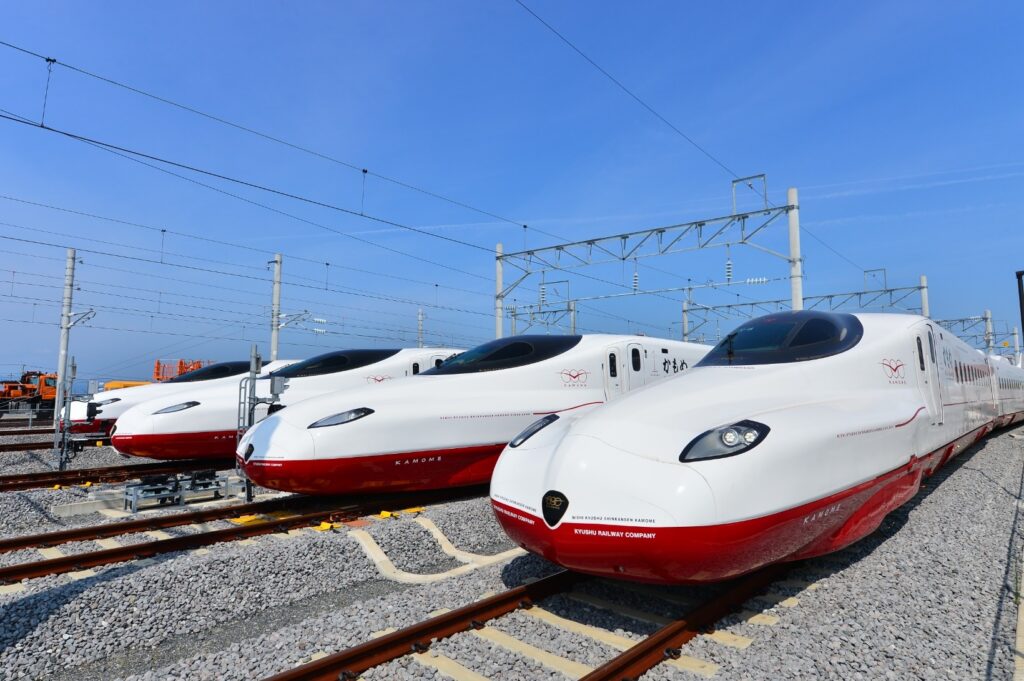
The Nishi-Kyushu Shinkansen is the completed portion of the planned Kyushu Shinkansen Nishi-Kyushu route between Fukuoka and Nagasaki, having opened on September 23, 2022. The line covers the section between Takeo-Onsen and Nagasaki, connecting the two stations in as little as 23 minutes.
Route: Takeo-Onsen – Nagasaki
Trains: Kamome
Kamome
The Kamome runs a 6-car formation based on the N700S, the same series that operates on the Tokaido and Sanyo Shinkansen in 16-car configurations. The exterior features a white body accented with the JR Kyushu corporate red, while the interior blends Japanese and Western design elements, creating what the operator calls a truly one-of-a-kind train that captures the spirit of Kyushu.
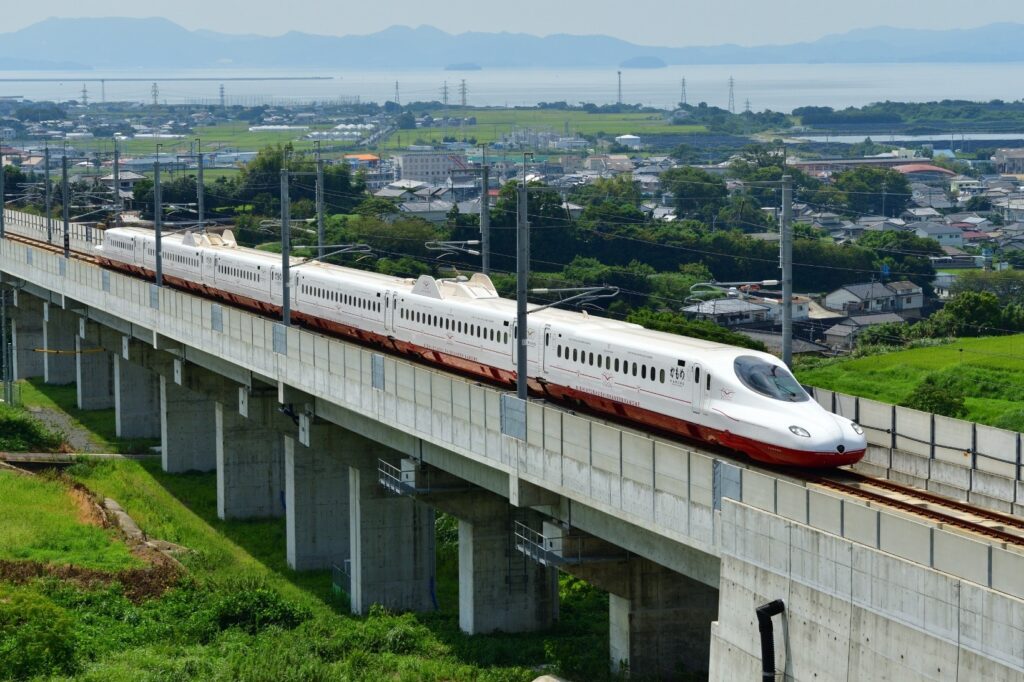
Rolling stock: Series N700S
Stops: Takeo‑Onsen, Ureshino‑Onsen (select services), Shin‑Omura (select services), Isahaya, Nagasaki
Seat types: Standard class (unreserved and reserved)
Power outlets: All seats
Onboard sales: None
© Toretabi Editorial Office Photos: Kotsu Shimbun Create
This article was originally published in March 2022 and updated by the Toretabi Editorial Team on June 28, 2026. Please note that information is subject to change; be sure to check for the latest details before traveling.