
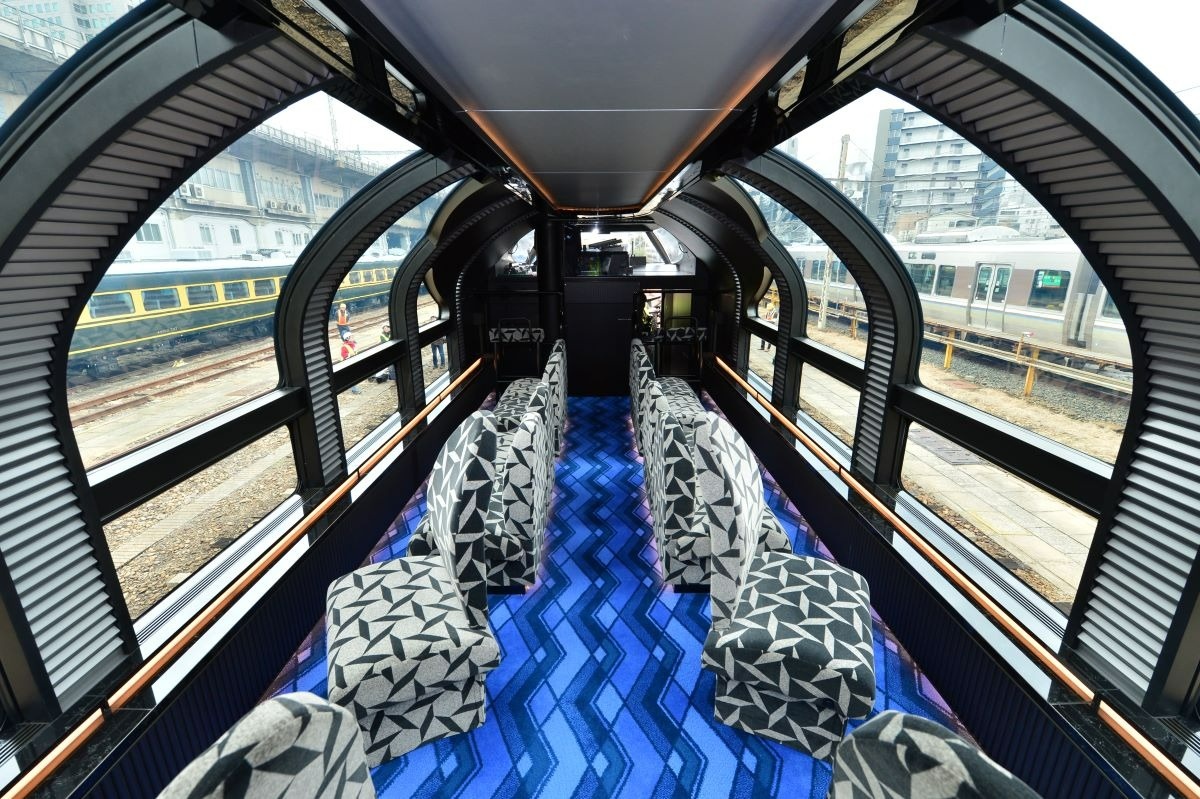
“I’ve heard of sleeper trains, but I don’t really know much about them.” “I’d love to ride one, but are there even any still running today?” “Come to think of it, what exactly is a sleeper train?”… and so on. The questions about sleeper trains never seem to end.
In this article, we’ll introduce:
・What a sleeper train is
・A list of the sleeper trains running today
・Sleeper trains of the past
The sleeper trains currently running in various parts of Japan each have their own distinctive features, and there are a few points worth knowing before you go.
Read this article, and whether the subject is new to you or already familiar, you’re sure to want to hop aboard one of the sleeper trains crisscrossing Japan!
A Quick Overview: About Sleeper Trains
Travel long distances while you sleep, and arrive at your destination by morning!
On April 8, 1900 (Meiji 33), Japan’s first sleeper train began running between Kobe Station and Mitajiri Station (now Hofu Station).
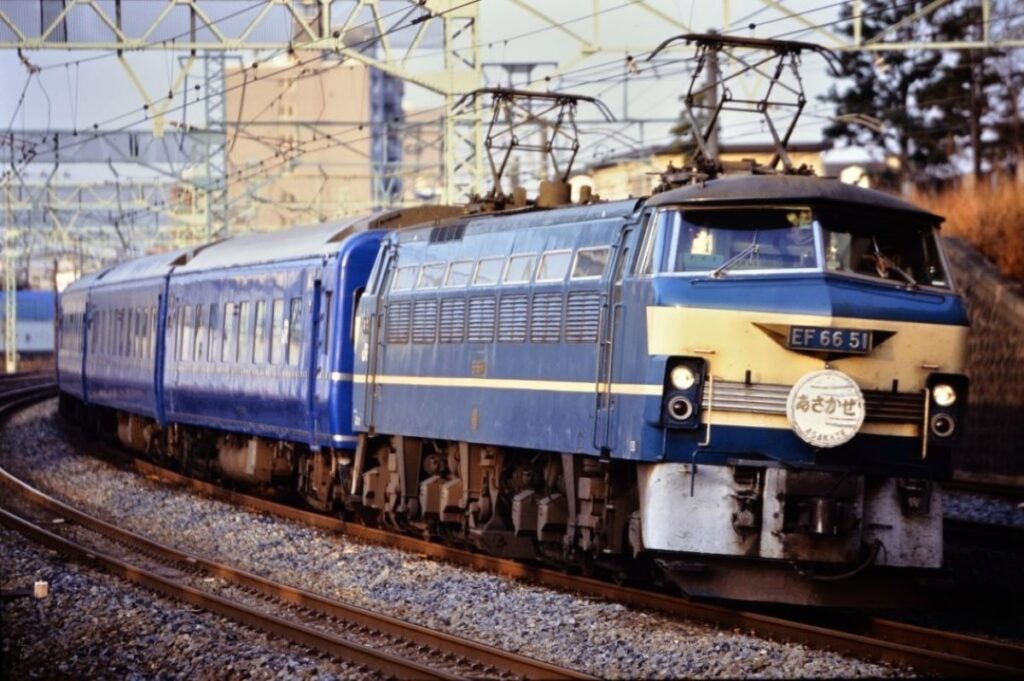
Later came the blue-bodied sleeper trains popularly known as “Blue Trains.” With comfort on par with a hotel, they won great acclaim, and sleeper trains went on to define an era of long-distance travel.
Today the Sunrise Express runs on a regular schedule, while ultra-luxurious sleeper trains known as “cruise trains” operate on a special, non-regular basis in various parts of the country.
Get the basics down
Sleeper trains generally depart at night and arrive in the morning.
To ride one, you need the following three types of tickets:
A basic fare ticket (jōshaken)
A limited express ticket (tokkyūken)
A berth ticket (shindaiken)
So what exactly is that intriguing third one—the berth ticket?
A berth ticket is essentially a ticket for reserving a sleeping berth, much like booking a type of hotel room. As such, the price of the berth ticket varies depending on the type of berth.
For example, to take the Sunrise Izumo from Tokyo Station to Izumoshi Station in a Single Deluxe (a Class A sleeper), you’ll need a basic fare ticket from Tokyo Station to Izumoshi Station, plus a Sunrise Izumo limited express ticket, plus a Single Deluxe berth ticket.
Now that you’ve got the basics of sleeper trains down, let’s take a look at the ones running today!
Still Going Strong! Sleeper Trains in Regular Operation
Sunrise Izumo & Sunrise Seto
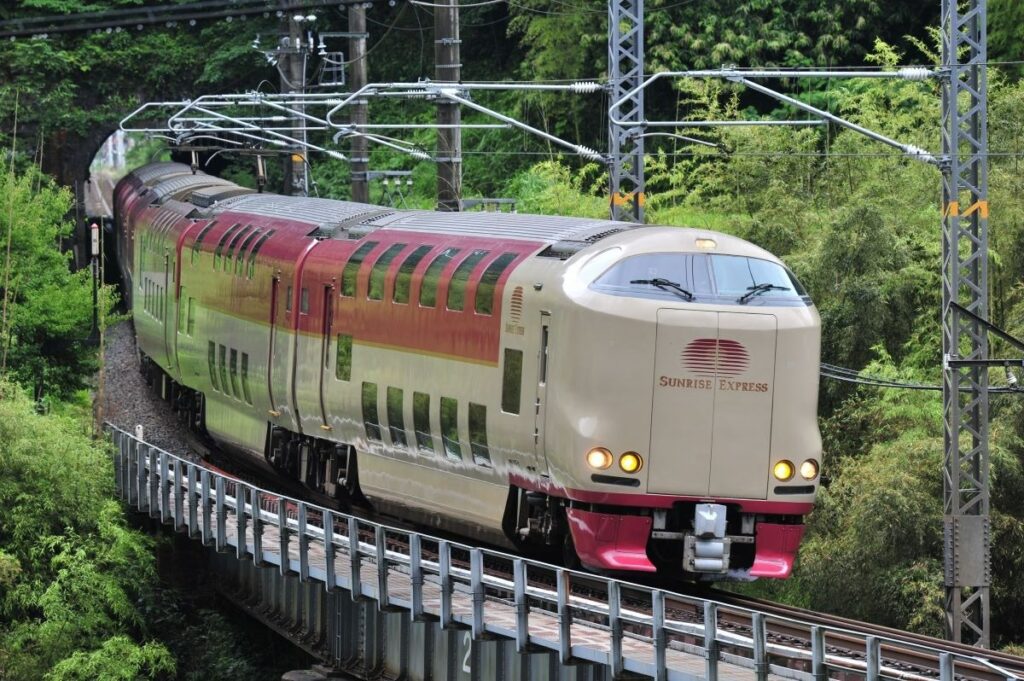
The Sunrise Izumo and Sunrise Seto are the only limited express sleeper services still running on a regular schedule.
Their interiors were designed by a major homebuilder, whose warm atmosphere and hotel-grade amenities set the stage for a sleeper-train journey.
Through the windows you can enjoy ever-changing scenery, from cityscapes to all kinds of natural beauty!
Sunrise Izumo
A journey to the land of myth, where you can savor the history and food of the San’in region.
Basic Information
Operating days:
One round trip daily
(Outbound) Tokyo Station 21:50 – Izumoshi Station 10:00
(Inbound) Izumoshi Station 18:57 – Tokyo Station 7:08
Intermediate stops:
(Outbound) Yokohama, Atami, Numazu, Fuji, Shizuoka, Hamamatsu, Himeji, Okayama, Kurashiki, Bitchu-Takahashi, Niimi, Yonago, Yasugi, Matsue, and Shinji Stations
(Inbound) Shinji, Matsue, Yasugi, Yonago, Niimi, Bitchu-Takahashi, Kurashiki, Okayama, Himeji, Sannomiya, Osaka, Shizuoka, Fuji, Numazu, Atami, and Yokohama Stations
Fares:
Tokyo Station – Izumoshi Station, from ¥16,040
How to book:
・Midori-no-Madoguchi (JR ticket offices)
・Reserved-seat ticket machines at stations
・Eki-net (Nobinobi Seats only)
・e5489
・Booking a tour through a travel agency
*Reservations open one month before the travel date (via e5489, Nobinobi Seat reservations can be made an additional week earlier)
Accommodations:
Single Deluxe / Single Twin / Single / Solo / Nobinobi Seat (single) / Sunrise Twin / Single Twin (for two)
The Sunrise Izumo is a sleeper train linking Tokyo with the city of Izumo in Shimane Prefecture.
At stations along the way, you can take in historic structures such as Bitchu Matsuyama Castle, Matsue Castle, and Izumo Taisha, and feast on dishes like Izumo soba and Tottori crab!
Sunrise Seto
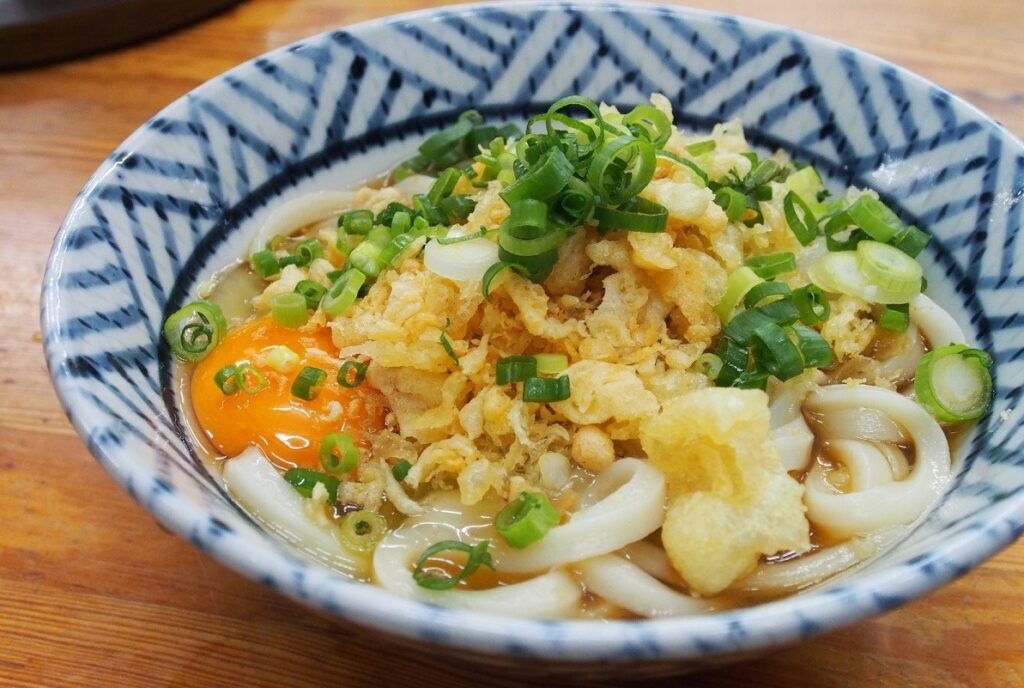
A journey across the sea to the “udon prefecture,” Kagawa.
Basic Information
Operating days & timetable:
One round trip daily
(Outbound) Tokyo Station 21:50 – Takamatsu Station 7:27
(Inbound) Takamatsu Station 21:26 – Tokyo Station 7:08
Intermediate stops:
(Outbound) Yokohama, Atami, Numazu, Fuji, Shizuoka, Hamamatsu, Himeji, Okayama, Kojima, and Sakaide Stations
(Inbound) Sakaide, Kojima, Okayama, Himeji, Sannomiya, Osaka, Shizuoka, Fuji, Numazu, Atami, and Yokohama Stations
Fares:
Tokyo Station – Takamatsu Station, from ¥15,480
How to book:
・Midori-no-Madoguchi (JR ticket offices)
・Reserved-seat ticket machines at stations
・Eki-net (Nobinobi Seats only)
・e5489
・Booking a tour through a travel agency
*Reservations open one month before the travel date (via e5489, Nobinobi Seat reservations can be made an additional week earlier)
Accommodations:
Single Deluxe / Single Twin / Single / Solo / Nobinobi Seat (single) / Sunrise Twin / Single Twin (for two)
The Sunrise Seto is a sleeper train linking Tokyo with the city of Takamatsu in Kagawa Prefecture.
After splitting from the Sunrise Izumo at Okayama Station, it crosses the Seto Ohashi Bridge toward Shikoku, where you can enjoy the views from the bridge and, if your timing is right, the sunrise.
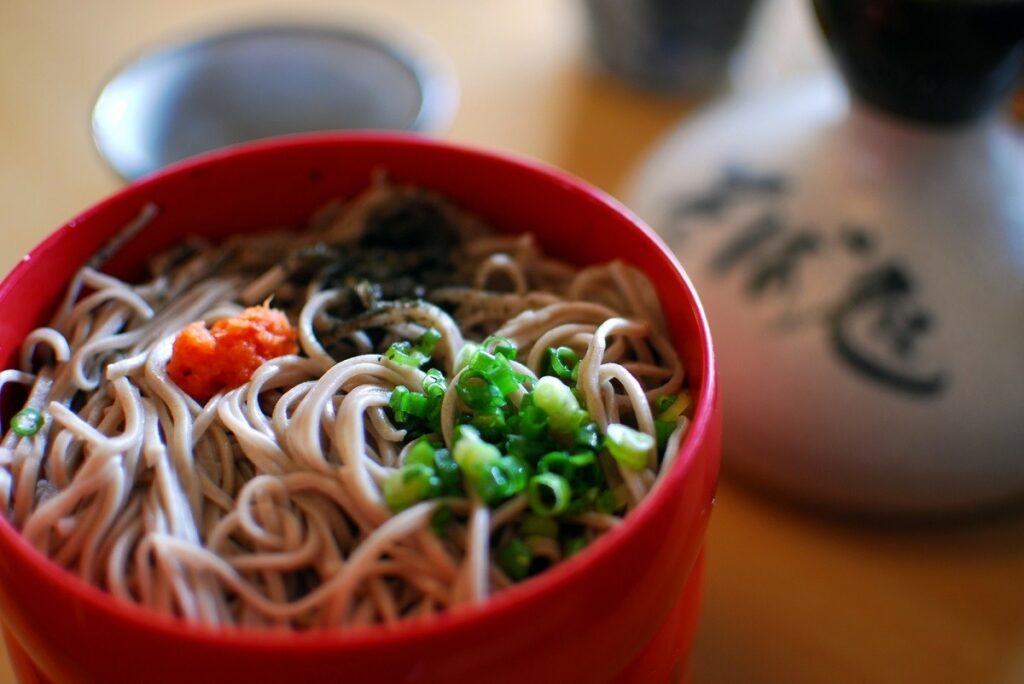
And once you arrive at Takamatsu Station, you can savor Sanuki udon first thing in the morning before setting off to enjoy your travels in Shikoku!
From Beloved Classics to the Newest Cruise Trains: A List of Special Sleeper Trains Running Nationwide
Four types of special sleeper trains are currently in operation across Japan. None of them run on a regular timetable; instead, they operate as special services or as trains exclusive to tour packages.
You can ride them by applying through their official websites or by purchasing a tour package from a travel agency.
From here, we’ll explain the features of these special trains:
TRAIN SUITE SHIKI-SHIMA
TWILIGHT EXPRESS MIZUKAZE
WEST EXPRESS GINGA
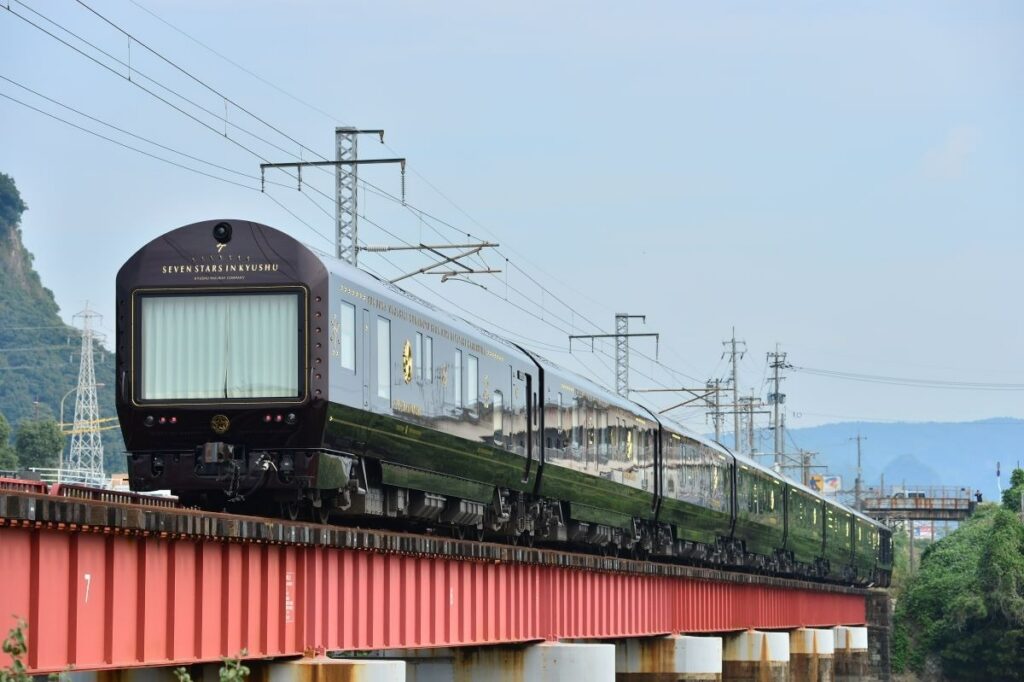
Seven Stars in Kyushu
TRAIN SUITE SHIKI-SHIMA
The ultimate cruise train, offering one-of-a-kind experiences throughout eastern Japan
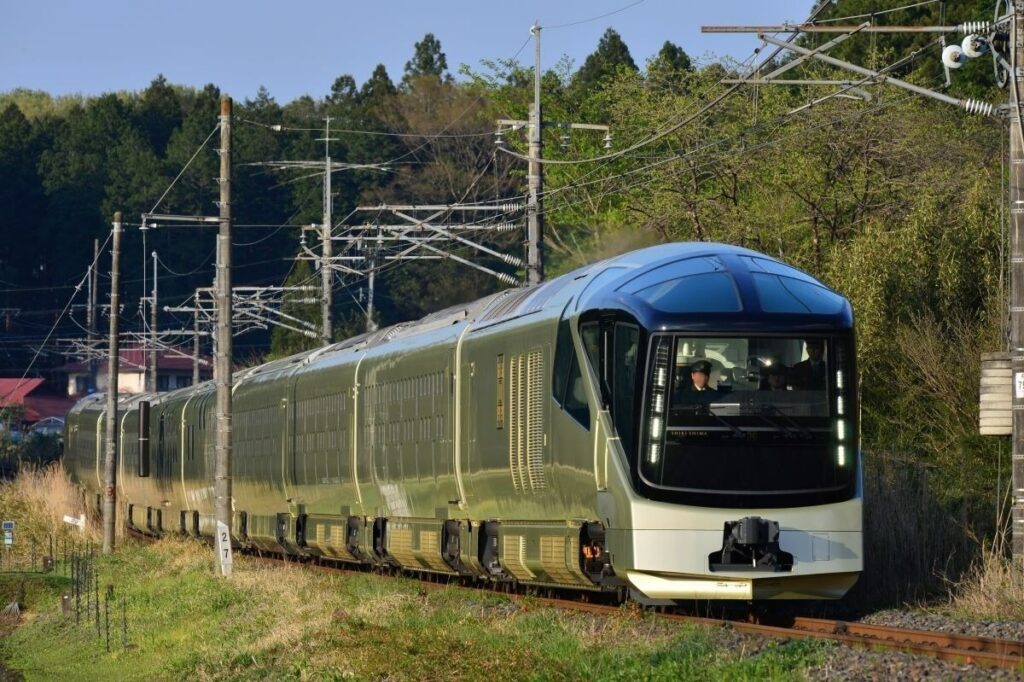
TRAIN SUITE SHIKI-SHIMA, the luxury sleeper train JR East takes pride in, tours various parts of eastern Japan on a range of set itineraries.
Courses can be chosen by number of nights, and applications are accepted seasonally.
Basic Information
Courses:
1-night/2-day course, 2-night/3-day course (winter only), 3-night/4-day course (spring and autumn), and more
Stops:
Vary by course (departs from and returns to Ueno)
Fares:
Vary by course
How to book:
・Lottery reservation via the official website
・Lottery reservation by mail
・Booking a tour through a travel agency
Accommodations:
Suite / Deluxe Suite / SHIKI-SHIMA Suite
The cabins are incredible!
SHIKI-SHIMA offers three types of accommodations.The Suites, found in cars 2, 3, 4, 8, and 9, number 15 rooms and make lavish use of specialty products from the Tohoku region, such as panels of Joboji lacquer from Iwate and duvets filled with Irikin silk floss from Fukushima.
Barrier-free cabins are also available, creating a space full of serenity and intimacy.
The Deluxe Suite is distinguished by its high ceiling and large windows. Inside unfolds an artful space combining time-honored Japanese patterns with a variety of materials, complete with amenities you’d never expect to find on a train—such as a fireplace. Don’t miss them.
And the SHIKI-SHIMA Suite is, remarkably, two stories! The first floor is a bedroom and the second a Japanese-style tatami room. It even comes with a hinoki (cypress) bath, so you can spend your time in complete relaxation.
The SHIKI-SHIMA journey begins even before you board
SHIKI-SHIMA departs from and returns to Ueno Station. Normally, a journey begins once you board the train—but SHIKI-SHIMA is different. At Ueno Station there’s a lounge reserved exclusively for SHIKI-SHIMA passengers, called Prologue SHIKI-SHIMA! And as a special touch of hospitality, when you step out of the lounge, SHIKI-SHIMA is waiting right in front of you on Platform 13.5. You can enjoy the world of SHIKI-SHIMA even before boarding.
What’s more, once you’re aboard, there’s also:
• VIEW TERRACE Kizashi and Ibuki, where you can take in the scenery from the front and rear cars
• LOUNGE Komorebi, where you can enjoy music and drinks
• DINING SHIKI-SHIMA, where you can savor seasonal ingredients from each region
—so you’re sure to spend a wonderful time.
TRAIN SUITE SHIKI-SHIMA distills the extraordinary into a single journey. It is, quite simply, a train to dream of.
TWILIGHT EXPRESS MIZUKAZE
Once Japan’s longest sleeper train, now revived and more luxurious than ever, racing across western Japan!
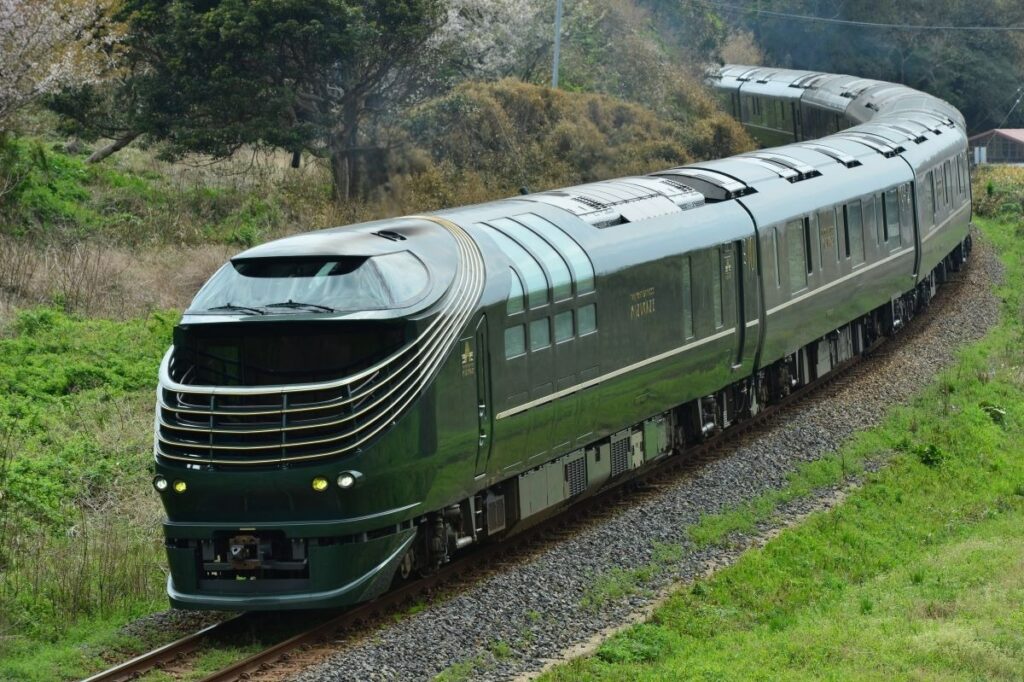
TWILIGHT EXPRESS MIZUKAZE is a cruise train running through the JR West region.
Three itineraries are offered—the 1-night/2-day San’in course and Sanyo course, and the 2-night/3-day Sanyo–San’in round-trip course—each letting you experience the appeal of different areas along the lines of western Japan.
From March 2026, the offerings change to three courses: the 1-night/2-day San’in course, the Lake Biwa & Setouchi course, and the 2-night/3-day Setouchi–San’in round-trip course.
Basic Information
Courses & routes (through February 2026):
San’in course (outbound): Kyoto Station → Shimonoseki Station
San’in course (inbound): Shimonoseki Station → Kyoto Station
Sanyo course (outbound): Kyoto Station → Shimonoseki Station
Sanyo course (inbound): Shimonoseki Station → Kyoto Station
Sanyo–San’in round-trip course: Kyoto Station → Kyoto Station
Courses & routes (from March 2026):
San’in course (outbound): Kyoto Station → Shimonoseki Station
San’in course (inbound): Shimonoseki Station → Kyoto Station
Lake Biwa & Setouchi course (outbound): Kyoto Station → Shimonoseki Station
Lake Biwa & Setouchi course (inbound): Shimonoseki Station → Kyoto Station
Setouchi–San’in round-trip course: Kyoto Station → Kyoto Station
Fares:
Vary by course
Accommodations:
The Suite / Royal Twin / Royal Single
TWILIGHT EXPRESS MIZUKAZE includes one sightseeing stop along the route each day. The destinations differ by course, so each itinerary offers its own distinctive pleasures.
From the windows you can enjoy scenery such as the Akashi Kaikyo Bridge, Higashihama (part of a UNESCO Global Geopark), and the Amarube Bridge.
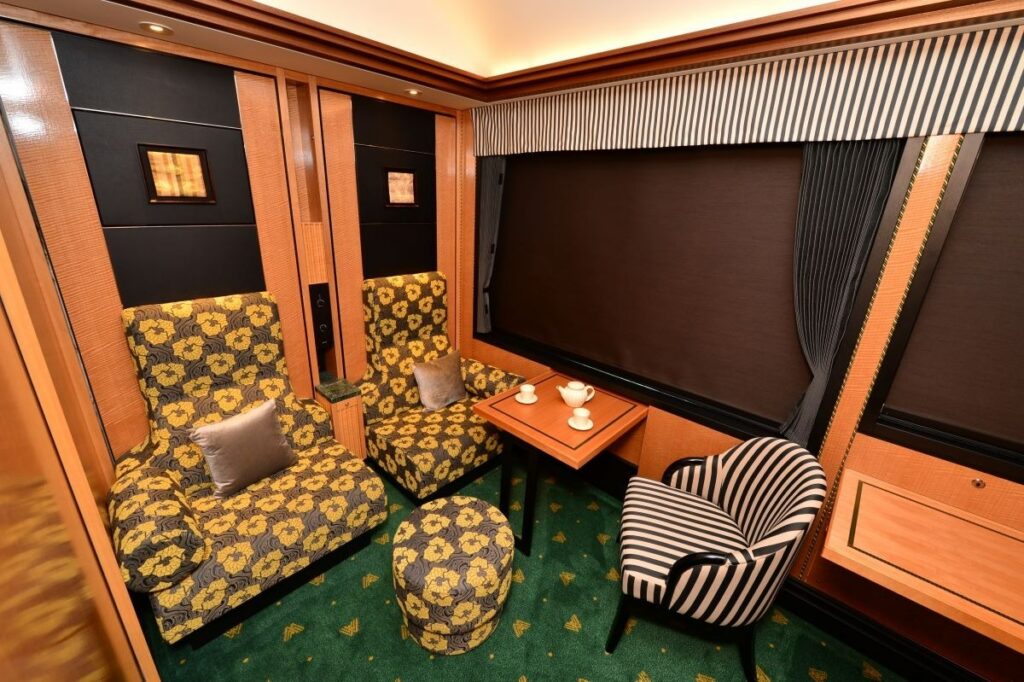
There are three types of accommodations in all. The Royal Single in car 4 and the Royal Twins in cars 2, 3, 4, 8, and 9 use timber and traditional crafts from the Chugoku region to create a calm, soothing space.
The Suite is an ultra-luxurious cabin that takes up the entirety of car 7.
It comes with a private balcony and a bathroom with a bathtub, for a truly elegant rail journey!
There’s also an observation car with sweeping window views and a dining car equipped with an open kitchen.
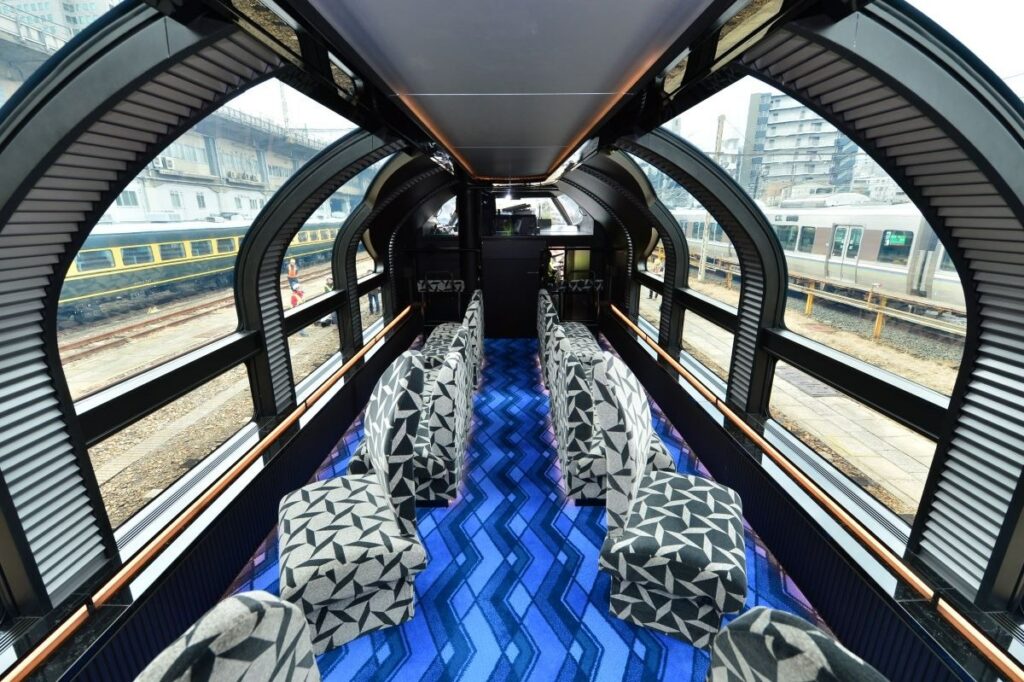
WEST EXPRESS GINGA
Hard at work day and night! A sleeper train racing around western Japan
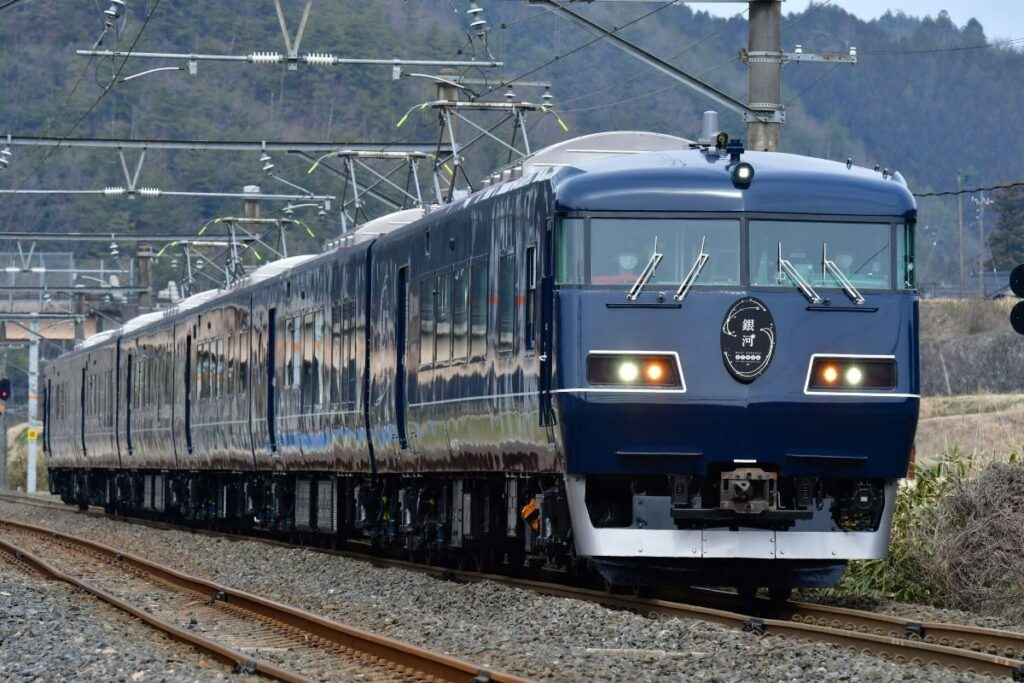
WEST EXPRESS GINGA is a long-distance train running set courses in the JR West region. Since September 2023, it has run in the Kinan area.
And it’s a dual-purpose train—running not only as a sleeper train but during the daytime as well!
Basic Information
Operating days:
Two round trips per week
Routes:
San’in course (Kyoto Station – Izumoshi Station)
Sanyo course (Kyoto Station – Shimonoseki Station)
Kinan course (Kyoto Station – Shingu Station)
*Varies by season
Fares:
Kyoto Station – Izumoshi Station, from ¥10,640
Kyoto Station – Shimonoseki Station, from ¥12,950
Kyoto Station – Shingu Station, from ¥8,670
*Varies by travel date and seat
Accommodations:
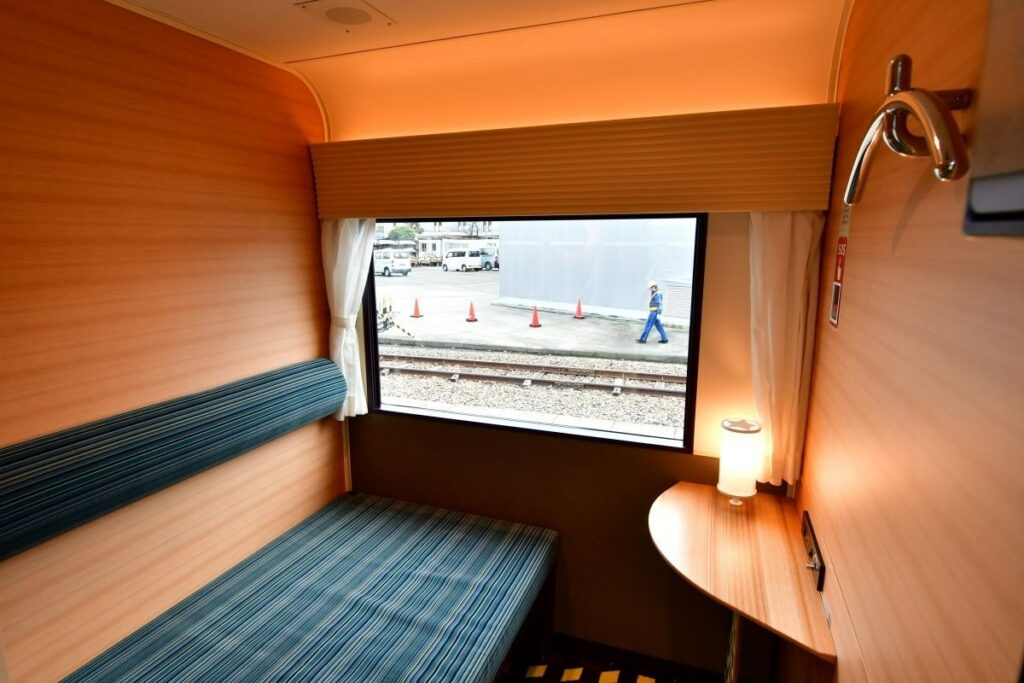
First Seat / Couchette / Family Cabin / Premier Room / Reclining Seat
The GINGA is notable for the wealth of onboard experiences it offers, with different events held on the outbound and inbound runs.
It also offers a wide variety of seating:
- First Seat, which serves as a box seat by day and a bed by night
- Couchette, reminiscent of old-style sleeper cars
- Family Cabin, a semi-private space for group travel
- Premier Room and Reclining Seat, fully private spaces where you can have the window views all to yourself
—so you can choose to suit the occasion.
Seven Stars in Kyushu
Chapter Two has begun for the original cruise train that is the pride of Kyushu
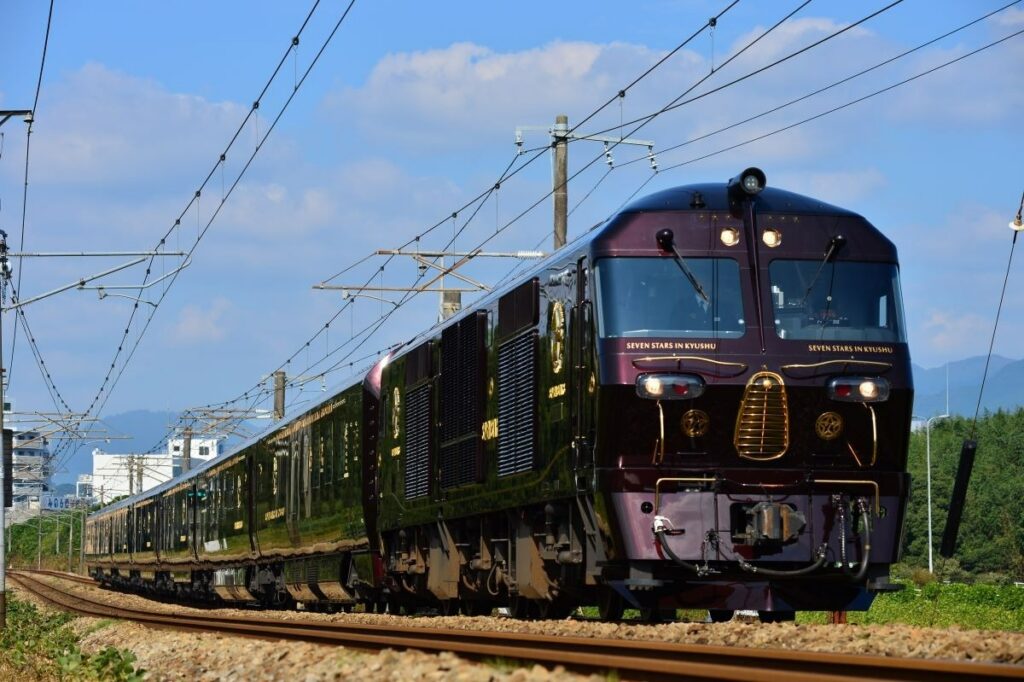
Seven Stars in Kyushu is a train that tours various parts of Kyushu, letting you get off along the way to sightsee and more. Under the theme “Travel to discover a new way of life,” it has enjoyed great popularity since service began in 2013.
Basic Information
Courses:
3-night/4-day course (Takachiho), 3-night/4-day course (Unzen), 1-night/2-day course (Kuju)
Fares:
Vary by course
Accommodations:
Suite / DX Suite A / DX Suite B
A pioneer among Japan’s cruise trains, Seven Stars in Kyushu is distinctive for having just 10 guest cabins—a number chosen so that all passengers can come together at mealtimes and other occasions.
As of March 2025, three courses are listed on the official website. Each tours different parts of Kyushu, with different activities to experience depending on the course. A distinctive feature of the 3-night/4-day courses is that you get to experience both nights aboard the train and nights at a traditional inn.
All accommodations are suites. Blending Japanese and Western, old and new, they make for a relaxing space.
In particular, the DX Suite A in car 7 offers the luxury of having the view from the very rear of the train all to yourself!
A Roundup of the Sleeper Trains That Once Thrived!
Over the years, Japan has been home to all kinds of sleeper trains.
Here we’ll briefly introduce a few that were especially popular:
• Hokutosei
• Twilight Express
• Cassiopeia
Hokutosei
A classic hotel on rails! The first sleeper train to link Tokyo and Hokkaido.
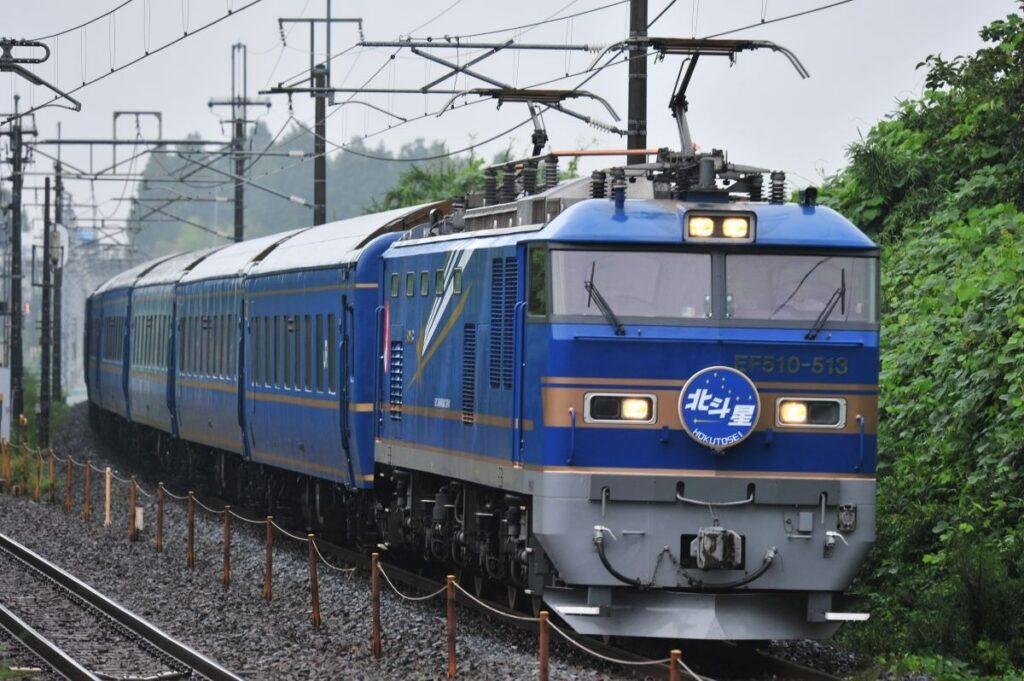
The Hokutosei began running between Ueno Station and Sapporo Station in 1988 (Showa 63), in conjunction with the opening of the Seikan Tunnel.
Its interior was done in chic tones, and its dining car served full-course French cuisine.
As the last of the Blue Train sleeper services, it kept running until August 2015.
Twilight Express
From Osaka to Hokkaido. A green sleeper train boasting the longest run in Japan.
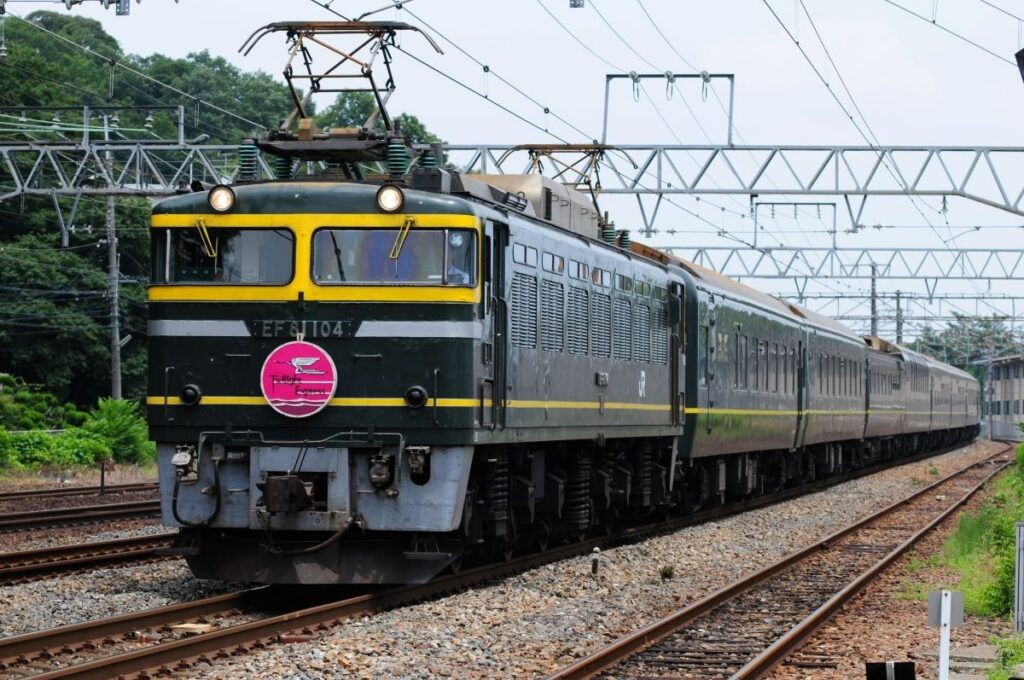
The Twilight Express began service in 1989 as a travel-agency tour product. It later became a special service, and as a hugely popular sleeper train it carried a cumulative total of 1.16 million passengers.
Covering roughly 1,500 km from Osaka Station to Sapporo Station in about 22 hours, it was Japan’s longest-running train, and because it traveled along the Sea of Japan coast from Osaka, passengers could enjoy beautiful natural scenery through the windows, such as the sun setting over the Sea of Japan.
Today, TWILIGHT EXPRESS MIZUKAZE runs through western Japan as its successor.
Cassiopeia
Double-decker throughout! An ultra-luxurious sleeper train with Class A berths in every cabin.
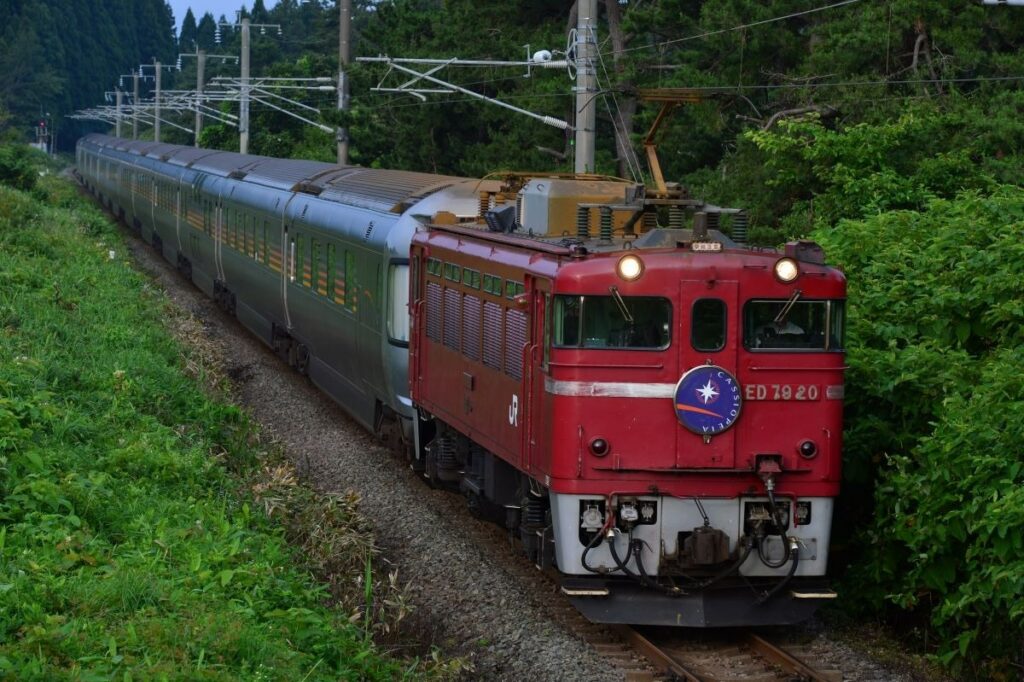
The Cassiopeia began running between Ueno Station and Sapporo Station in 1999, using newly built passenger cars.
A train beloved for the luxury of having Class A berths in every cabin, its berth tickets were said to often sell out almost the instant they went on sale.
Until June 2025, it operated as a special train under the name “Cassiopeia Journey.”
*Text & editing: Toretabi Editorial Office
*Photos: Kotsu Shimbun Create Co., Ltd.