
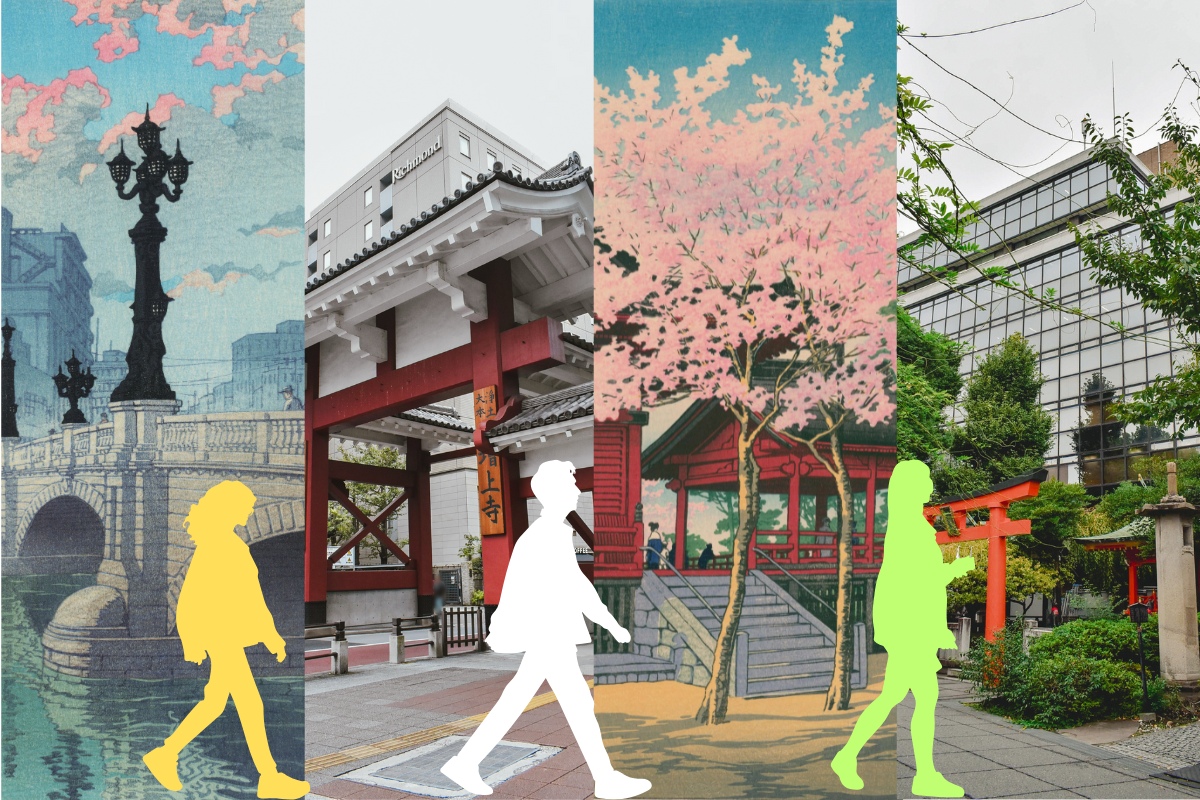
Following in Hasui’s Footsteps: A Nostalgic Journey Through Japan’s Landscapes
A rail-based art walk through Tokyo.
Visit the very locations that inspired Kawase Hasui’s woodblock prints, and experience art not just as something to be seen, but something to be lived.
With the kind cooperation of the Ota City Folk Museum, this itinerary traces the footsteps of modern woodblock print master Kawase Hasui.
About Kawase Hasui
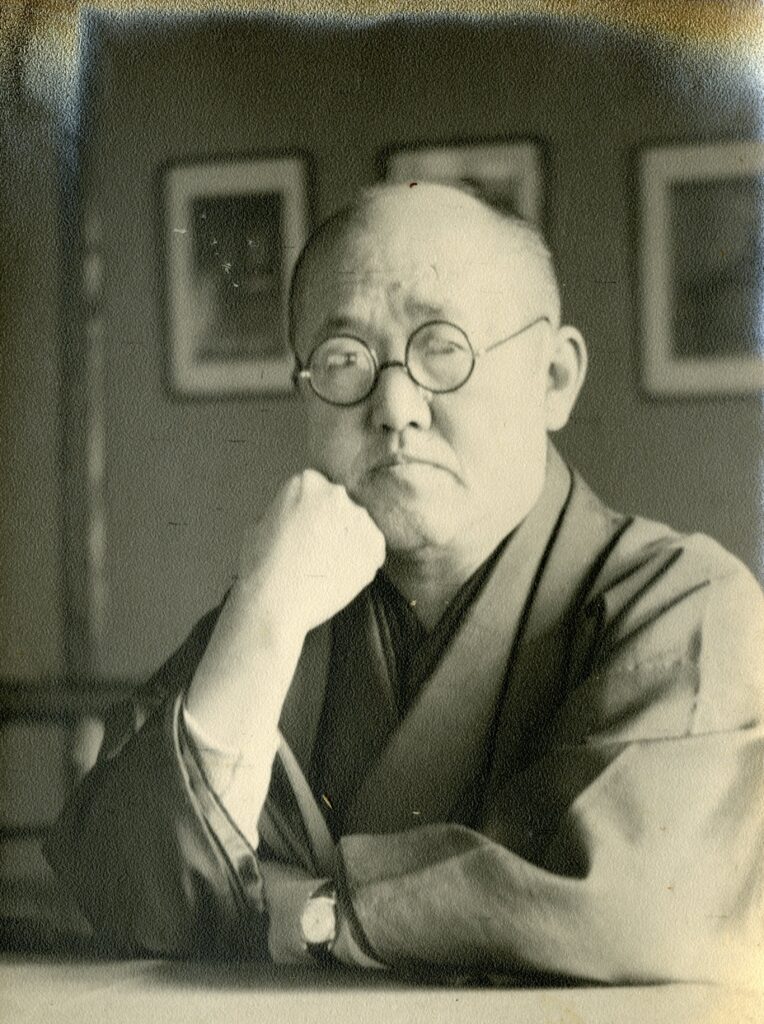
Born in Tokyo in 1883 (Meiji 16), Kawase Hasui (born “Bunjiro”) harbored dreams of becoming an artist from childhood. Family pressures led him instead to work in the braided cord trade, but fate had other plans.
After his father’s business failed and the family trade passed to his sister and her husband, Hasui was free to pursue his true calling. In 1910 (Meiji 43), he became a pupil of the renowned painter Kaburagi Kiyokata. Eight years later, he encountered a series of woodblock prints called “Eight Views of Omi” by his fellow student Ito Shinsui, and was instantly captivated by the medium. Partnering with publisher Watanabe Shozaburo, he soon released works such as “Shiobara Okane Road,” launching his celebrated career.
Until his death in Ota Ward in 1957 (Showa 32), Hasui traveled the length and breadth of Japan, creating over 600 works that captured the poetic essence of the country’s landscapes.
About This Itinerary
This route follows the JR Yamanote Line from the east side of Tokyo (Ueno, Akihabara, Tokyo Station) down to the south (Shinagawa), visiting the historic spots that Hasui immortalized in his prints.
Every stop along the way is within a 15-minute walk from the nearest station, making this an effortless and thoroughly rewarding stroll through the city.
Take your time, let the prints be your guide, and discover the Tokyo that Hasui once saw.
A Walk Through Hasui’s Tokyo
Crossing time in search of the landscapes a woodblock print master loved
“Ueno Kiyomizudo”
Ueno Station Listen to the silence of a beloved temple set above the city
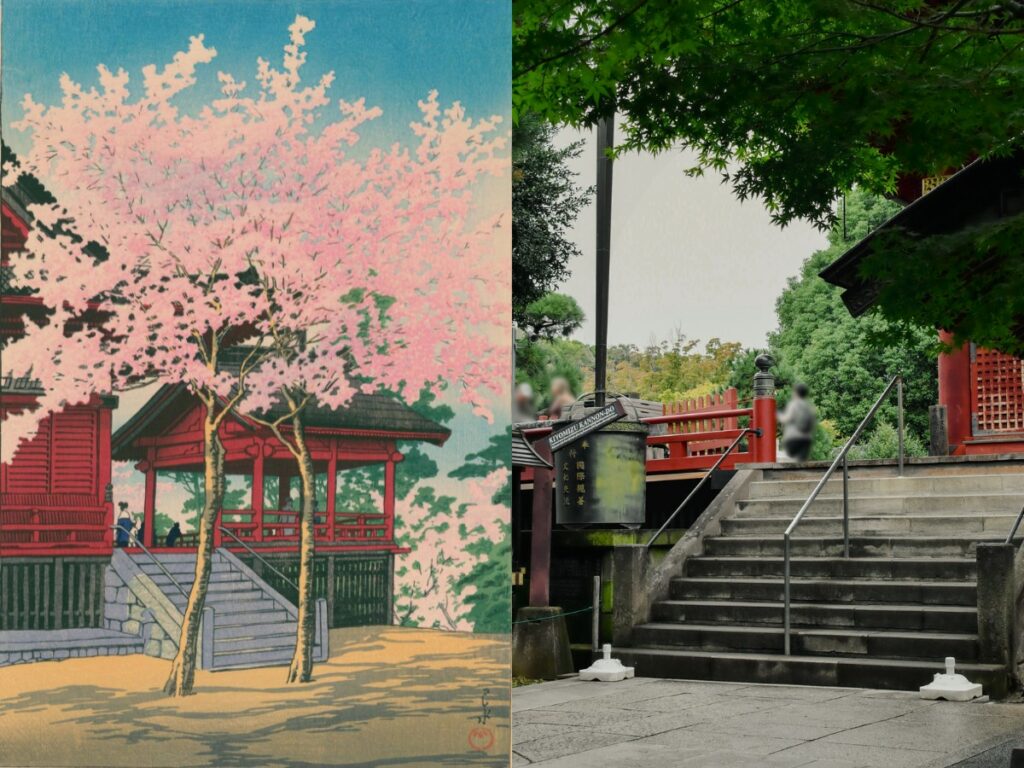
Perched on a hilltop within Ueno Park, Kiyomizu Kannon-do is a hall modeled on the famous Kiyomizudera Temple in Kyoto’s Higashiyama. Hasui painted it in full cherry blossom bloom. The scene has changed a little since the first edition was printed in 1928 (Showa 3), but the red hall, stone staircase, and lush natural surroundings remain just as captivating as ever.
“Ueno Kiyomizudo” — from Twenty Views of Tokyo, 1928 (Showa 3)
The vivid pink blossoms in this work depict the akiiro-zakura (autumn-tinted cherry) growing behind the main hall. Kiyomizu Kannon-do was founded in 1631 (Kan’ei 8) by the monk Tenkai, a trusted advisor to Tokugawa Ieyasu, as a miniature replica of Kyoto’s Kiyomizudera. The building and the graceful arc of the cherry branches are rendered with faithful precision from Hasui’s on-site sketches. However, he took one creative liberty: the number of figures standing before the hall was quietly increased in the finished print, adding a gentle sense of life to the scene.
- Access: JR Ueno Station (Park Exit) — 5-minute walk
- Photo spot: Near Kiyomizu Kannon-do, inside Ueno Park
“Kanda Myoujin Shrine Grounds”
One of the Ten Shrines of Tokyo, and the quiet glow Hasui found within
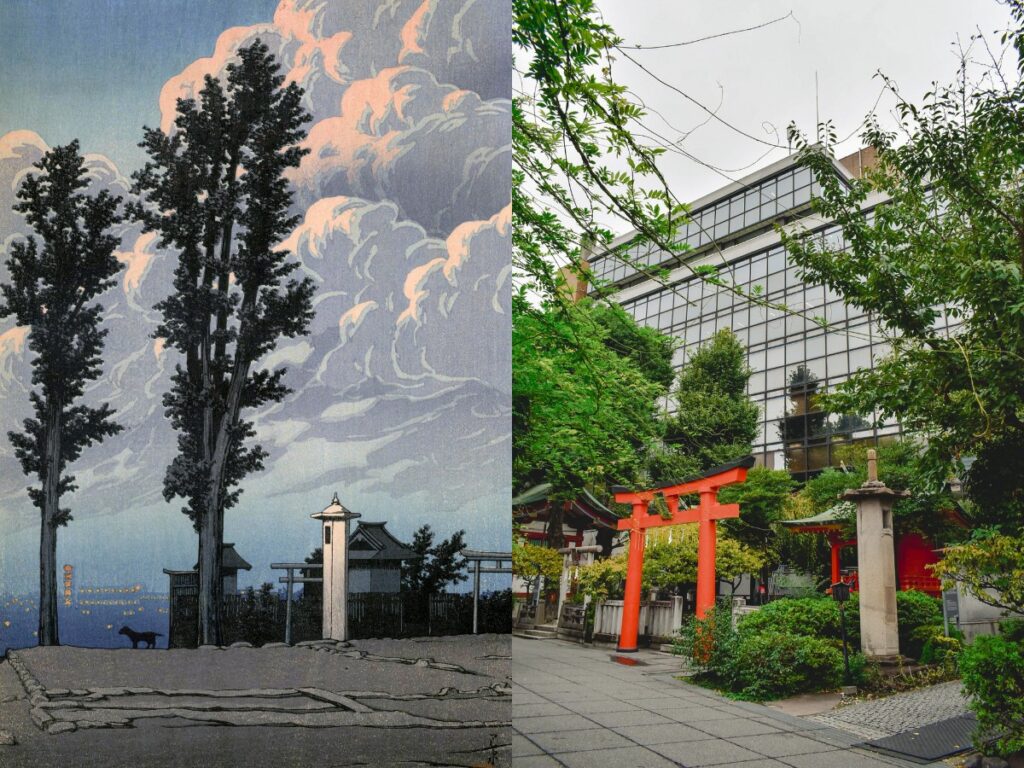
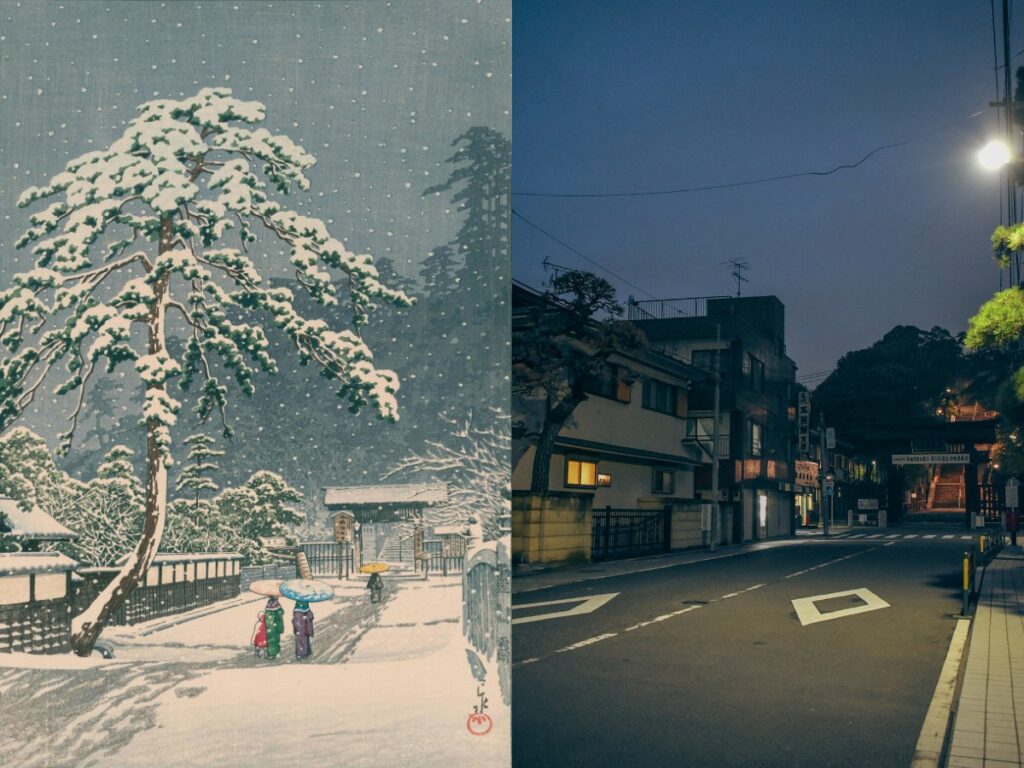
Just a short walk from Akihabara or Ochanomizu stations, Kanda Myoujin (Kanda Jinja) served as the great guardian shrine of old Edo. But what Hasui chose to paint was not the bustling main hall; it was the soft lantern light of the back approach, glimpsed from a quiet corner. Look for the stone monument, and you can overlay the print’s scene onto today’s landscape.
“Kanda Myoujin Shrine Grounds” — from Twenty Views of Tokyo, 1926 (Taisho 15)
Kanda Myoujin’s original Edo-era shrine buildings were destroyed in the Great Kanto Earthquake of September 1923 (Taisho 12). This print depicts the desolate aftermath: a bare foundation stone, two surviving Japanese cypress trees, and an atmosphere of quiet emptiness. Yet below the shrine grounds, the lights of a city beginning to rebuild itself already flicker in the darkness. The current fireproof concrete shrine hall, rebuilt in 1934 (Showa 9), survived World War II with only minor damage.
- Access: JR Akihabara Station (Electric Town Exit) — 12-minute walk
- Photo spot: Near the Mizuno Toshikata Memorial Stone, within the shrine grounds
“Nihonbashi (Dawn)”
Where history meets modernity — a bridge that has witnessed it all
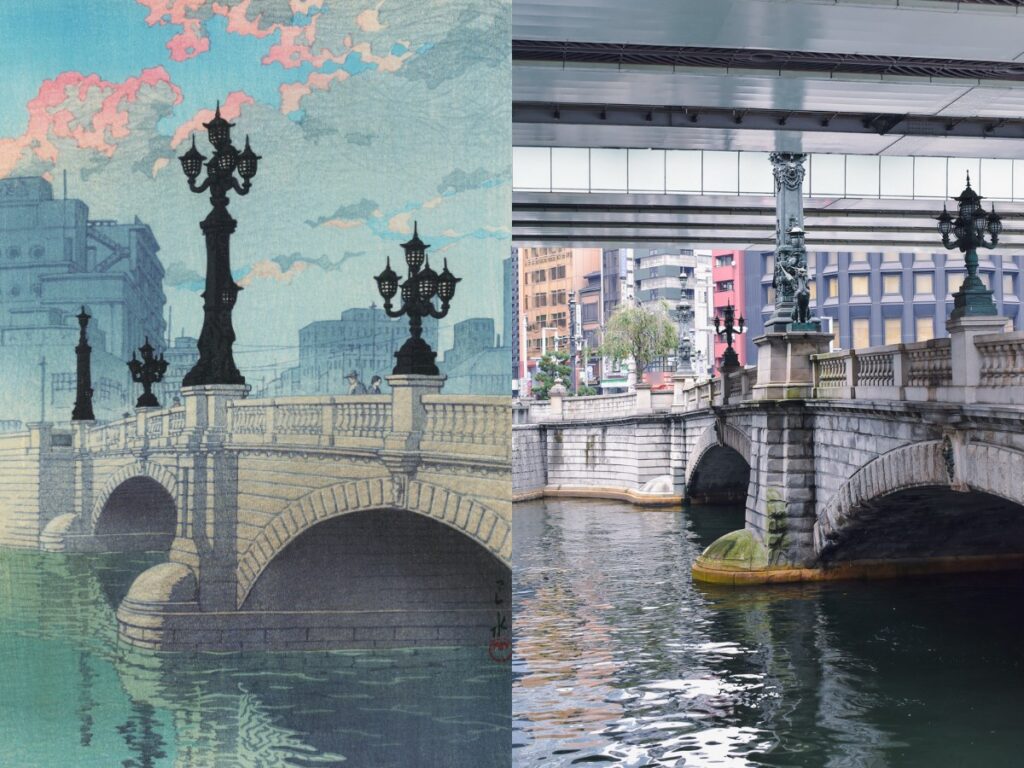
Once the origin point of Japan’s five great highways, Nihonbashi remains at the heart of Tokyo’s financial and commercial life. Hasui’s dawn scene, where the tide of modernization mingles with the mood of departure, preserves the atmosphere of that era for us today. An elevated expressway now runs directly overhead, but the bridge itself is essentially unchanged.
“Nihonbashi (Dawn)” — from Landscape Selections of the Tokaido, 1940 (Showa 15)
In the early morning of July 1940, Hasui visited Nihonbashi to sketch. The word “Shirokiya” (now near the site of Coredo Nihonbashi) can be made out on a building to the left, revealing that the view is from Nihonbashi Muromachi 1-chome, looking toward Nihonbashi 1-chome. The bridge is also famously depicted by Utagawa Hiroshige: Hiroshige painted a wooden drum bridge, while Hasui captured the Renaissance-style stone arch bridge in quiet morning light. Today, the elevated Metropolitan Expressway runs above, and Hasui’s exact view can no longer be seen, making his print all the more precious.
- Access: JR Tokyo Station (Yaesu Central Exit) — 14-minute walk
- Photo spot: Near the “Nihonbashi Origin Stone” monument, by Nihonbashi Bridge
“Shiba Daimon”
The great gate of Zojoji standing proud through the centuries
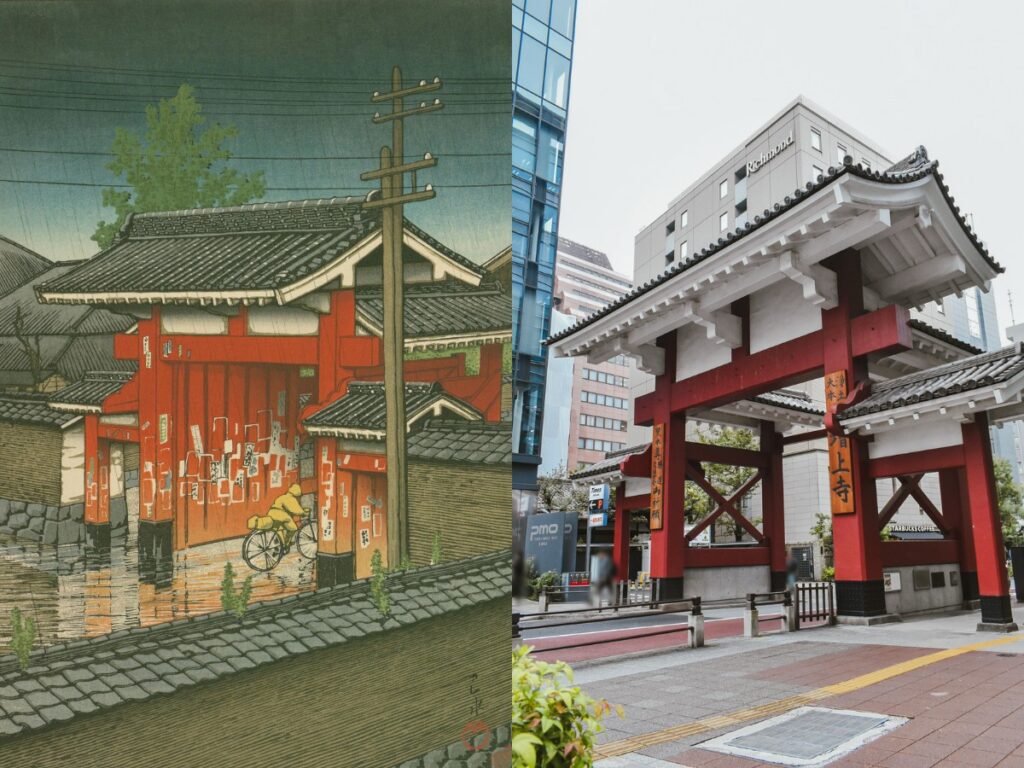
The great gate at the entrance to Zojoji Temple, once one of the main gateways into old Edo, still commands the eye even amid today’s surrounding skyscrapers. Judging by the angle Hasui chose, he must have found a slightly elevated vantage point to take in its full presence. Its dignified bearing continues to speak of a deep and layered history.
“Shiba Daimon” — from Sosaku Hanga Society, 1926 (Taisho 15)
In the rain, a lone bicycle passes through the great gate (omote-mon) of Zojoji, the family temple of the Tokugawa shoguns, a rare motif for Hasui. The wooden gate seen in the print was originally the main gate of Edo Castle, gifted by Tokugawa Ieyasu to the temple when Zojoji relocated to Shiba in 1598 (Keicho 3). In 1937 (Showa 12), it was relocated to Eko-in in Ryogoku as part of a road-widening project, and was ultimately lost to the air raids of 1945 (Showa 20).
- Access: JR Hamamatsucho Station (North Exit) — 7-minute walk
- Photo spot: Near the Great Gate (Daimon) of Zojoji Temple
“Shinagawa”
A peaceful waterway, a wooden bridge, and a long-gone fishing village
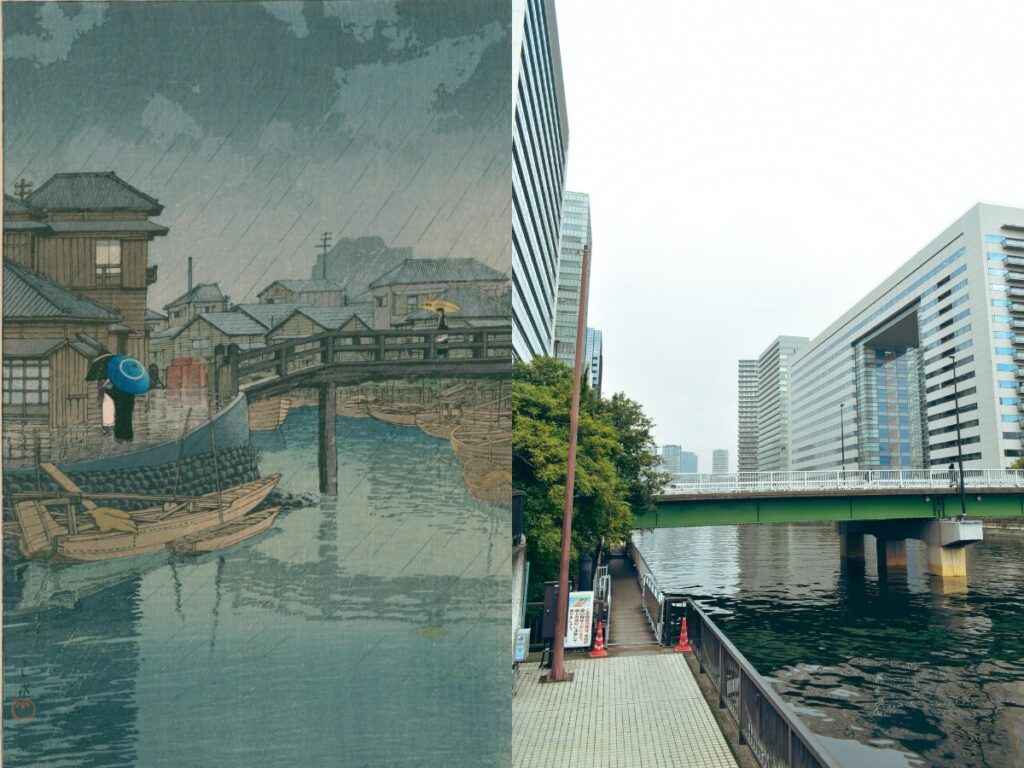
The Mitatenohashi bridge over a canal near Shinagawa Station. The fishing village on Tokyo Bay that Hasui depicted is worlds away from the major transport hub Shinagawa has become. But follow the canal and the bridge, and you’ll find where the landscapes still overlap. High-rise buildings now line the skyline, offering a poignant reminder of how much Tokyo has changed.
“Shinagawa” — from Landscape Selections of the Tokaido, March 1931 (Showa 6)
The setting is identified in Hasui’s sketchbook as “Shinagawa Ryoshimachi,” the fishing community of Minami-Shinagawa. This narrow strip of land extending south along the Meguro River from the Minami-Shinagawa post town was a pure fishing village, also known as “Shinagawa Ura.” It was one of the eight villages that supplied fresh fish to Edo Castle (Gosai Yanohachi-ga-ura). Small fishing boats, the tools of that trade, are painted into the canal in the foreground of the print.
- Access: JR Shinagawa Station (Konan Exit) — 10-minute walk
- Photo spot: Riverside promenade near Mitatenohashi Bridge
Closing Thoughts
Itinerary Map
“The Printmaker of Travel and Longing” — The Poetry of Tokyo, Revealed by Hasui
Using the Yamanote Line as our backbone, this itinerary is an artfully crafted walking journey moving from the east side of Tokyo to the south, tracing the scenes Hasui once captured in ink and pigment.
Walking in his footsteps, you’ll find unexpected moments where the serene, timeless, quietly luminous world of woodblock printing surfaces through the noise and bustle of modern Tokyo. These brief encounters are what linger longest. Visiting the actual locations behind a work of art stirs something in us; the experience sharpens the senses and enriches everything we see.
There’s something special about exploring a city by rail. The journey between stations carries its own quiet romance. By arriving on foot, you can search for those rare moments where the past and present overlap: from a roofline, to a curve in the road, and lights on the water. Use the convenience of the city, step outside the ordinary, and let yourself drift into a nostalgic space between eras.
Cooperation: Ota City Folk Museum
Opened in November 1978, this humanities museum preserves and exhibits archaeological, historical, and ethnological materials related to Ota City. The permanent exhibition, Ota Mono-gatari (Ota’s Stories through Objects), explores the history of the city through four themed sections: “History Carved in the Earth,” “Rural and Fishing Village Landscapes,” “The Magome Literary Village,” and “Modernization and the Town.” A touchless information search system, the Ota History Explorer Guide, is also available for local historical research.


Ota City Folk Museum
| Address | 5-11-13 Minami-Magome, Ota Ward, Tokyo |
| Phone | 03-3777-1070 |
| Hours | 9:00 AM – 5:00 PM |
| Closed | Mondays (open on public holidays), year-end/New Year holidays, and during exhibition changeovers and storage room cleaning periods |
| Access | Take a bus from JR Omori Station; alight at “Manpukuji-mae,” then approx. 2-minute walk |
| Admission | Permanent exhibition is free of charge. Please inquire about special exhibition fees. |
About the Author
Satsuma Ruri

Born in Kanagawa in 1994. After working in corporate employment, she became a freelance writer in 2021. With a focus on the arts, she writes across a wide range of topics, including culture, travel, and the SDGs. Her specialty is Japanese art. She holds a Level 2 certification from the Japanese Traditional Culture Proficiency Test and shares information via social media.
- © Image source: National Diet Library “NDL Image Bank”
- Photography: Satsuma Ruri
- Text: Satsuma Ruri, Ota City Folk Museum
- Cooperation: Ota City Folk Museum
- Information current as of November 2025.