
The Year’s Final Tournament: Making the Most of Fukuoka, a City for Food Lovers
The November Grand Tournament is held in Fukuoka, Kyushu, a city famous for its food. This is the season for superb fish and hot pot, which makes the tournament something both the wrestlers and their fans look forward to every year.
To help you get more out of it, here’s everything you need in one place: how to reach the venue, what to look out for, and the spots recommended by wrestlers with local ties.
In this series covering both food and sightseeing, sumo writer Saki Iizuka shows you how to double or even triple your enjoyment of the year’s final tournament, a fixture of winter in Fukuoka.
Fukuoka, Host City of the November Grand Tournament
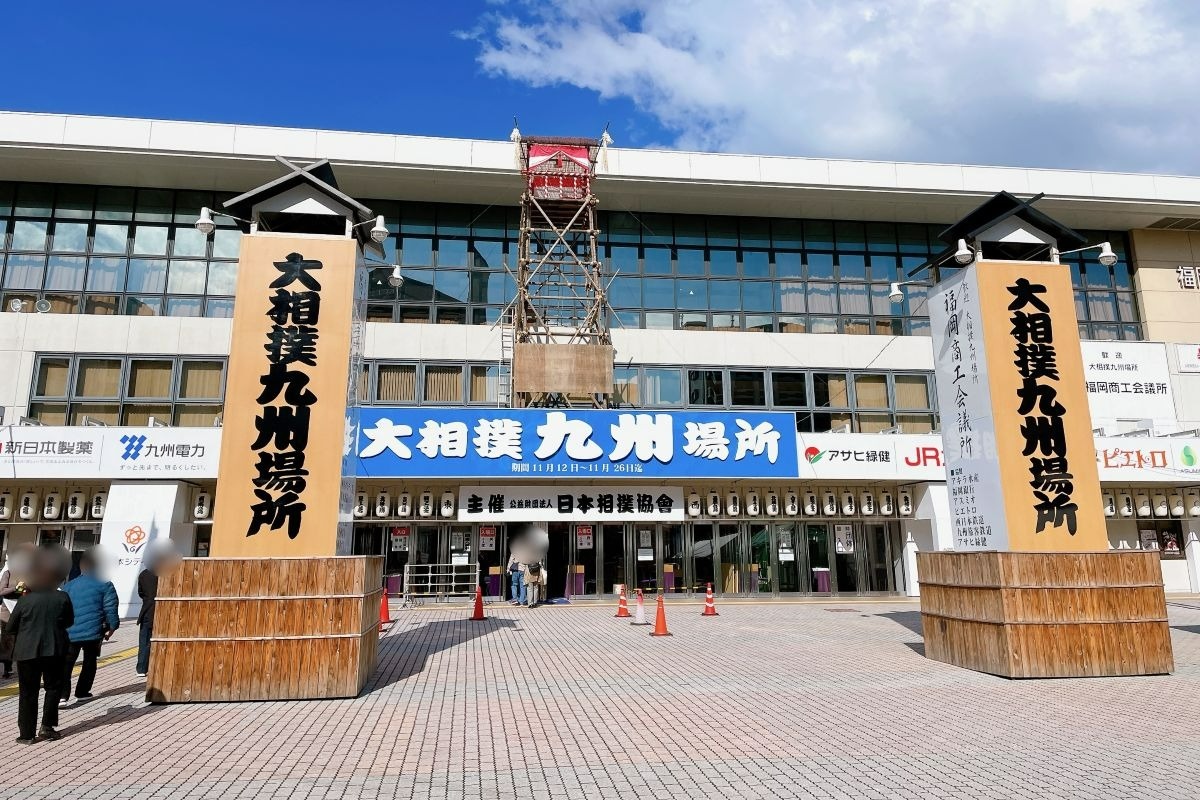
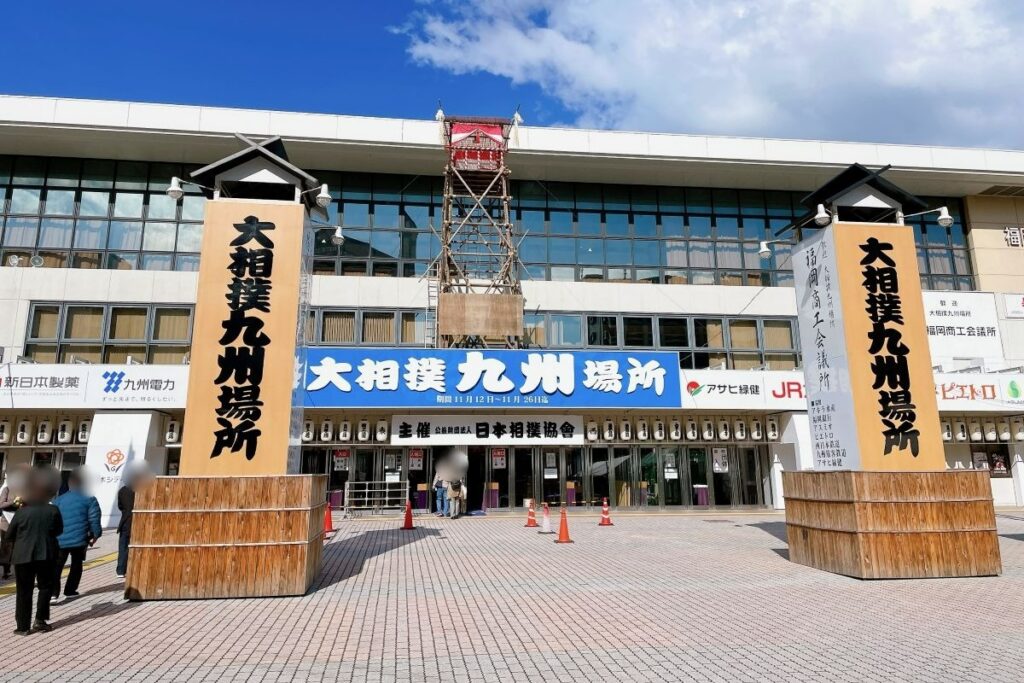
Fukuoka Kokusai Center, cooled by the sea breeze off Hakata Bay
Fukuoka Kokusai Center faces Hakata Bay, close to the Bayside Place Hakata shopping mall and the Hakata Port Tower.
The nearest station is Gofukumachi on the Fukuoka City Subway Hakozaki Line, though it’s about a 15-minute walk from there.
The route we’d recommend is a Nishitetsu bus from Hakata Station, getting off at Kokusai Center / Sun Palace-mae. It takes roughly 10 to 15 minutes each way.
During the tournament, several extra buses run back to Hakata Station once the day’s bouts have finished, which makes for an easy return trip.
The History of the November Grand Tournament, and What Makes It Special
The history of the November Grand Tournament: more than 90 years of Kyushu winters
In October 1930, an 11-day tournament was staged at a temporary Kokugikan built in the Susaki-ura district. The 14,000-capacity venue is said to have sold out day after day. After the Second World War, while “semi-official” tournaments were being held in Kyoto, Hokkaido, Nagoya, and elsewhere, November 1955 saw a Fukuoka semi-official tournament staged as the inaugural event at the newly opened Fukuoka Sports Center in Tenjin. The 15 days were a great success, and two years later, in 1957, the Kyushu Basho (as it is called in Japanese) formally began as an official tournament. That same year, the official tournaments were also renamed after the months they fall in: the January Grand Tournament, the March Grand Tournament, and so on.
In 1974 the venue moved to the Kyuden Kinen Gymnasium in Yakuin. That year, komusubi Kaiketsu beat yokozuna Kitanoumi in the final bout to claim his first championship. The present venue, Fukuoka Kokusai Center, came into use in 1981. Every winter since, 15 days of competition have unfolded in this airy hall looking out over Hakata Bay.
What makes the November Grand Tournament special?
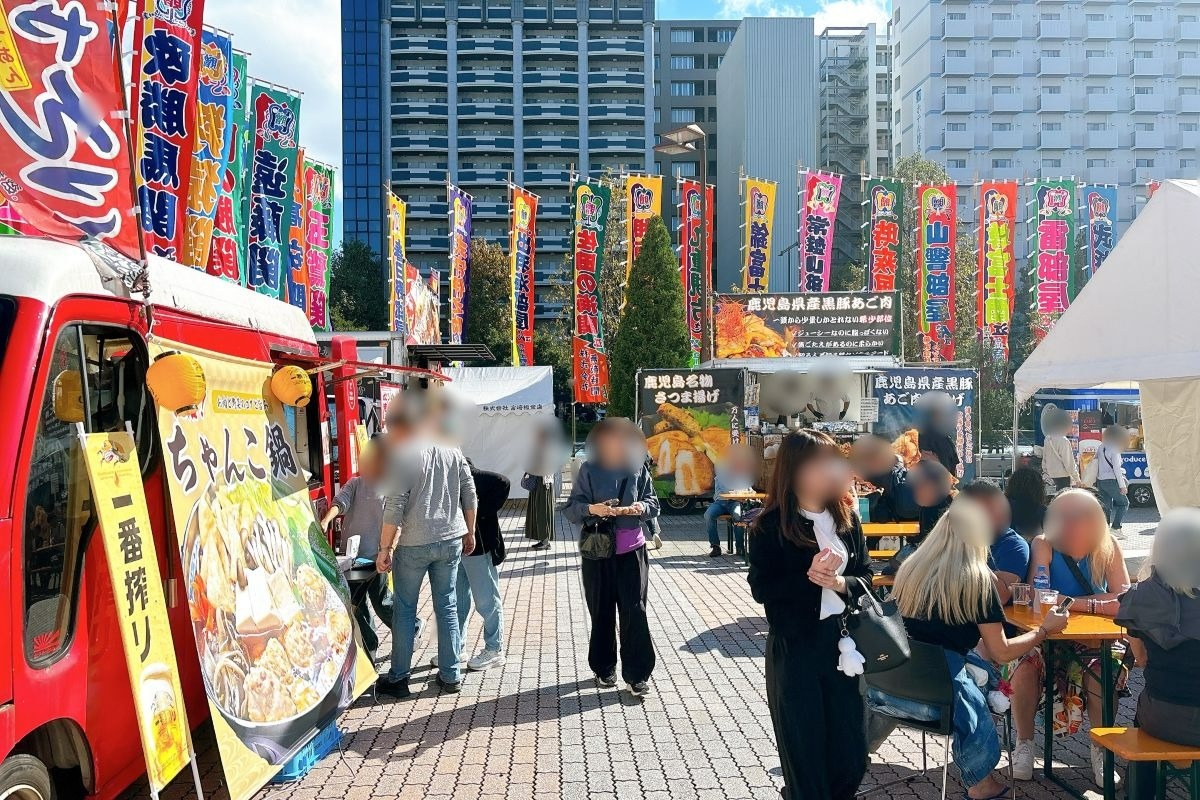
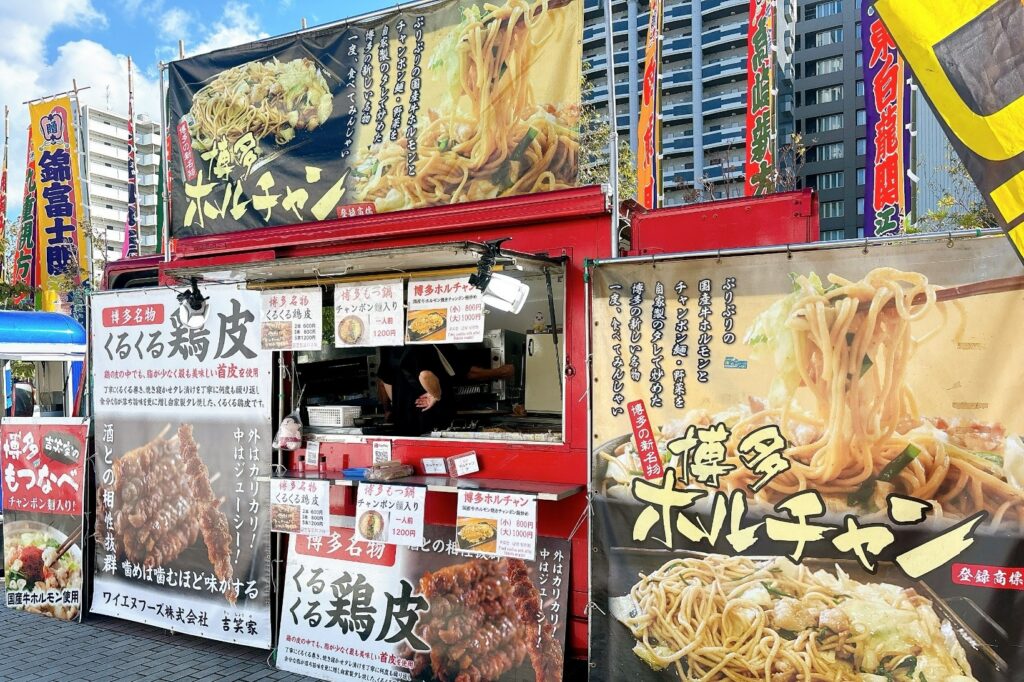
If one thing sets the November Grand Tournament apart, it’s the superb line-up of food trucks in the plaza outside.
Tickets for the official tournaments are hard to come by these days, but this plaza is open to everyone, ticket or not. You can tuck into chanko-nabe, the perfect dish on a cold winter’s day, or other Fukuoka specialties, and watch the bouts on monitors set up inside the tents. Even without getting into the hall itself, you can soak up plenty of the atmosphere.
Inside, there’s an excellent selection of goods and souvenirs available only during the tournament, along with capsule-toy machines. Wrestlers from Kyushu draw noticeably louder cheers when their turn comes, whatever their rank, and plenty of their merchandise is on sale too. All this adds to the enjoyment.
Fukuoka Kokusai Center
| Access | About 10–15 min. by bus from JR Hakata Station |
| Address | 2-2 Chikko Honmachi, Hakata-ku, Fukuoka City, Fukuoka |
| URL | https://www.marinemesse.or.jp/kokusai/ |
A Suggested Itinerary for Tournament Day
Sumo spots to visit before the bouts
Sumiyoshi Shrine
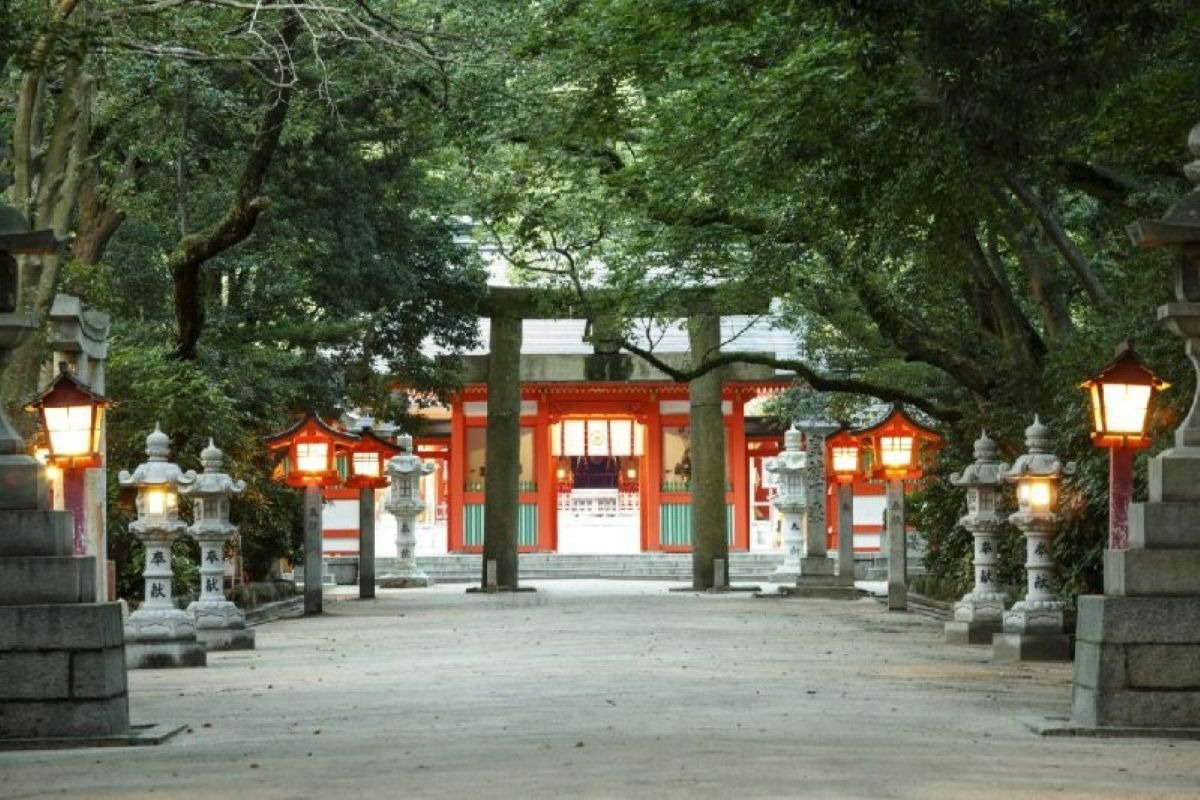
Sumiyoshi Shrine, located in Fukuoka City’s Hakata Ward, has over 1,800 years of history.
It is said to be the first of the more than 2,000 Sumiyoshi shrines across Japan. The grounds are vast at over 8,000 tsubo (roughly 26,000 square meters) in total. The shrine has deep ties to sumo: during the November Grand Tournament, it hosts the lodgings of the Asakayama stable, headed by former ozeki Kaio, and you can watch morning practice up close.
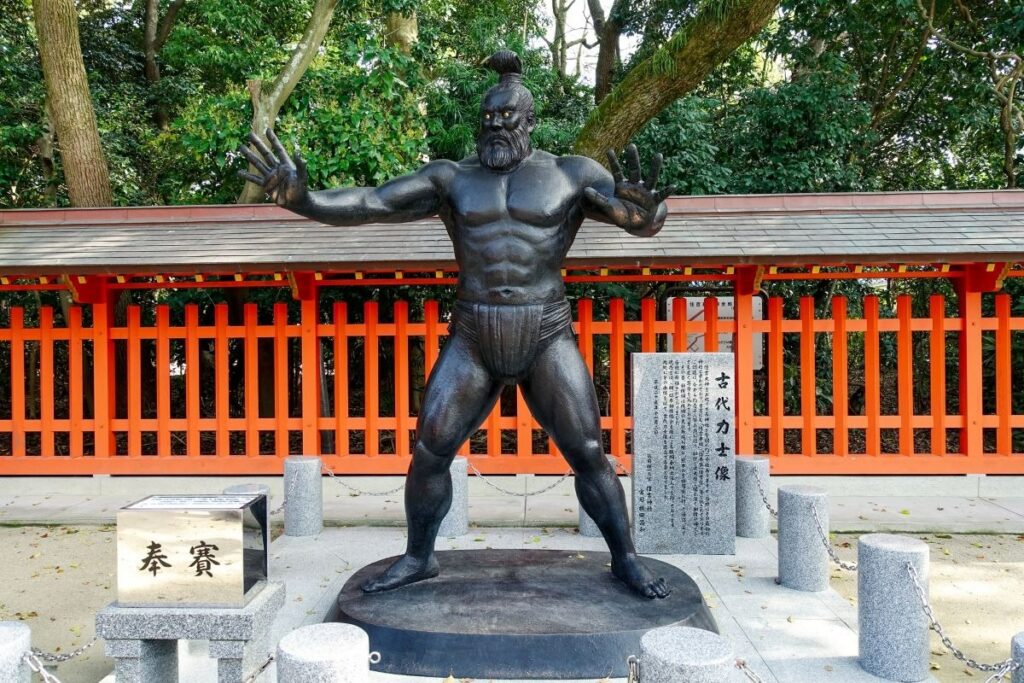
Beside the main hall at the center of the expansive grounds stands a stern-faced “ancient wrestler statue.” It is a joint work by the Hakata doll makers Nakamura Shinkyo and his son Hiromine, and because the creases in its right hand resemble the character 力 (“strength”), touching that hand is said to pass some of that strength on to you. It’s a place any sumo enthusiast should visit at least once.
Sumiyoshi Shrine
| Address | 3-1-51 Sumiyoshi, Hakata-ku, Fukuoka City |
| Hours | 9:00 a.m.–5:00 p.m. |
| Access | About 8 min. on foot from JR Hakata Station |
| URL | https://www.nihondaiichisumiyoshigu.jp/ |
Dazaifu Tenmangu
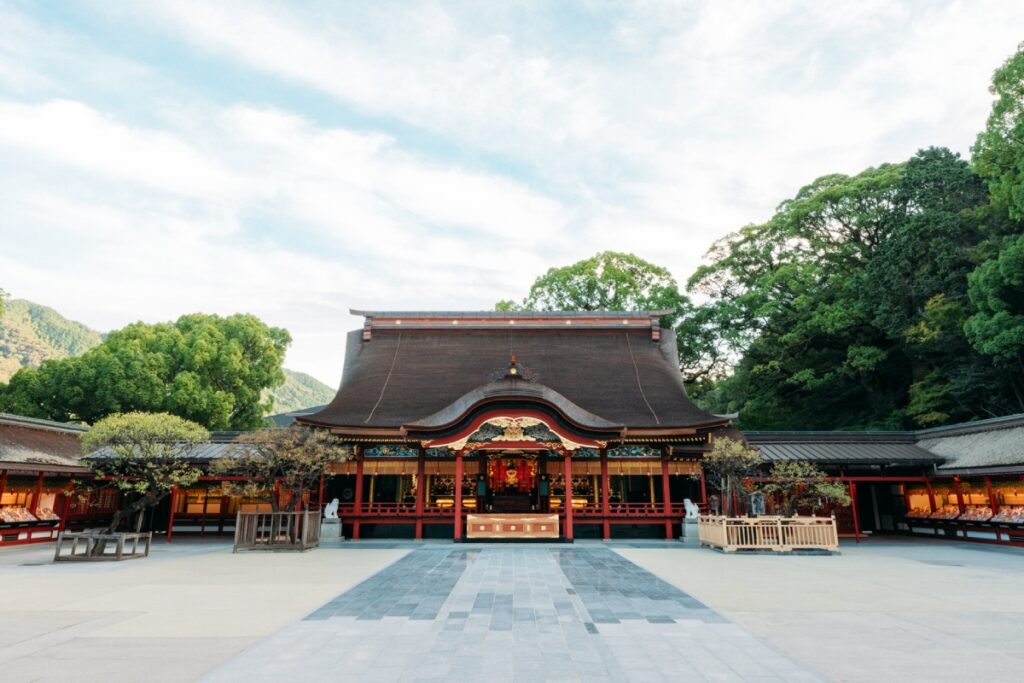
Dazaifu Tenmangu is known for enshrining Sugawara no Michizane, the deity of learning. About 30 minutes from Tenjin Station by Nishitetsu train, or 25 minutes by direct bus from Fukuoka Airport, it draws a steady stream of worshippers from both inside and outside Japan.
Dazaifu Tenmangu
| Address | 4-7-1 Saifu, Dazaifu City, Fukuoka |
| Hours | 6:30 a.m.–6:30 p.m. *Varies by season |
| Access | About 5 min. on foot from Nishitetsu Dazaifu Station |
| URL | https://www.dazaifutenmangu.or.jp/ |
Sadogatake Stable’s Kyushu Lodgings
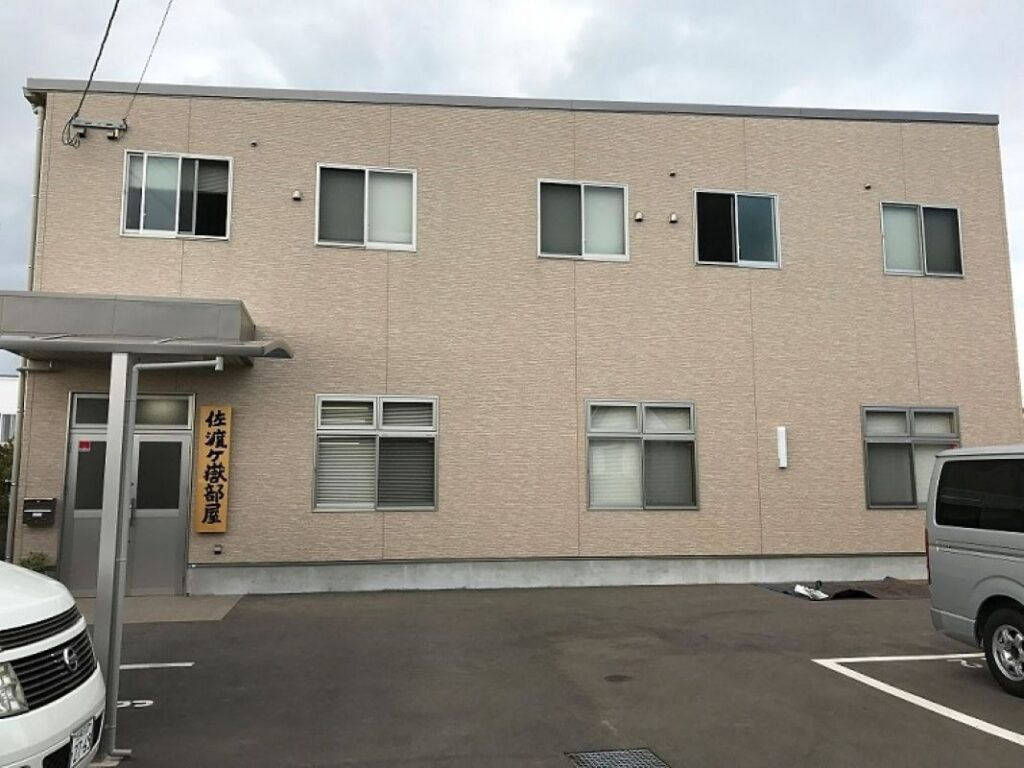
Getting to and from the Sadogatake stable’s Kyushu lodgings is half the fun.
The stable, led by ozeki Kotozakura, sets up in Saitozaki, which can only be reached by ferry crossing Hakata Bay. Walk from Fukuoka Kokusai Center to Hakata Port, then it’s about a 15-minute ferry ride, followed by a 7-minute walk from the landing to the lodgings. The younger wrestlers, ranked makushita and below, all take this ferry to the venue each day, psyching themselves up for the day ahead with the sea breeze in their faces.
If you can manage an early start, do cross the water to watch Sadogatake’s practice. Ferries run roughly once an hour, so check the timetable before setting off.
Sadogatake Stable Kyushu Lodgings
| Address | Sadogatake Stable Kyushu Lodgings |
Recommended Cuisine to Eat when Going to See a Tournament
Umegae Mochi
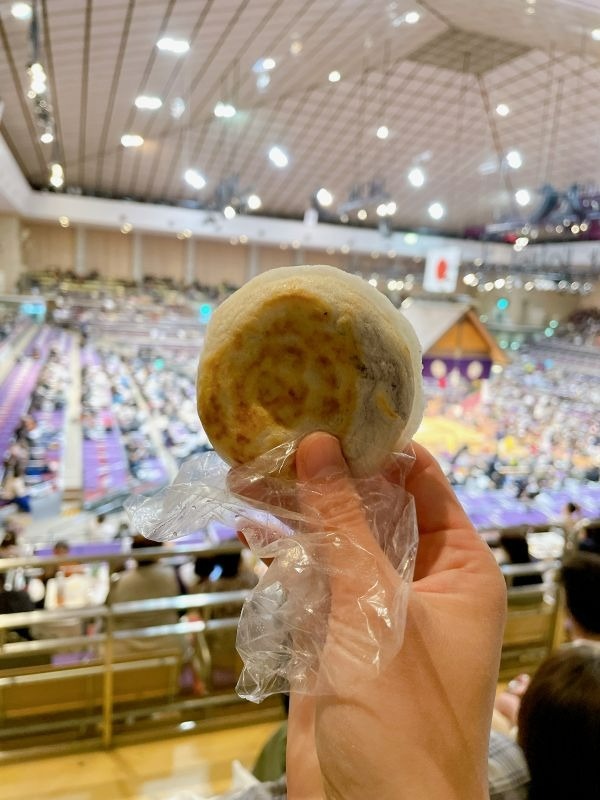
Umegae mochi is a famous snack and souvenir from Dazaifu, where the Isegahama stable lodgings mentioned above are located.
During the November Grand Tournament, you can buy it inside the tournament venue itself. The stall you want is immediately to your right as you come through the main entrance, and you can take the freshly grilled, piping-hot mochi back to your seat. Straight off the griddle, they’re too hot to hold even through the bag, and I mean genuinely too hot to hold!
I have one every year without fail. Boxed versions for gifts are available too, so you can take some home. Even if you can’t make it out to Dazaifu, do try one if you have a ticket.
Mucchan Manju, home of the original mudskipper-shaped cake
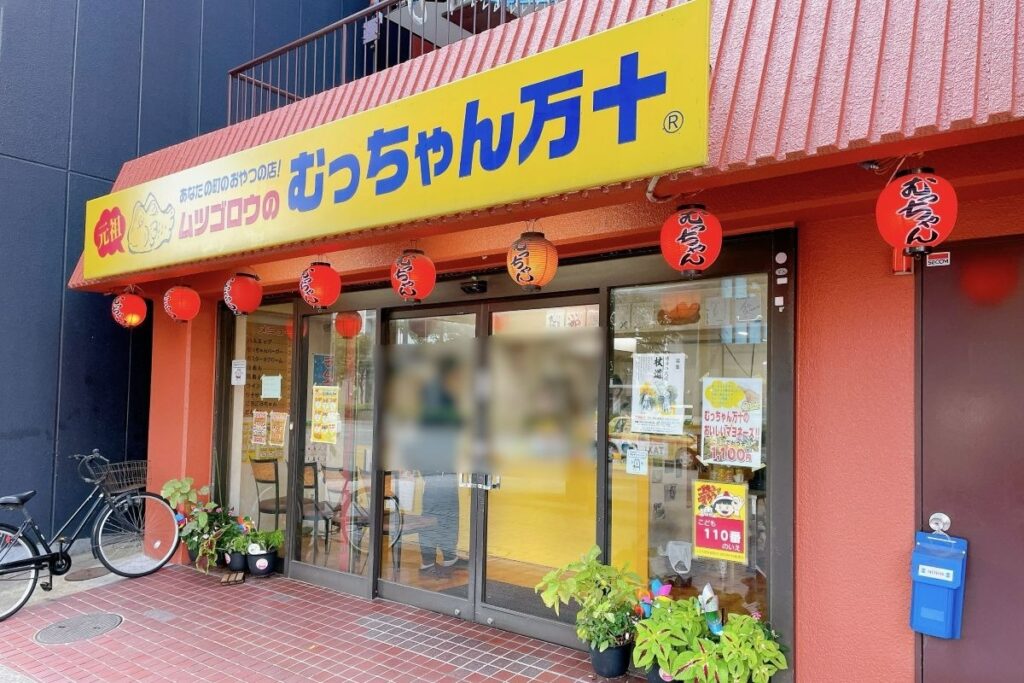
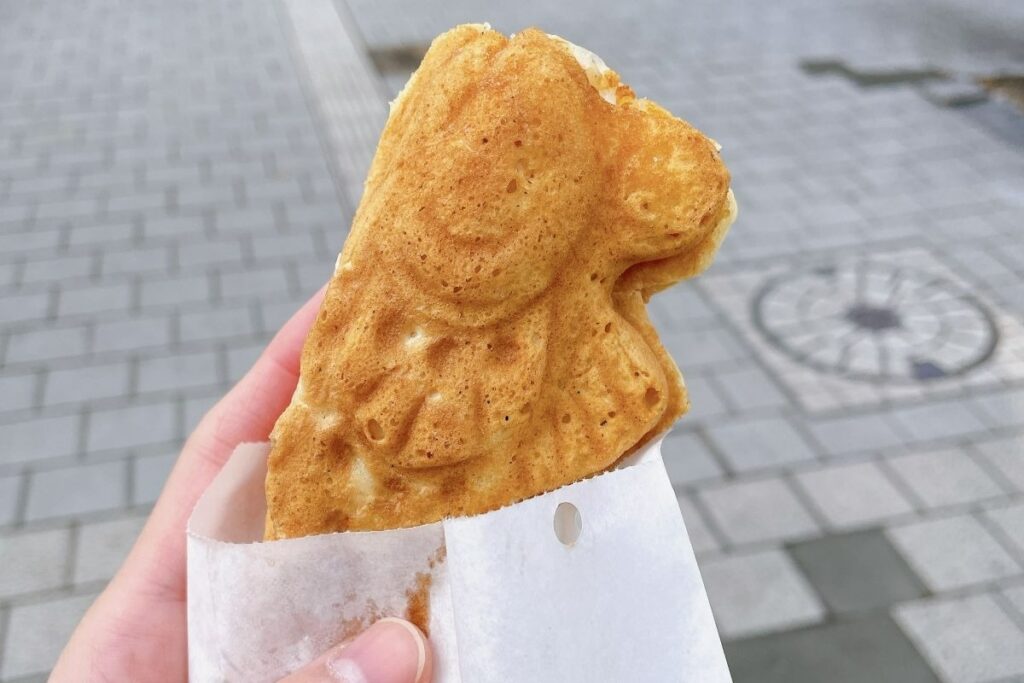
Known to everyone as “Mucchan Manju,” this chain has several branches across Fukuoka Prefecture.
It’s one of the Fukuoka foods that many wrestlers snack on during the November Grand Tournament. Inside the fluffy, castella-like batter you’ll find all sorts of fillings, the most notable being ham and egg with an addictive mayonnaise sauce inside. There are sweet versions too, of course, with red bean paste or custard, and each one is packed with filling right down to the tail, much to the wrestlers’ satisfaction (though one is never quite enough).
Pick some up on your way to the venue.
Mucchan Manju, Gofukumachi branch
| Address | 14-3 Naraya-machi, Hakata-ku, Fukuoka City, Fukuoka |
| Hours | 11:00 a.m.–7:00 p.m. |
| Closed | Irregular |
| URL | https://mucchanmanjyuu.com/ |
Restaurants Recommended by Wrestlers
Maki no Udon
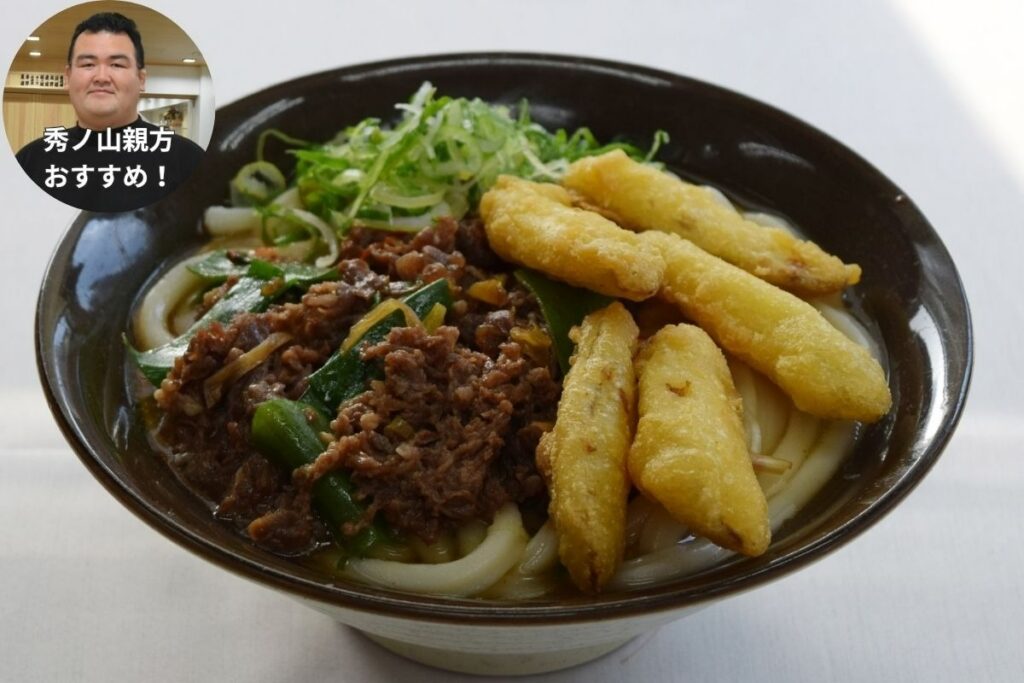
For this section, I asked wrestlers with local ties for their favorite places to eat.
First up is Hidenoyama-oyakata, the former ozeki Kotoshogiku, who hails from Yanagawa City in Fukuoka Prefecture. The first name out of his mouth was Maki no Udon, a Fukuoka udon chain and a shop I visit often myself. Fukuoka is known for soft-noodle udon, such as gobo-ten udon (noodles served with burdock tempura). Here’s what he had to say:
“My usual order is niku udon (noodles served with meat) with a triple helping of meat, two prawn tempura, maruten (round fish cake), and burdock tempura. The broth, with its kombu and bonito flavor, goes perfectly with the sweet-savory richness of the meat. I love the maze meshi (mixed rice); it tastes like my grandmother’s chirashizushi (rice topped with mixed sashimi). And you can get the kashiwa meshi (a type of maze meshi) to take away, so it’s a place I look forward to whenever I’m in Fukuoka.”
I was moved that an oyakata who knows the best food the whole country has to offer named a chain beloved by locals. Try it for a quick lunch, or the morning after a heavy night.
Maki no Udon, Hakata Bus Terminal branch
| Address | B1F, 2-1 Hakataeki Chuogai, Hakata-ku, Fukuoka City, Fukuoka |
| Hours | 10:00 a.m.–11:00 p.m. |
| URL | https://www.makinoudon.jp/ |
Warayaki Mikan
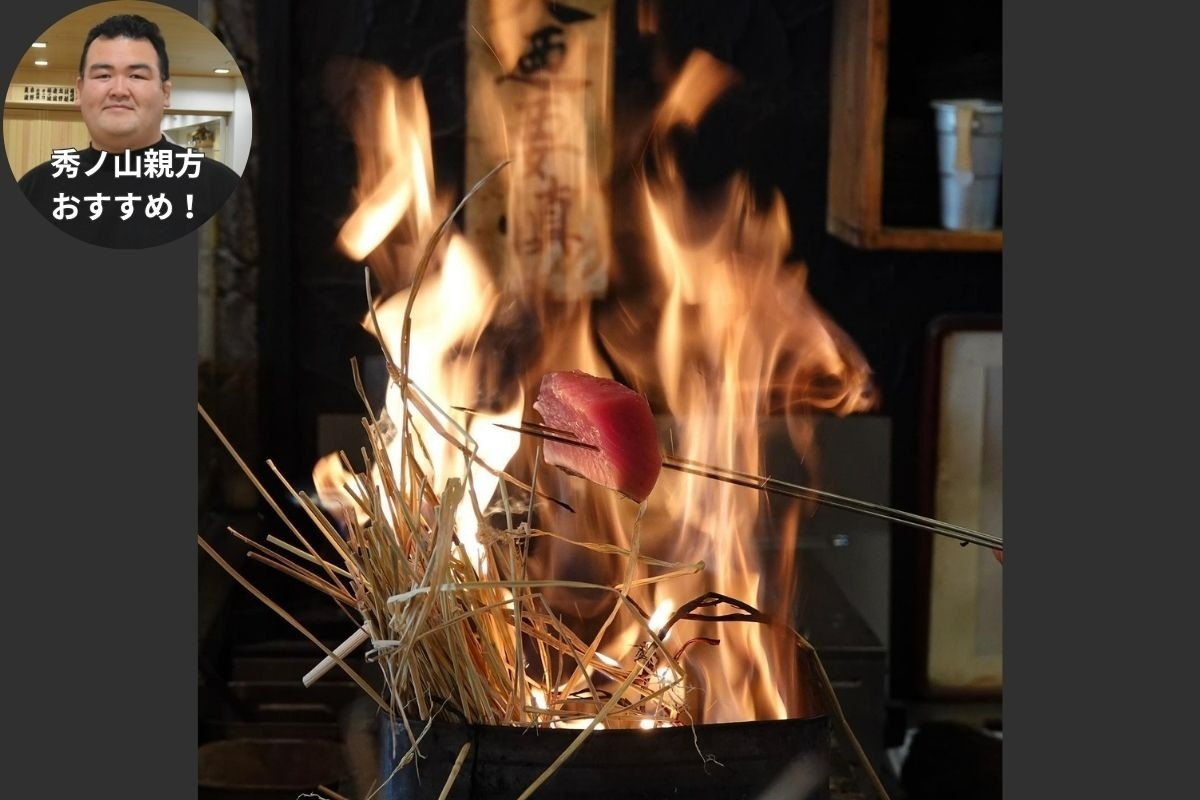
Hidenoyama-oyakata’s other recommendation is Warayaki Mikan, an izakaya in Chuo Ward. In his words: “They’re serious about Kyushu ingredients, and the straw-grilling is a spectacular thing to watch live. You need a reservation, but it’s a place where you get seafood and meat with the flavor and presentation of a fine kappo restaurant.”
Looking at the menu, everything sounds good, including the fresh fish, the vegetables, the meat dishes. Check availability before you go.
Warayaki Mikan
| Address | 2-12-20 Harayoshi, Chuo-ku, Fukuoka City, Fukuoka |
| Hours | 5:00 p.m.–midnight |
| Closed | Sundays |
| URL | https://www.instagram.com/wara_yaki_mikan/ |
Ange
My other contributor is a veteran of the active ranks: Sadanoumi, from Kumamoto City in Kumamoto Prefecture, whose kesho-mawashi (ceremonial apron) featuring the local mascot Kumamon has been a talking point in the ring.
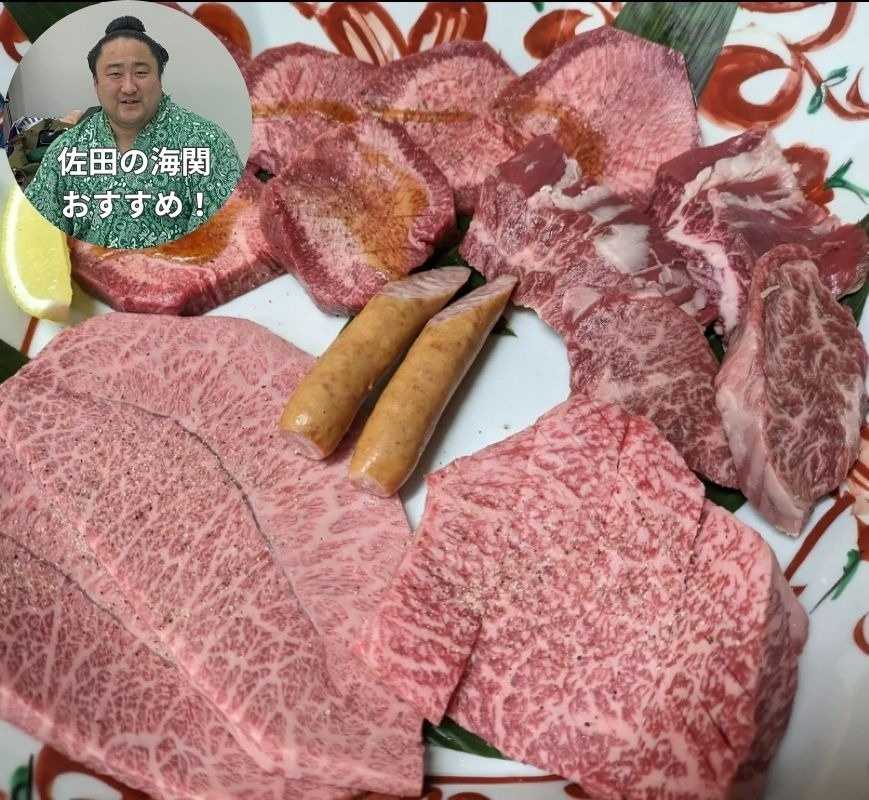
His first recommendation is Ange, a yakiniku restaurant in Chuo Ward. Trust a wrestler to know where the good grilled meat is, wherever he happens to be. “This is my favorite yakiniku place. The prices are reasonable, but the quality of the meat is very high. I’d especially recommend the tongue and the skirt steak. I order them every single time,” says Sadanoumi.
During the November Grand Tournament, tackling a yakiniku restaurant as though you were a wrestler yourself sounds like an excellent plan.
Ange
| Address | Estate Mour Ohori 1F, 2-15-11 Imagawa, Chuo-ku, Fukuoka City, Fukuoka |
| Hours | 5:00 p.m.–10:00 p.m. |
| Closed | Wednesdays |
| URL | https://www.instagram.com/yakiniku_ange/ |
How to Watch a Tournament & Manners
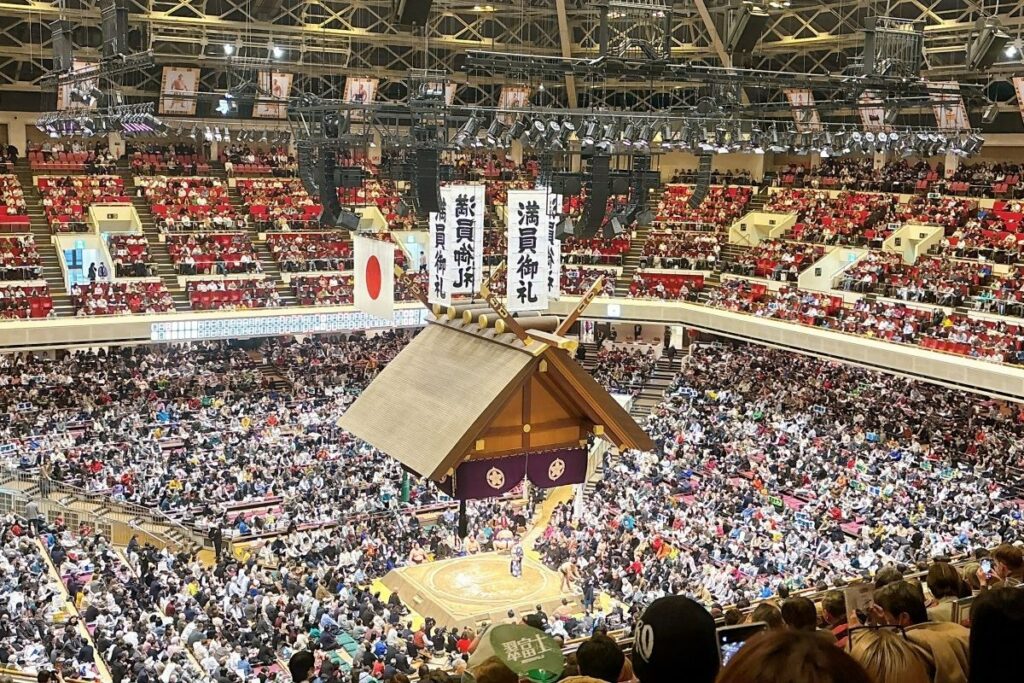
Many visitors worry that sumo comes with a long list of rules, but you can relax. There is no dress code, and as long as you aren’t ringside, you can eat or cheer on wrestlers from your seat. Please relax and enjoy the spectacle. But there are two things I’d like people to be aware of:
1. Do not leave your seat during grappling
You can move around in between matches, but between the moment before the grappling starts until after the match is decided, please do not get out of your seat, as it will inconvenience other spectators. If you are in the middle of going back to your seat and you hear the referee shout “Hakki yoi!” then crouch down in the aisle, etc., and try not to block anybody else.
Also, it is fine to cheer on the wrestlers, but please refrain from doing so before the grappling starts, when they need to focus the most.
2. Do not throw your cushion
Many people have probably seen videos of the audience erupting in cheers and throwing cushions when there is an upset in the finals, such as when a Yokozuna loses. However, in reality, you are not supposed to do this, and there are announcements that say, “please do not throw cushions as it is dangerous.”
I have also been hit in the back of the head with a cushion when I was ringside, and it really hurt! I know it is easy to get excited, but please cheer them on with your voice and not your cushion.
Conclusion
So, what do you make of the November Grand Tournament? I hope you can feel some of the wrestlers’ love for Fukuoka, and my own.
As for the action in the ring, the ones to watch are yokozuna Onosato, who took the September Grand Tournament, and the other yokozuna, Hoshoryu, who fought him right to the end. The question is how far ozeki Kotozakura, rising talents Aonishiki and Hakuoho, and local favorites Hiradoumi and Shodai can stay with them. They say, “enjoy dumplings before flowers,” but here, it should be “enjoy the ring at the Kokusai Center before Fukuoka’s cuisine!” Keep a close eye on the action.
*Interview cooperation: Nihon Sumo Kyokai, Sadogatake stable, Sumiyoshi Shrine, Dazaifu Tenmangu, T.M.K. Co., Ltd., Maki no Udon, Warayaki Mikan, and Ange
*Photo provided by: Saki Iizuka, Ryogoku Takahashi, Lion-do, Tonkatsu Hasegawa, Inonaka, BLESS
*Information as of August 2025.
Author: Saki Iizuka