What the Silver Carriage Road Carried Through Time
As Japan raced toward modernization in the wake of the samurai era, Ikuno Silver Mine, north of Himeji, was of critical national importance. The problem was access: a winding, narrow road was all that connected Himeji to Ikuno, making the transport of large quantities of materials a serious challenge. The government responded by commissioning French engineers to apply the latest technology of the day, completing the 49-kilometer Silver Carriage Road in 1876. More than just a route between two towns, this road became a bridge between old Japan and modern Japan. Walking it today, you can sense the life of the French and Japanese engineers who lived 150 years ago, all striving together to build a new era.
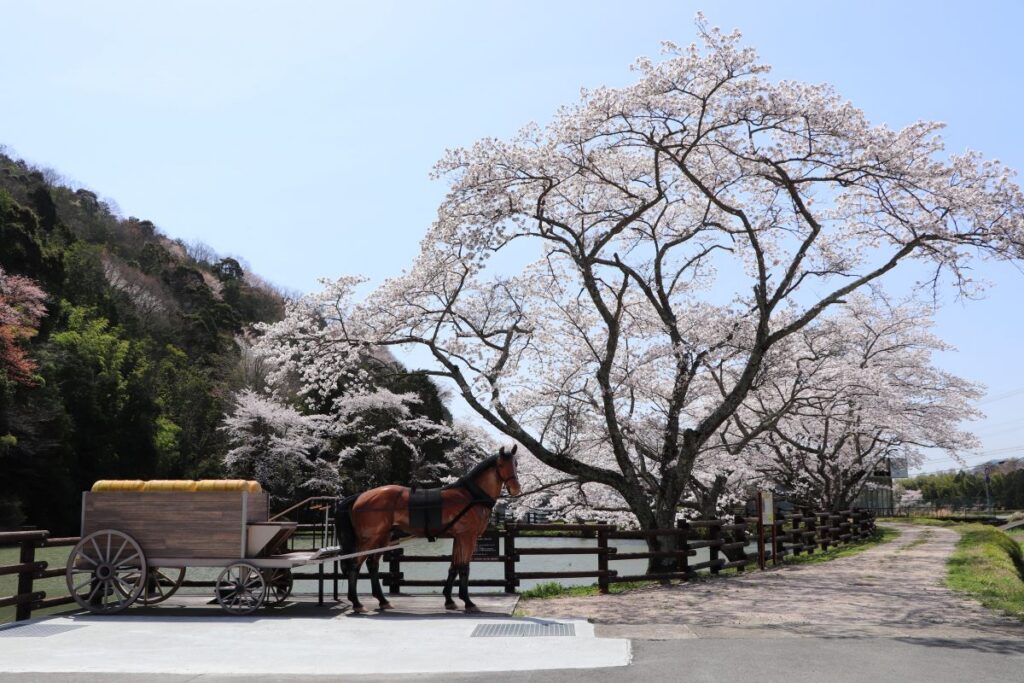
Highlights Along the Silver Carriage Road
The Silver Carriage Road passes through five municipalities: Himeji City, Fukusaki Town, Ichikawa Town, Kamikawa Town, and Asago City, and there is no shortage of things to see. Here are some of the highlights to see, from a UNESCO World Heritage Site to locations beloved by famous figures, sweeping grasslands used as film locations, and tunnels that powered Japan’s development.
Himeji Castle
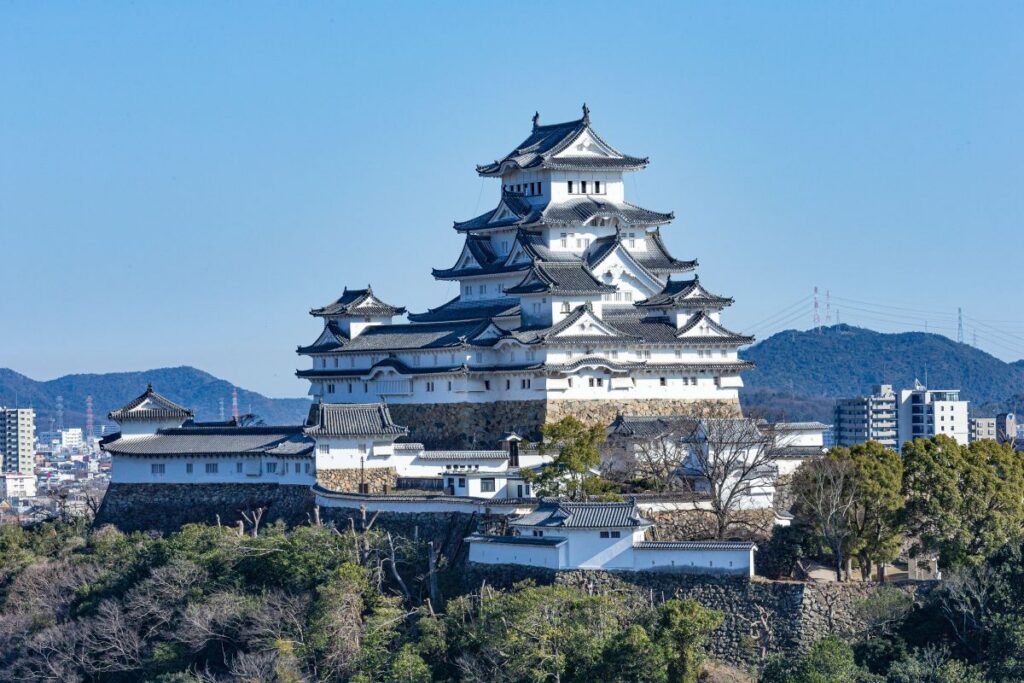
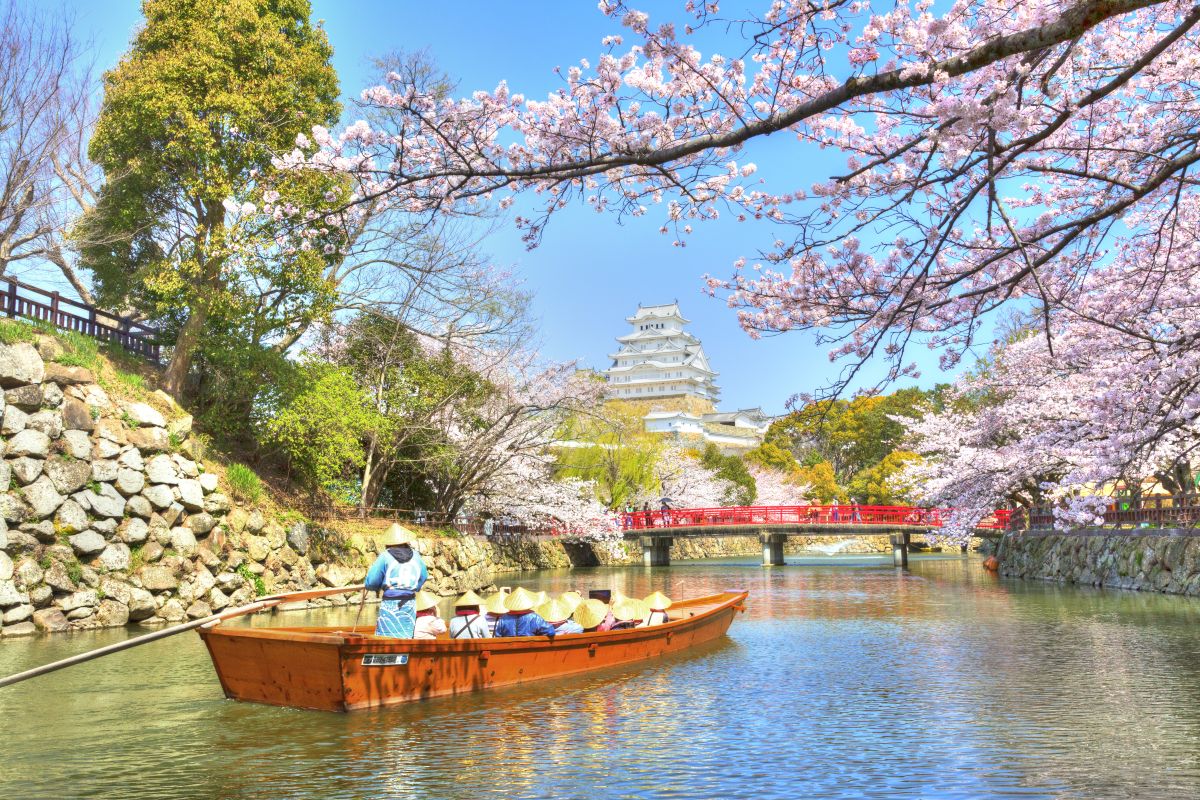
Completed in the early 17th century at the height of Japan’s castle architecture, Himeji Castle was designated a UNESCO World Heritage Site alongside Nara’s Horyu-ji Temple, the first such designation in Japan. Known as the “Shirasagi Castle (White Heron Castle)” for its elegant white-plastered walls, it combines stunning beauty with ingeniously designed defensive features, bearing witness to extraordinary craftsmanship and centuries of history. The castle is breathtaking in every season—framed by cherry blossoms in spring and crimson foliage in autumn—and equally magical when illuminated at night.
| Nearest Station | Himeji Station (Sanyo Shinkansen / Sanyo Main Line / Bantan Line / Kishin Line), Sanyo-Himeji Station (Sanyo Electric Railway Main Line) |
| Access | 20-minute walk from Himeji Station (Sanyo Shinkansen / Sanyo Main Line / Bantan Line / Kishin Line) or Sanyo-Himeji Station (Sanyo Electric Railway Main Line) |
| Address | 68 Honmachi, Himeji, Hyogo |
| Opening hours | 9:00 – 17:00 (last entry 16:00; hours vary by season) |
| Closed | December 29 – 30 |
| Admission | ¥2,500; combined ticket with KOKO-EN Garden ¥2,600; free for visitors under 18 (ID required) |
※ Admission prices are as of from March 1, 2026.
Tsujikawayama Park
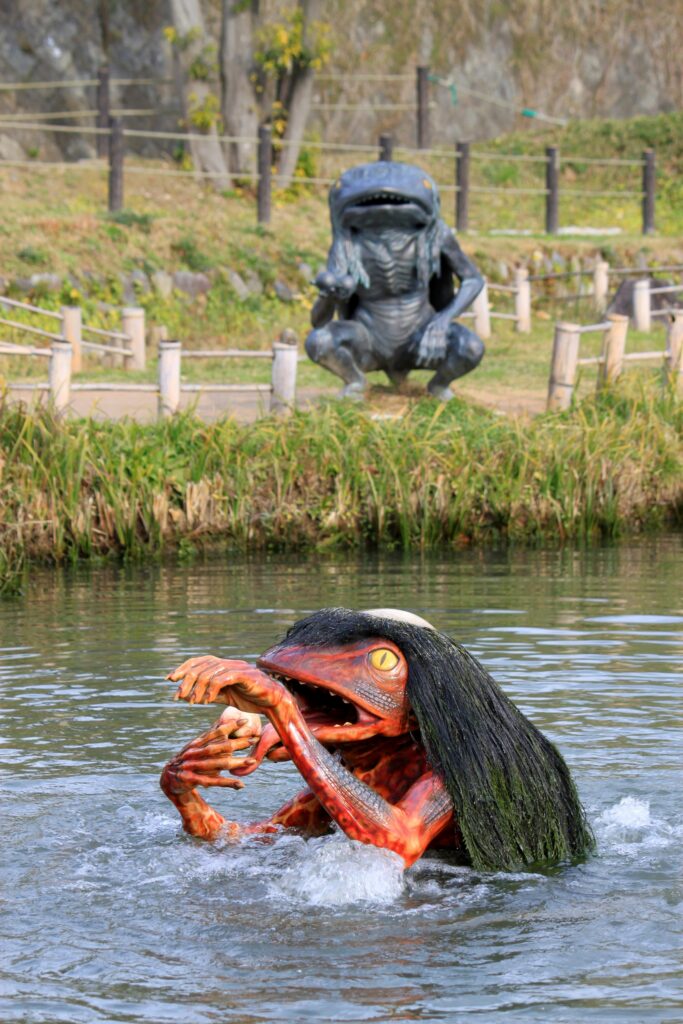
 This charming park sits adjacent to the birthplace and memorial museum of Kunio Yanagita, the scholar who systematically collected folk legends and ghost stories from across Japan and established the field of Japanese folklore. The supernatural creatures he devoted his life to studying make surprise appearances throughout the park, delighting visitors with a taste of the world of Japanese folk mystery. The animated displays are especially popular: a kappa (a water-dwelling creature) rising from a pond, and a tengu (a mountain spirit) soaring through the air.
| Nearest Station | Fukusaki Station, Bantan Line |
| Access | 10-minute taxi ride from Fukusaki Station (Bantan Line) |
| Address | Nishitawara, Fukusaki-cho, Kanzaki-gun, Hyogo |
Hashimoto Shinobu Memorial Museum
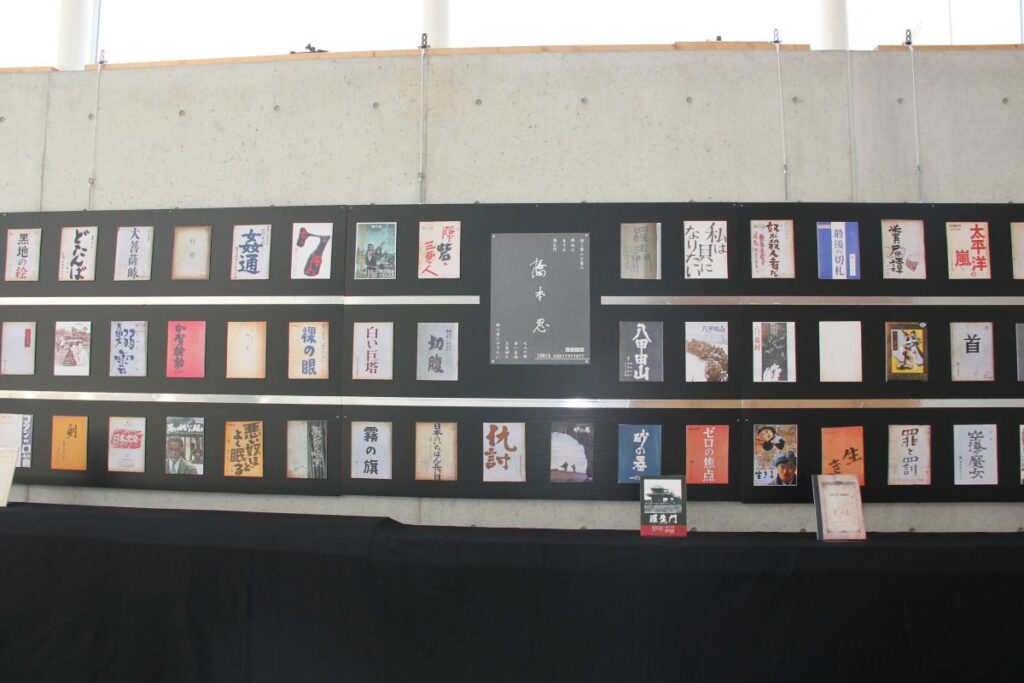
This museum is dedicated to Shinobu Hashimoto, one of Japan’s most celebrated screenwriters, who was born in Ichikawa. The collection centers on rare materials donated by Hashimoto himself, including handwritten manuscripts. He made his debut writing the screenplay for Akira Kurosawa’s Rashomon, which became the first Japanese film to win the Golden Lion at the Venice International Film Festival. He went on to collaborate with Kurosawa on eight more films, including Seven Samurai, creating a body of work that left a lasting mark on world cinema.
| Nearest Station | Amaji Station, Bantan Line |
| Access | 20-minute walk from Amaji Station (Bantan Line) |
| Address | Inside Ichikawa Town Cultural Center, 715 Nishikawabe, Ichikawa-cho, Kanzaki-gun, Hyogo |
| Opening hours | 9:00 – 17:00 |
| Closed | Tuesdays, third Thursdays, the day after public holidays, year-end/New Year holidays |
| Admission | Free |
Tonomine Plateau
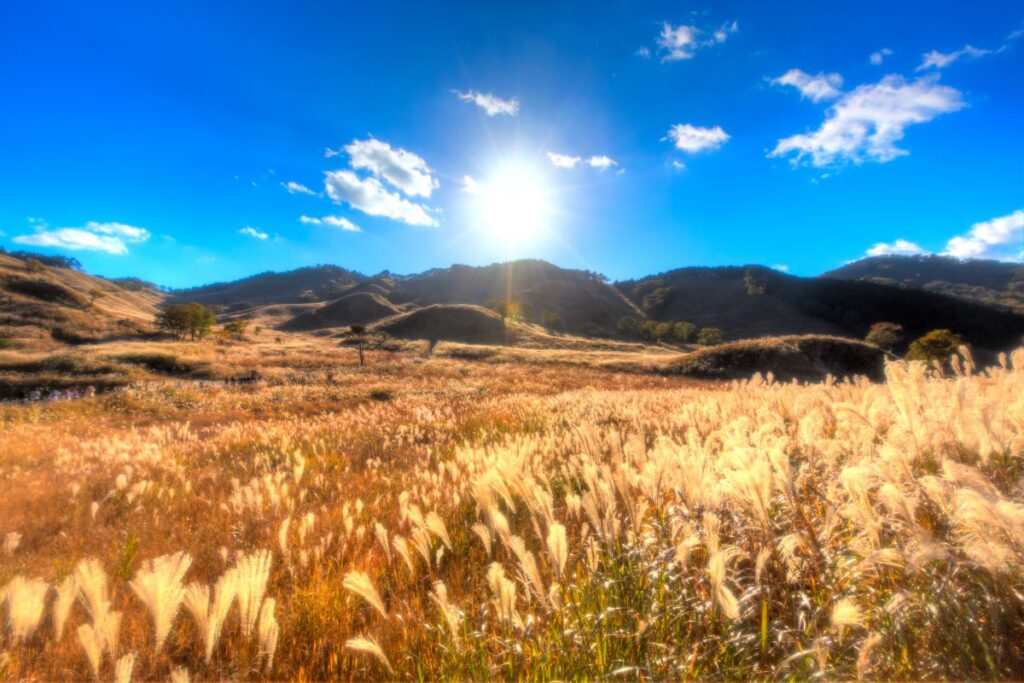
This vast plateau, stretching over 90 hectares, is one of the largest pampas grass fields in western Japan. It is a stunning landscape where the grass glows vivid green in spring and summer, and turns a sweeping, golden bronze in autumn. The plateau has served as a filming location for numerous films and TV dramas, including the film adaptation of Norwegian Wood by Haruki Murakami, one of Japan’s most iconic authors. The adjacent Tonomine Nature Exchange Center features an observation terrace with panoramic views.
| Nearest Station | Teramae Station, Bantan Line |
| Access | 36-minute taxi ride from Teramae Station (Bantan Line); a direct bus service is planned from around October to early November (reservation required, weekends only) |
| Address | 801 Kawakami, Kamikawa-cho, Kanzaki-gun, Hyogo |
| Note | Closed in winter (December to late March) due to snowfall |
Ikuno Silver Mine
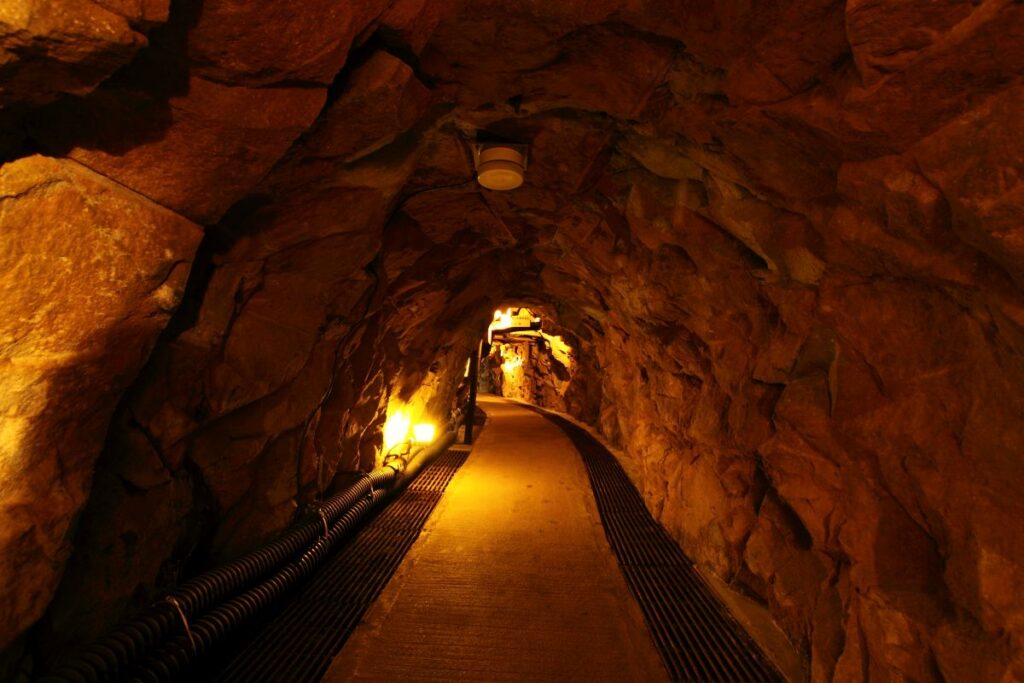
This remarkable cultural heritage site tells the story of a mine that helped drive Japan’s development from its discovery in 807 until its closure in 1973. The combined length of its tunnels reaches more than 350 kilometers, descending as deep as 880 meters underground. The approximately 1-kilometer sightseeing tunnel offers a fascinating double journey through time: you’ll see tunnels modernized using Western technology after Ikuno became Japan’s first government-operated mine in 1868, alongside older sections where the marks of hand-chiseling still remain on the walls.
| Nearest Station | Ikuno Station, Bantan Line |
| Access | Approx. 10 minutes by on-demand shared transport from Ikuno Station (Bantan Line) (reservation required: 079-666-8170) |
| Address | 33-5 Ono, Ikuno-cho, Asago, Hyogo |
| Opening Hours | Apr – Oct: 9:10 – 17:20 (tunnel last entry 16:40) Nov: 9:10 – 16:50 (tunnel last entry 16:10) Dec – Feb: 9:40 – 16:20 (tunnel last entry 15:40) Mar: 9:40 – 16:50 (tunnel last entry 16:10) |
| Closed | Tuesdays in December–February (following day if a public holiday), year-end/New Year holidays |
| Admission | ¥1,200; ¥600 for elementary, junior high, and high school students |
Fascinating Local Legends
The Legend of Himeji Castle’s Great Keep
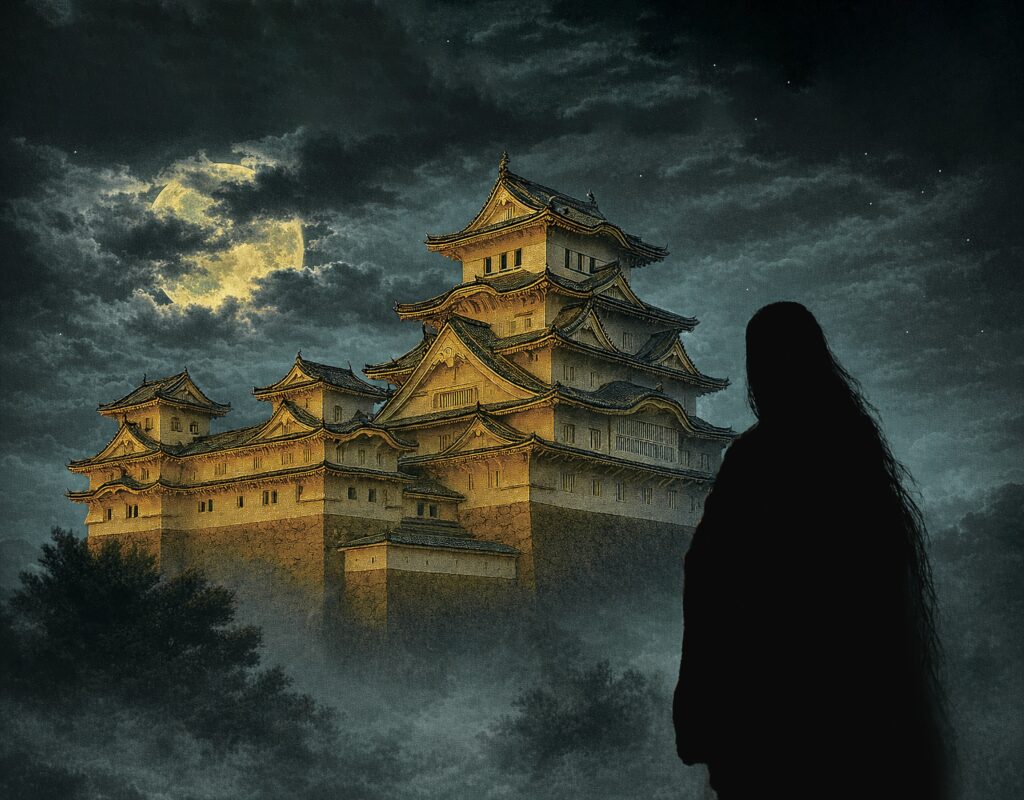
The swordsman Miyamoto Musashi—widely regarded as Japan’s greatest—was once ordered to rid Himeji Castle of evil spirits. On his way up through the keep, he encountered raging flames and violent tremors, but held his ground through the night. At dawn, a beautiful princess appeared, declaring herself Osakabe Myojin, the castle’s guardian deity. She praised Musashi for driving away the spirits in fear, and presented him with a treasured sword as his reward.
Source: History of Himeji Castle | Himeji Castle Official Website
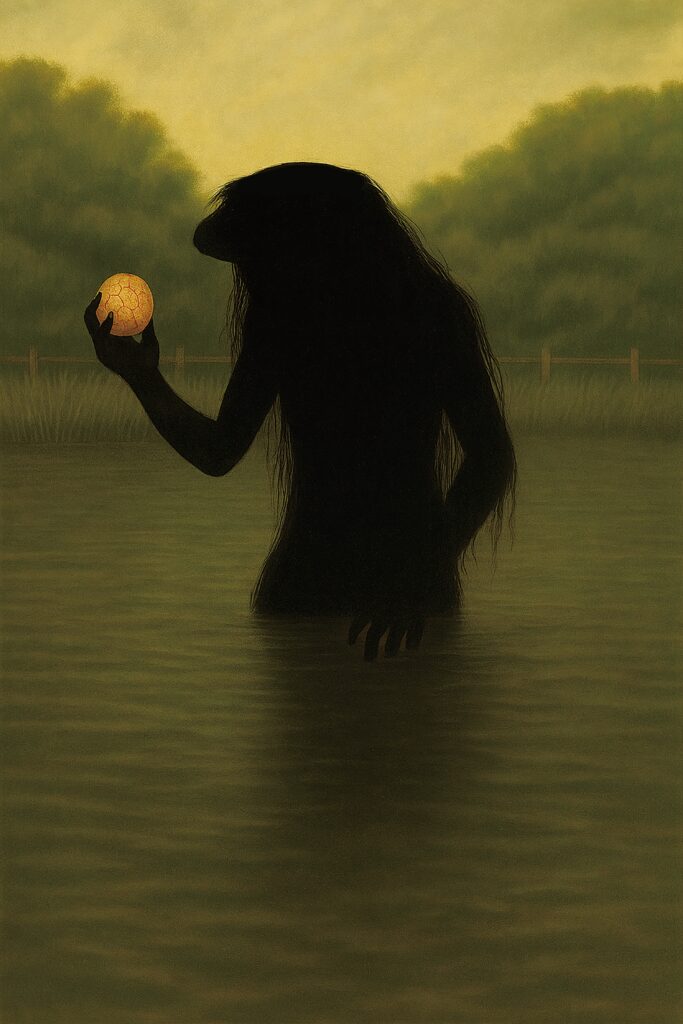
Near Komagaiwa Rock along the Ichikawa River in Fukusaki Town—a place where Kunio Yanagita, the father of Japanese folklore, played as a child—there is said to lurk a kappa called “Gataro.” According to local legend, this water creature would drag children beneath the surface and steal their “shiri-kodama,” a mystical orb believed to reside within the body. The kappa brothers that appear in Tsujikawayama Park were created based on this very legend.
Source: The Yokai of Tsujikawayama Park | Fukusaki Town Tourism Association (Official)
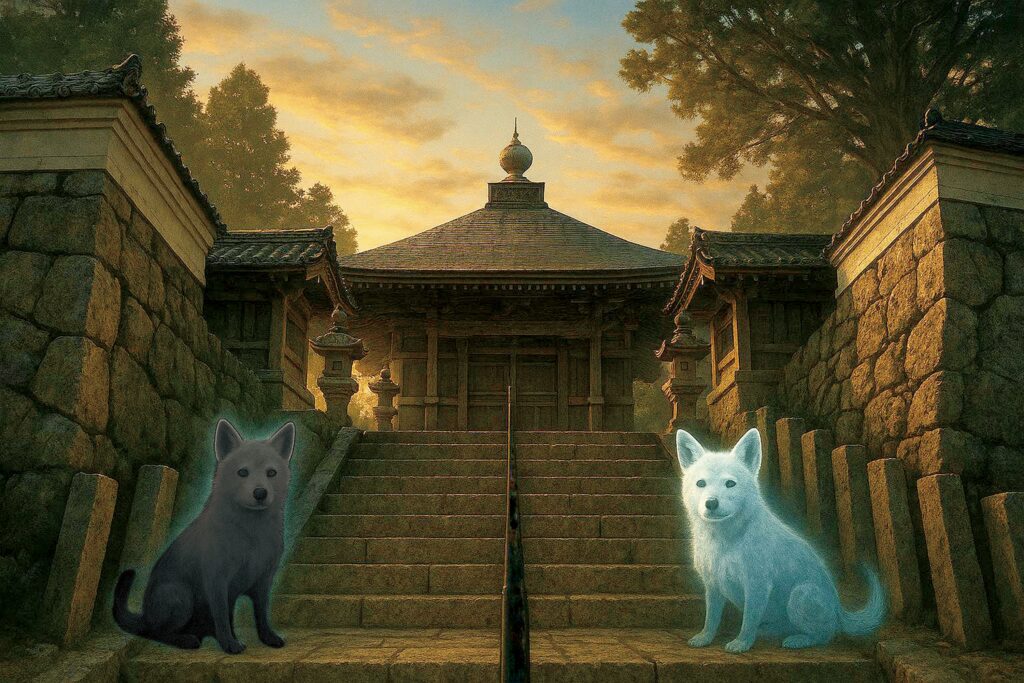
Horakuji Temple in Kamikawa Town is known as “Banshu Inu-dera,” the Dog Temple of Banshu. When a powerful clan leader returned from battle, a retainer invited him on a hunting trip, but it was a trap. While the lord had been away at war, the retainer had been secretly meeting his wife and now planned to kill him. Just as the retainer raised his bow, the lord’s two beloved dogs leaped forward and bit the retainer, saving his master’s life. Years later, when the dogs passed away, the lord built this temple in their honor.
Source: Horakuji Temple / Dog Temple of Banshu — “The Tale of Two Dogs, White and Black” | Hyogo Prefectural Museum of History
Explore by Bike: The Silver Carriage Road Cycling Route
A handy map introducing model cycling routes along the Silver Carriage Road, complete with local highlights, gourmet recommendations, and sightseeing spots. The map also notes simple bicycle parking facilities and restrooms along the way, distance markers every 10 kilometers, and important tips for cyclists. Available at the Himeji City Tourism and Convention Bureau and other locations.